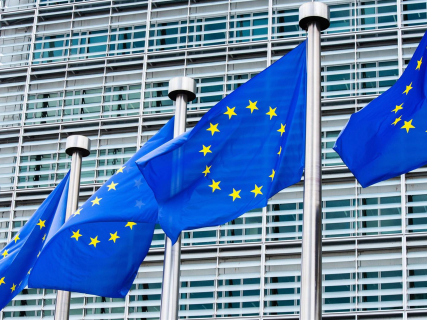
The interior ministers of the EU address this Tuesday the crisis of Ceuta

The interior ministers will analyze the migration crisis after a preparatory meeting in which the member states highlighted Spanish management, Morocco's cooperation, and the need to strengthen European coordination.

2 minutes

fotonoticia 20260728160139 1920

fotonoticia 20260728160139 1920

Add DEMÓCRATA to Google

Ask FREN

Published

Last updated

2 minutes

Most read

The Interior ministers of the European Union will hold an extraordinary meeting via videoconference this Tuesday to address the migratory crisis triggered in Ceuta, in a meeting that will start from a climate of widespread support for Spain's actions from the member states.

The meeting, called for 10:00 hours (Brussels time) under the presidency of the Irish Minister of Justice, Interior and Migration, Jim O'Callaghan, will serve to analyze the evolution of the situation, reinforce coordination among European partners, and discuss the protection of the Union's external borders.

Along with the Twenty-Seven, the countries associated with the Schengen area, the European External Action Service (EEAS), Frontex, the European Union Agency for Asylum (EUAA), and Europol will also participate.

It is expected that, once the videoconference concludes, the European Commissioner for Home Affairs, Magnus Brunner, will appear before the media to inform about the conclusions of the meeting and the next steps that the European Union will take following the largest migratory crisis recorded in Ceuta in recent years.

The ambassadors prepare the meeting with a message of support for Spain

The ministerial meeting comes after the ambassadors of the member states analyzed the situation during a meeting of the Committee of Permanent Representatives of the European Union on Monday, where they prepared the common position that will be brought to the debate this Tuesday.

According to European diplomatic sources to DEMÓCRATA, the shared assessment is that the crisis was controlled quickly and that practically all the people who crossed the border irregularly have already returned, with no movements detected towards other member states.

The European representatives also expressed their solidarity with Spain and recognized the speed and effectiveness of the Spanish authorities in managing the emergency.

European unity against disinformation

For their part, Spanish diplomatic sources indicate that another focus of the meeting this Tuesday will be the need to maintain a common position against disinformation related to immigration.

In this regard, European partners consider it essential to work with verified data and reinforce coordination among member states to avoid narratives that could weaken the Union's joint response to this type of crisis.

The same sources point out that during the preparations, the information provided by Spain in real time throughout the management of the crisis was also valued.

Migration, borders, and cooperation with Morocco

The ministers will also exchange views on diplomatic coordination with third countries and on strengthening the protection of the external borders of the European Union.

Among the issues that are likely to focus the debate is the implementation of the European Pact on Migration and Asylum, as well as cooperation with Morocco, whose collaboration to contain the crisis was recognized during the preparatory meeting of the ambassadors.

The meeting also takes place after the European mechanism for Integrated Political Crisis Response (IPCR) analyzed the situation last Saturday, a follow-up that has served as the basis for the meeting this Tuesday.

More key points, information and questions with FREN

AI-GENERATED CONTENT

What are the pending parliamentary procedures for the implementation of the European Pact on Migration and Asylum?

The implementation of the European Pact on Migration and Asylum in Spain is not being done through a single “Pact law,” but through several pieces: regulatory reforms already approved and some legislative initiatives underway or announced. In the General Courts, as of today, two files stand out directly linked to the management of migratory contingencies and the immigration regime, both still in the initial phase of parliamentary processing, and an organic draft bill on childhood linked to the Reception Directive that has not yet reached the Congress. In parallel, much of the adaptation to the Pact is being done through regulatory means (royal decrees), which do not go through the Chambers.

1. Bill derived from Royal Decree-Law 2/2025 (migrant minors)

Royal Decree-Law 2/2025, of March 18, on urgent measures to guarantee the best interests of children and adolescents in the face of extraordinary migratory contingencies, was approved by the Council of Ministers (Moncloa reference) and published in the BOE as Royal Decree-Law 2/2025. The decree regulates, among other aspects, the solidarity distribution among autonomous communities of unaccompanied foreign minors, an issue that the Government links to the new European framework on migration and asylum.

Subsequently, the Congress agreed to process it as a bill (file 121/000055). According to the parliamentary record, the deadline for submitting amendments has been successively extended “until 2026-09-02” (Congress bulletin).

Pending procedures in this bill:

  • Closing of the deadline for total and partial amendments in the Congress (until September 2, 2026).
  • Constitution of a working group and preparation of a report in the competent committee.
  • Approval of the committee report and debate/vote in the Plenary of the Congress.
  • Sending the text to the Senate and processing there (amendments and possible veto).
  • Possible second reading in the Congress, publication in the BOE, and entry into force of the resulting law.

Until this processing is completed, the content of the royal decree-law remains in force, but without the full legislative “endorsement” that the ordinary law will provide.

2. Organic Law Proposal to restrict "arraigo" (LO 4/2000)

From the opposition, the PP has promoted a reform of Organic Law 4/2000 (Immigration Law) with a restrictive approach, in a context of debate about extraordinary regularization and its fit with the European Pact. This is the Organic Law Proposal to amend LO 4/2000 to restrict the regularization of illegal immigrants through "arraigo", processed as 124/000038 in the Congress and 622/000080 in the Senate.

In the Congress, the latest status indicates that the deadline for submitting amendments has also been extended until September 2, 2026 (initiative record). In the Senate, it also appears as an organic law proposal of the Upper Chamber (Senate bulletin).

Pending procedures in this proposal:

  • Closing of the deadline for amendments in the Congress.
  • Debate on consideration (if the Board and majority promote it) or possible “freezing” via extensions.
  • If applicable, working group, committee report, and vote in the Plenary of the Congress.
  • Second round in the Senate and possible return to the Congress.

Although this initiative does not arise to “implement” the Pact, it does condition the Spanish interpretation of regularization pathways and the return regime, at a time when the Pact strengthens return procedures and State obligations.

3. Organic draft bill on childhood and Reception Directive

In the pre-parliamentary sphere, the Ministry of Youth and Childhood has submitted for public consultation a Draft Organic Law to amend LO 8/2021 on comprehensive protection of children and adolescents against violence (public consultation; consultation text at [link]).

The consultation document itself explains that the reform adapts the legislation to what is established in the European Pact on Migration and Asylum, specifically article 26.6 of Directive (EU) 2024/1346 on reception conditions for applicants for international protection, and foresees changes in the Civil Code and Organic Law 1/1996 on legal protection of minors.

Pending procedures here:

  • Approval of the draft as an organic bill by the Council of Ministers.
  • Submission to the General Courts.
  • The entire parliamentary process (Congress and Senate), which has not yet begun.

4. Other regulatory adaptations without parliamentary procedure

A significant part of the adaptation to the new European framework is being carried out through regulatory norms, which do not go through Congress or Senate:

  • New Immigration Regulation: Royal Decree 1155/2024, of November 19, and its amendment by Royal Decree 316/2026, of April 14, which introduces, among other things, the extraordinary regularization subject to intense political and judicial scrutiny (including possible conflict with norms that “implement the Pact,” as noted by the Supreme Court in analyses cited by the newspaper Demócrata).
  • Public consultation to update the Regulation of the international protection reception system (Royal Decree 220/2022) precisely “for the implementation of the Pact” in reception matters, opened by Inclusion and Migration ([link]).

These reforms are key for the operational landing of the Pact, but do not themselves generate pending parliamentary procedures, as they are regulatory competences of the Government; control is mainly exercised through the Congress (political debate) and courts, not through specific legislative votes.

5. Summary

With the available information, it can be said that Spain has advanced mainly through regulatory and planning means (national implementation plans, immigration regulation, reception system), while in the General Courts the piece most directly linked to the new European migratory context that is formally underway is the bill developing Royal Decree-Law 2/2025 on minors and migratory contingencies. The rest of the “substantive” legislative adaptation (organic reform of childhood and, eventually, broader adjustments of the Immigration Law and Asylum Law) is still in a pre-parliamentary phase or on a political rather than normative level.

Can you detail the main content of the bill derived from Royal Decree-Law 2/2025 and what changes it introduces regarding unaccompanied minors? What specific relationship does the future reform of Organic Law 8/2021 have with article 26 of Directive (EU) 2024/1346 on reception of asylum seekers? How do extraordinary regularization and the reform of the Immigration Regulation fit with the return obligations of the European Pact on Migration and Asylum?

What are the competencies of the Irish Minister for Justice, Interior and Migration within the Council of the EU?

The Irish Minister for Justice, Interior and Migration acts in the Council of the EU as the political representative of Ireland in the Justice and Home Affairs (JHA) formation, where decisions of the Union on justice, interior, and migration matters are negotiated and adopted. Additionally, during the current Irish presidency of the Council, his role is reinforced because he can chair the JHA sessions and set part of the agenda. His competencies are not “personal” to the minister but derive from the general functions of the Council in the Area of Freedom, Security and Justice, exercised on behalf of the Irish Government.

Council formation in which he participates

Sources show that the Irish minister participates in the Council of the EU formation known as the Justice and Home Affairs Council (JHA). This formation meets periodically in Brussels or Luxembourg and usually divides its work into two blocks:

  • Justice session, focused on judicial cooperation, rule of law, fundamental rights, mutual recognition of decisions, etc. An example agenda can be seen in the June 2026 JHA Council media advisory, with debates on cross-border parentage and the Justice 2028-2034 program.
  • Home Affairs session, focused on migration, borders, internal security, police cooperation, and Schengen management. The focus is seen, for example, in the JHA Council where Spain participates with Interior and Migration to address online sexual abuse of minors and the consequences of the war in Ukraine and the Middle East, according to the Moncloa note on the presence of Elma Saiz and Grande-Marlaska in Luxembourg (Inclusion note).

Functions within the Council of the EU

In this formation, the Irish minister has, like the other 27 counterparts, three main political functions:

  • Negotiate and adopt EU legislation in the areas of justice, interior, and migration (directives and regulations on migrant trafficking, child sexual abuse, insolvency, etc.), as reflected in the agendas of the December 2024 and June 2025 JHA Councils, where ministers seek to “reach a common position” on these directives (December 2024 JHA advisory and June 2025 JHA advisory).
  • Coordinate national policies within the Area of Freedom, Security and Justice framework (for example, the implementation of the Migration and Asylum Pact or cooperation against organized crime), something the future Irish presidency has linked to the ProtectEU strategy and the strengthening of Europol and Frontex, as detailed by the newspaper Demócrata reviewing Ireland’s priorities in the Council (Demócrata analysis on Irish presidency).
  • Define Ireland’s position on all these files, negotiate compromises with other States and with the Commission and Parliament, and vote on behalf of his country when appropriate.

Enhanced role under the Irish presidency

In the second half of 2026, Ireland holds the rotating presidency of the Council, which grants the Irish minister an additional role. According to Demócrata, the presidency wants to use that semester to promote the implementation of the Migration and Asylum Pact, the ProtectEU strategy against organized crime, and the revision of the Directive on the European Investigation Order, among other justice and security files (Demócrata article).

As part of that presidency, the Irish minister can chair the JHA Council meetings. A very clear example is the Ceuta migratory crisis: the Irish presidency convenes an extraordinary meeting of Interior ministers to analyze the situation, and Demócrata details that the Justice and Home Affairs Council session will be “chaired by Jim O’Callaghan” in his capacity as Irish Minister for Justice, Interior and Migration (Demócrata report on Ceuta).

External dimension and political coordination

Besides the internal work of the Council, the Irish minister participates in informal or ministerial meetings with third countries representing the EU when the presidency tasks him (for example, EU-US or EU-Western Balkans Justice and Home Affairs forums, described in Council communications as meetings of “Justice and Home Affairs ministers of the Presidency of the Council of the European Union” with their regional counterparts).

He also maintains an intense bilateral agenda with other Justice and Interior ministers. The Spanish Government’s own agenda records meetings of Félix Bolaños with the Irish minister Jim O’Callaghan in JHA forums in Warsaw and Luxembourg, where challenges of the rule of law and the Area of Freedom, Security and Justice are addressed (note on informal Warsaw meeting and Moncloa agenda for June 5, 2026).

Overall, his competencies in the Council are not executive over other States’ administrations but legislative, coordinating, and political driving within the EU institutional framework and, in particular, the JHA Council.

What specific priorities has Ireland set in justice, interior, and migration during its Council presidency? How does Ireland’s leadership in the JHA Council affect Spain on migration and asylum issues? What differences exist between the role of the Irish minister in the JHA Council and that of the European Commissioner for Justice or Interior?

What legal requirements must the EU meet to strengthen the protection of its external borders?

To strengthen the protection of its external borders, the European Union must act within a legal framework that combines institutional competencies, parliamentary control, technical work in committees, and mechanisms of transparency and participation. Any reinforcement (more surveillance, legislative changes, new functions for agencies, etc.) must be supported by a clear normative basis, be subject to political supervision, and respect fundamental rights. Additionally, the procedure must allow detailed scrutiny of the measures and open spaces, at least minimal, for civil society participation.

1. Legal basis and distribution of competencies

To adopt border reinforcement measures, the EU needs to base them on competencies attributed to it in the Treaties. This implies, in general terms:

  • Precisely defining the material scope (border management, immigration, asylum, police cooperation, etc.) to avoid encroaching on national competencies.
  • Respecting the principle of attribution: the Union can only act where Member States have transferred normative capacity.
  • Justifying subsidiarity and proportionality: that action at the European level is necessary and that measures do not go beyond what is essential to protect the external border.

Without this prior legal fit, any reinforcement measure (for example, granting more operational functions to an agency or tightening controls) risks being challenged for exceeding attributed competencies.

2. Role of Parliament and parliamentary control

Border protection reinforcement usually requires new rules or reform of existing ones. In any parliamentary system, such changes must undergo substantive parliamentary control, articulated through instruments similar to those in Member States:

  • Debate and voting on normative texts, with the possibility to reject or amend proposals.
  • Questions, interpellations, and motions so that the Executive (at the European level, the proposing and executing institution) explains the orientation of its border policy and is held accountable.
  • Appearances of political leaders and senior officials before competent committees to present strategies, operations, and resource use.
  • Investigative committees or specific studies when migratory crises, border incidents, or rights violation complaints occur.

Thus, the legitimacy of any border reinforcement depends not only on the formal legality of the measure but also on the existence of real and ongoing political scrutiny.

3. Technical work in specialized committees

Major normative changes in border matters are normally processed in specialized parliamentary committees, which fulfill a function similar to that described for Spain:

  • Detailed study and debate of legislative proposals, analyzing their legal, operational, and budgetary implications.
  • Presentation and voting of amendments to adjust the balance between security, migration control, and rights guarantees.
  • Preparation of a report which, once approved, is sent to the plenary for final decision.

This committee work is essential to introduce nuances, adjust competencies of border agencies, and clarify supervision and accountability mechanisms.

4. Guarantees of fundamental rights and participation

Any border protection reinforcement must be compatible with a set of basic guarantees, usually conveyed through:

  • Respect for fundamental rights: especially regarding asylum, treatment of migrants, prohibition of summary returns, protection of minors, and the right to effective judicial protection.
  • Mechanisms of transparency and citizen participation in preparatory phases, inspired by public consultations and hearings regulated in many States. This allows specialized organizations, experts, and civil society to provide observations on the impact of measures.
  • Possibility of appearances by NGOs, agencies, security forces, and other actors before parliamentary committees to enrich the debate with diverse perspectives.

These guarantees are not mere decoration but a legal and political requirement for measures to be sustainable and resistant to judicial review.

5. Continuous supervision and judicial control

Once measures are adopted, compliance with legal requirements does not end with formal approval:

  • Parliament maintains its control function over executive action (border operations, cooperation with third countries, use of surveillance systems, etc.).
  • Evaluation and accountability mechanisms may be created or strengthened regarding the effectiveness of measures and their impact on rights.
  • Judicial control by courts allows annulment of acts or provisions contrary to Union Law or fundamental rights, and correction of unlawful practices at the border.

In summary, strengthening the protection of the EU’s external borders is not just a matter of more resources or controls, but of articulating that reinforcement within a framework of clear legal basis, effective parliamentary control, rights guarantees, and judicial supervision.

What leeway do Member States have versus the EU to apply border control rules more strictly or more flexibly? How is border management combined with the obligation to process asylum applications in the EU? What political and judicial control mechanisms exist over the operations of European agencies at the borders?

Play

Test your knowledge with FREN!

How much do you know about this topic? Answer the following 3 questions.

Who chairs the extraordinary meeting of EU Interior Ministers on the Ceuta crisis?

Question 1 of 3

Which European agency participates in the meeting alongside the Interior Ministers and specializes in border management?

Question 2 of 3

What aspect of the management of the Ceuta crisis was highlighted by the European ambassadors?

Question 3 of 3

Hola, soy Fren. ¿Cómo te ayudo?