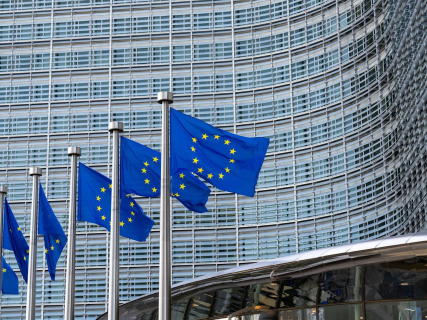
The European Union has taken one of the most relevant strategic steps in its recent history this Sunday by presenting an ambitious plan to strengthen its military capacity, increase defense spending, and reduce its external dependence. The European Commission and the High Representative for Foreign Policy have announced the White Paper on European Defense / Preparedness 2030, accompanied by the program ReArm Europe, a roadmap that will mobilize more than 800 billion euros in the coming years.
The initiative represents a paradigm shift in Brussels. For decades, the EU built its political project on economic integration, trade openness, and strategic stability under the umbrella of NATO and the United States. Now, with the war in Ukraine, Russian pressure on the eastern flank, growing global competition, and geopolitical uncertainty, the Commission assumes that this model is no longer sufficient.
The community president, Ursula von der Leyen, summarized it with a forceful phrase: “The era of the peace dividend ended long ago”.
What the plan really means
The political message from Brussels is clear: Europe considers that it is entering a new stage of security. It is no longer just about helping Ukraine or responding to a specific crisis, but about rebuilding large-scale European military capabilities and preparing the continent for a decade of strategic tension.
The fixed objective is 2030, a date by which the EU aims to have a stronger defense industrial base, more own production, more coordination among Member States, and greater common military capabilities.
Why Brussels is making a move now
The Commission maintains that Europe has been dragging two structural problems for years:
- Chronic underfunding in defense after decades of cuts.
- Industrial and military fragmentation, with multiple incompatible systems between countries.
- Dependence on external suppliers, especially from the United States.
- Bureaucratic slowness in acquiring material and deploying capabilities.
The Russian invasion of Ukraine accelerated that diagnosis. Brussels considers that the conflict has demonstrated that European security cannot be taken for granted.
The 800 billion: how Brussels wants to finance European rearmament
The plan ReArm Europe / Preparation 2030 is based on a central idea: member states must spend more on defense and do so in a coordinated manner. To this end, the Commission proposes to open up room within European fiscal rules, allowing governments to temporarily increase their military investment without that spending counting in the same way for deficit purposes.
Specifically, Brussels proposes activating a special clause of the Stability Pact that would allow countries to increase their defense spending by up to an additional 1.5% of annual GDP for four years. In practice, the Commission is telling member states that they can strengthen their military budgets even if it implies more pressure on their public finances.
To that national route will be added a new financial instrument: SAFE, acronym for Security Action for Europe. The Commission plans to raise up to 150 billion euros in the markets through common debt to then lend that money to Member States on favorable terms. These funds must be used for joint purchases of military equipment and for strengthening capabilities considered priorities.
The plan also wants to involve the European Investment Bank, which will expand its scope for financing projects linked to security and defense, a possibility that until now was more limited. In addition, Brussels seeks to mobilize private capital through the new Union of Savings and Investments, with the aim of channeling money towards strategic sectors, including the defense industry.
Priority capabilities: air defense, ammunition, and military mobility
The White Paper identifies several shortcomings that Europe must urgently correct. The first is air and missile defense, a need evidenced by the war in Ukraine, where drones, missiles, and attacks on critical infrastructure have demonstrated the importance of protecting cities, military bases, and energy networks.
Another of the big objectives is to increase the European production of ammunition, artillery and terrestrial systems. The EU has verified that its current industrial capacity is not enough to sustain a prolonged war nor to quickly replenish the arsenals sent to Ukraine.
Brussels also wants to improve military mobility within the continent. The rapid transfer of troops, armored vehicles, or heavy equipment between countries still depends on infrastructure that is not always prepared. For this reason, the Commission proposes adapting roads, bridges, railways, and logistics corridors to respond more quickly in the event of a crisis.
The eastern flank will have a central role. The EU wants to especially reinforce the areas close to Russia and Belarus, considered the most exposed in the current security context.
Military Technology and Strategic Reserves
The Commission also links European defense to technological leap. The plan aims to accelerate the incorporation of artificial intelligence, autonomous systems, electronic warfare, cyber defense, and quantum technology into the European military ecosystem.
It is not just about buying more weapons, but about preparing European industry to compete in the new fields of defense. Modern warfare no longer depends solely on tanks, planes, or artillery, but also on software, sensors, data, satellites, drones, and digital capabilities.
The White Paper also includes the need to reinforce strategic reserves. Europe wants to have more critical materials, industrial components, and civil preparedness capabilities for prolonged crises, from military conflicts to hybrid attacks or supply chain disruptions.
Buy European as a political and industrial priority
One of the most relevant messages of the plan is that member states must buy more defense produced in Europe. Brussels wants to prevent the increase in military spending from primarily benefiting external suppliers, especially the United States.
The idea of “buying European” has a clear industrial dimension: reinforcing factories, sustaining qualified employment, stimulating innovation, and creating a true European defense market. For Von der Leyen, investing in European material means strengthening the continent's technological base and reducing dependencies at a time of geopolitical uncertainty.
This bet also responds to the growing weight that the US industry has had in European military purchases since the start of the war in Ukraine.
Ukraine, within the European defense ecosystem
The plan keeps Ukraine at the center of the strategy. Brussels proposes to continue increasing military assistance to Kyiv, but also to move towards greater integration between Ukrainian and European industry.
Ukraine will be able to participate in certain joint purchases, which allows it to sustain its war effort and, at the same time, take advantage of the technological and operational experience it has accumulated during the conflict with Russia.
The Commission also opens the door for other close partners to participate, such as candidate countries to join the EU, European Economic Area states, or countries with security and defense agreements with Brussels.
A fundamental political change
The plan does not create a European army, but it does represent a far-reaching political shift. The European Union is beginning to act less as an exclusively regulatory and economic power and more as a geopolitical actor that wants to equip itself with its own military capabilities.
The challenge will be to turn that shift into concrete results. Not all member states perceive the threat with the same intensity: Poland and the Baltic countries are calling for speed, while other partners are more cautious. Furthermore, European industry remains very fragmented, with multiple national manufacturers and overlapping programs.
There will also be internal debate. Increasing defense spending may generate social resistance in countries where political priority is more focused on housing, healthcare, or energy transition. And, although Brussels increasingly speaks of strategic autonomy, European defense remains closely linked to NATO.
Deep down, the Commission assumes that the international context has changed and that Europe can no longer act as if its security were guaranteed by third parties. After years of talking about strategic autonomy, Brussels is now trying to turn that idea into budget, industry, and real military capability.