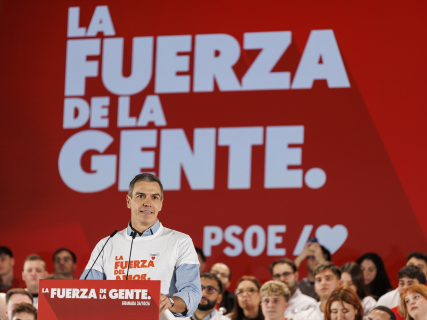

If the polls don’t miss, Pedro Sánchez will not be president of the Government of Spain in the next legislature. His more than possible exit from La Moncloa will undoubtedly reopen the debate about a possible reshuffling at the helm of the PSOE. Since he took over leadership of his party, critical moves have followed one another around him, and the president of Castilla-La Mancha, Emiliano García-Page, was always one of the names with the most resonance.
With 10 days to go before the general elections of the 29N, the man from Castilla-La Mancha is appearing again in the debate about the future of the PSOE. According to La Razón, he would be sending signals to activate the critical sectors with Pedro Sánchez. The newspaper attributes this information to its own sources and places Page as a possible reference for those who question the course of the federal leadership.
The absence of the regional president at Sánchez’s rally in Albacete, on November 17, fanned the rumors, although it should be noted that Page was in Brussels for an institutional trip, an agenda that had already been announced in advance.
Jordi Sevilla
Socialdemocracia 21, the initiative promoted in January 2026 by former minister Jordi Sevilla, was born to open a debate about the direction of the PSOE and to claim a return to the principles of social democracy. The project was presented as a current of reflection and political action open to both socialist members and progressive citizens who are not affiliated.
Its launch was supported by a manifesto that demanded a change of political course, an autonomous socialist project and greater attention to citizens’ problems. The document questioned the alliance strategy of the PSOE and defended recovering dialogue, agreements on matters of State, and robust public services.
In May, after the Andalusian elections, the platform stepped in again to call for the resignation of María Jesús Montero from her organizational responsibilities, to advance the meeting of the Federal Committee and to open an internal debate “real, free and deep”. In the following months, Jordi Sevilla continued spreading proposals and reflections linked to Socialdemocracia 21, including a set of ten measures on housing, infrastructure, health, salaries and regional financing.
Reactivate
Another critical move was Reactiva, the opinion collective formed by critical socialist militants with the leadership of Pedro Sánchez, which took shape publicly in early June 2026 with a meeting at the headquarters of UGT in Madrid. The group brought its demands to the Federal Committee of the PSOE through a letter in which it demanded general elections before the end of the year and the replacement of the leadership with a Management Commission that would organize an extraordinary congress.
In the document, Reactiva described a “credibility crisis” aggravated, in its view, by cases of alleged corruption and by political decisions that it considered to be far from social-democratic principles. It also called for opening an internal debate about the situation of the party and argued that its acronyms belong to the militants and voters, not to a leadership or a specific leader.
The collective continued its activity during the summer. In early July, it held a presentation event in Barcelona to extend its initiative among PSC militants and to express its rejection of pacts with the independentist movement. The spokesperson Roberto González then reiterated that Reactiva was calling for Sánchez’s exit from the leadership and the calling of elections and an extraordinary congress.
Its latest public statement is from August. Reactiva denounced that different regional leaderships of the PSOE were pressuring militants to withdraw publications or stop expressing criticism of the management of the migration crisis in Ceuta. The group demanded explanations from the federal leadership and argued that internal disagreement should be able to be expressed without reprisals.