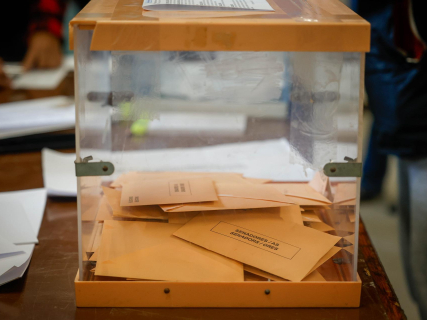
Radiography of the scrutiny of 29N: the PP leads in 11 autonomous communities and the PSOE in five

The Populars lead the count in all provinces of Galicia, Castile and León, Castile-La Mancha, Aragon and the Valencian Community. The Socialists lead in Extremadura, Asturias, Navarre, Catalonia and the Basque Country.

fotonoticia 20261129210617 1920

fotonoticia 20261129210617 1920

Add DEMÓCRATA to Google

Ask FREN

Published

Last updated

6 minutes

Most read

Resultados de las elecciones generales del 29N en directo

Elecciones generales del 29 de noviembre de 2026 · Congreso de los DiputadosSenado

Escrutado: 43,00 %Votantes: 12.251.876Participación: 79,24 % (+12,65 pts vs 2023)

Datos de las 21:45 · Avances de participación: 14:00: 45,73 % (40,48 % en 2023) · 18:00: 68,15 % (53,12 % en 2023)

Votos

PartidoEscañosVotosPorcentaje
PP135 −23.869.65231,93 %
PP: 135 escaños. Se presenta con estos nombres:
  • PARTIDO POPULAR (PP)125 escaños
  • PARTIT POPULAR / PARTIDO POPULAR (PP)8 escaños
  • UNIÓN DEL PUEBLO NAVARRO EN COALICIÓN CON EL PARTIDO POPULAR (UPN-PP)2 escaños
PSOE119 −23.611.92229,80 %
PSOE: 119 escaños. Se presenta con estos nombres:
  • PARTIDO SOCIALISTA OBRERO ESPAÑOL (PSOE)83 escaños
  • PARTIT DELS SOCIALISTES DE CATALUNYA (PSC-PSOE)15 escaños
  • PARTIDO SOCIALISTA DE EUSKADI-EUSKADIKO EZKERRA (PSOE)7 escaños
  • PARTIDO DOS SOCIALISTAS DE GALICIA-PSOE (PSdeG-PSOE)8 escaños
  • PARTIDO SOCIALISTA DE NAVARRA-PSOE (PSN-PSOE)2 escaños
  • PARTIDO SOCIALISTA DE LAS ISLAS BALEARES (PSIB-PSOE)2 escaños
  • PARTIDO SOCIALISTA DE HUELVA (PSOE)2 escaños
Vox49 +161.861.78915,36 %
Frente Amplio13 −18710.1215,86 %
Frente Amplio: 13 escaños. Se presenta con estos nombres:
  • FRENTE AMPLIO (FA)5 escaños
  • COMPROMÍS: FRONT VALENCIÀ (COMPROMIS-EUPV-PODEM-ERPV)3 escaños
  • COMUNS-FRONT AMPLI3 escaños
  • CHUNTA ARAGONESISTA-FRENTE AMPLIO ARAGÓN (CHA-IU-MS-FRENTE AMPLIO)1 escaño
  • FRENTE AMPLIO ANDALUZ (FA)0 escaños
  • FRENTE AMPLIU POR ASTURIES (FA)0 escaños
  • ARAMÉS-FRONT AMPLI (ARAMÉS-EU-MS)1 escaño
  • FRENTE AMPLIO-FRONTE ZABALA0 escaños
  • FRENTE AMPLIO-FRONTE AMPLA0 escaños
  • FRENTE AMPLIO - FRONTE AMPLA0 escaños
  • UNIDAD DEL PUEBLO CANARIO UPC (NC-BC, PODEMOS, IU, SUMAR)0 escaños
ERC11 +4373.7633,08 %
EH Bildu7 +1401.9323,32 %
Junts5 −2191.2041,58 %
Adelante4 +4223.4791,84 %
EAJ-PNV3 −2217.7681,80 %
BNG2 +1127.4921,05 %
CCa2 +112430,01 %
CCa: 2 escaños. Se presenta con estos nombres:
  • MUNICIPALISTAS PRIMERO CANARIAS-COALICIÓN CANARIA (1.ºCAN-CCa)1 escaño
  • COALICIÓN CANARIA-MUNICIPALISTAS PRIMERO CANARIAS (CCa-1ºCAN)1 escaño
SALF0177.8011,47 %
SALF: 0 escaños. Se presenta con estos nombres:
  • SE ACABÓ LA FIESTA (SALF)0 escaños
  • SE ACABO LA FIESTA (SALF)0 escaños
FO0 =38.0410,31 %
Podemos034.6990,29 %
PACMA0 =32.5790,27 %
PACMA: 0 escaños. Se presenta con estos nombres:
  • PARTIDO ANIMALISTA CON EL MEDIO AMBIENTE (PACMA)0 escaños
  • PARTIT ANIMALISTA AMB EL MEDI AMBIENT (PACMA)0 escaños
ALHORA024.2870,20 %
PCTE0 =13.9370,11 %
PCTE: 0 escaños. Se presenta con estos nombres:
  • PARTIDO COMUNISTA DE LOS TRABAJADORES DE ESPAÑA (PCTE)0 escaños
  • PARTIT COMUNISTA DELS TREBALLADORS DE CATALUNYA (PCTE)0 escaños
  • PARTIDO COMUNISTA DE LOS TRABAJADORES DE EUSKADI/EUSKADIKO LANGILEEN ALDERDI KOMUNISTA (PCTE)0 escaños
  • PARTIDO COMUNISTA DOS TRABALLADORES DA GALIZA (PCTE)0 escaños
  • EUSKADIKO LANGILEEN ALDERDI KOMUNISTA/PARTIDO COMUNISTA DE LOS TRABAJADORES DE EUSKADI (PCTE)0 escaños
D21011.6900,10 %
MUNDO+JUSTO094700,08 %
MUNDO+JUSTO: 0 escaños. Se presenta con estos nombres:
  • POR UN MUNDO MAS JUSTO (MUNDO+JUSTO)0 escaños
  • POR UN MUNDO MAIS XUSTO (MUNDO+JUSTO)0 escaños
  • POR UN MUNDO MÁS JUSTO (MUNDO+JUSTO)0 escaños
ESCAÑOS EN BLANCO0 =72470,06 %
ESCAÑOS EN BLANCO: 0 escaños. Se presenta con estos nombres:
  • ESCAÑOS EN BLANCO PARA DEJAR ESCAÑOS VACÍOS (ESCAÑOS EN BLANCO)0 escaños
  • ESCANOS EN BRANCO PARA DEIXAR ESCANOS BALEIROS (ESCAÑOS EN BLANCO)0 escaños
  • ESCAÑOS EN BLANCO PARA DEJAR ESCAÑOS VACIOS (ESCAÑOS EN BLANCO)0 escaños
TERUEL EXISTE044300,04 %
GBAI0 =29960,02 %
FE de las JONS0 =26370,02 %
FE de las JONS: 0 escaños. Se presenta con estos nombres:
  • FALANGE ESPAÑOLA DE LAS J.O.N.S. (FE de las JONS)0 escaños
  • FALANGE ESPAÑOLA DE LAS JONS (FE de las JONS)0 escaños
NEX022970,02 %
SY0 =19270,02 %
PREPAL0 =14110,01 %
VLC013240,01 %
IE011490,01 %
AGENDA VALENCIANA010140,01 %
PARTIDO AUTÓNOMOS0 =10020,01 %
FIA07920,01 %
3e0 =7630,01 %
2905690,00 %
PH0 =4320,00 %
PANCAL-URCI03420,00 %
RRB03090,00 %
P. ALANTRE02840,00 %
EGUZKILORE02110,00 %
PUEDE0 =1710,00 %
CNV01140,00 %
PFAC01130,00 %
P.D.S.J.E.0700,00 %
D.R.G0410,00 %
LIB0130,00 %
PCPC070,00 %

Los partidos que se presentan con varios nombres van juntos: pasa por encima del ? para ver el detalle. Porcentajes sobre votos válidos. Junto a los escaños, la diferencia con el 23J (en los votos, cuando termina el escrutinio).

Escaños (350)

Mayoría: 176
PP: 137 escaños en 2023PSOE: 121 escaños en 2023Vox: 33 escaños en 2023Sumar: 31 escaños en 2023ERC: 7 escaños en 2023EH Bildu: 6 escaños en 2023Junts: 7 escaños en 2023EAJ-PNV: 5 escaños en 2023BNG: 1 escaño en 2023CCa: 1 escaño en 20231371213331PP: 135 escaños en 2026 (PARTIDO POPULAR: 125; PARTIT POPULAR / PARTIDO POPULAR: 8; UNIÓN DEL PUEBLO NAVARRO EN COALICIÓN CON EL PARTIDO POPULAR: 2)PSOE: 119 escaños en 2026 (PARTIDO SOCIALISTA OBRERO ESPAÑOL: 83; PARTIT DELS SOCIALISTES DE CATALUNYA (PSC-PSOE): 15; PARTIDO SOCIALISTA DE EUSKADI-EUSKADIKO EZKERRA (PSOE): 7; PARTIDO DOS SOCIALISTAS DE GALICIA-PSOE: 8; PARTIDO SOCIALISTA DE NAVARRA-PSOE: 2; PARTIDO SOCIALISTA DE LAS ISLAS BALEARES: 2; PARTIDO SOCIALISTA DE HUELVA: 2)Vox: 49 escaños en 2026Frente Amplio: 13 escaños en 2026 (FRENTE AMPLIO: 5; COMPROMÍS: FRONT VALENCIÀ: 3; COMUNS-FRONT AMPLI: 3; CHUNTA ARAGONESISTA-FRENTE AMPLIO ARAGÓN: 1; FRENTE AMPLIO ANDALUZ: 0; FRENTE AMPLIU POR ASTURIES: 0; ARAMÉS-FRONT AMPLI: 1; FRENTE AMPLIO-FRONTE ZABALA: 0; FRENTE AMPLIO-FRONTE AMPLA: 0; FRENTE AMPLIO - FRONTE AMPLA: 0; UNIDAD DEL PUEBLO CANARIO UPC: 0)ERC: 11 escaños en 2026EH Bildu: 7 escaños en 2026Junts: 5 escaños en 2026Adelante: 4 escaños en 2026EAJ-PNV: 3 escaños en 2026BNG: 2 escaños en 2026CCa: 2 escaños en 2026 (MUNICIPALISTAS PRIMERO CANARIAS-COALICIÓN CANARIA: 1; COALICIÓN CANARIA-MUNICIPALISTAS PRIMERO CANARIAS: 1)13511949132026202620232023
  • PP 135 −2
  • PSOE 119 −2
  • Vox 49 +16
  • Frente Amplio 13 −18
  • ERC 11 +4
  • EH Bildu 7 +1
  • Junts 5 −2
  • Adelante 4 +4
  • EAJ-PNV 3 −2
  • BNG 2 +1
  • CCa 2 +1

Fuera, el reparto del 29N; dentro, el del 23J de 2023.

Simulador de Pactos

Pulsa los partidos para sumar sus escaños.Abrir el Simulador de Pactos

Los escaños más ajustados

Quién tiene el último escaño, quién le sigue y los votos que le faltan
  1. CuencaPPyVOX93 votos

    El último escaño de Cuenca (el 3.º) es para el PP. Le sigue VOX, que necesitaría 93 votos más para quitárselo. Ver Cuenca ›

  2. Santa Cruz de TenerifeVOXyPP117 votos

    El último escaño de Santa Cruz de Tenerife (el 7.º) es para VOX. Le sigue el PP, que necesitaría 117 votos más para quitárselo. Ver Santa Cruz de Tenerife ›

  3. GranadaPSOEyVOX226 votos

    El último escaño de Granada (el 7.º) es para el PSOE. Le sigue VOX, que necesitaría 226 votos más para quitárselo. Ver Granada ›

  4. Las PalmasPSOEyNC-BC, PODEMOS, IU, SUMAR272 votos

    El último escaño de Las Palmas (el 8.º) es para el PSOE. Le sigue NC-BC, PODEMOS, IU, SUMAR, que necesitaría 272 votos más para quitárselo. Ver Las Palmas ›

  5. AsturiasPSOEyFA280 votos

    El último escaño de Asturias (el 7.º) es para el PSOE. Le sigue FA, que necesitaría 280 votos más para quitárselo. Ver Asturias ›

Ver todas las provincias y el mapa

Provincias donde el último escaño cambiaría de manos con menos votos, con lo escrutado hasta ahora. Pulsa una para ver el detalle.

Senado

3,48 % escrutado
PartidoSenadores
PP98 −22
Senado de ProgresoSenado de Progreso: 74 senadoresSe presenta con estos nombres:
  • SDP (PSOE, IU, MS, MM, COMPROMIS, CHA, BATZARRE)62
  • PSC6
  • SDP (PSOE-MS)3
  • PSIB-PSOE-MÉS PER MALLORCA-SUMAR-EUIB1
  • PSOE-MS1
  • SDP (PSOE-IUN NEB-MS-BATZARRE)1
74 +1
EH Bildu10 +6
ERC8 +5
Junts2 +1
EAJ-PNV0 −4
UPN0 −1
A.H.I.0 −1
ASG0 −1

Junto a los senadores, la diferencia con el 23J. Los partidos que se presentan con varios nombres van juntos: pasa por encima para ver el detalle. Baleares y Canarias eligen sus senadores por islas.

Senadores (209)

Elegidos en las urnas
PP: 120 senadores en 2023PSOE: 73 senadores en 2023 (PSOE: 48; PSC: 12; PSdeG-PSOE: 4; PSE-EE (PSOE): 4; PSN-PSOE: 3; PSIB-PSOE: 1; PSOE-SUMAR-EUIB-ARA EIVISSA: 1)EH Bildu: 4 senadores en 2023EAJ-PNV: 4 senadores en 2023ERC: 3 senadores en 2023 (ERC-ESQUERRES PER LA INDEPENDÈNCIA: 2; ERC: 1)Junts: 1 senador en 2023UPN: 1 senador en 2023A.H.I.: 1 senador en 2023ASG: 1 senador en 202312073PP: 98 senadores en 2026Senado de Progreso: 74 senadores en 2026 (SDP (PSOE, IU, MS, MM, COMPROMIS, CHA, BATZARRE): 62; PSC: 6; SDP (PSOE-MS): 3; PSIB-PSOE-MÉS PER MALLORCA-SUMAR-EUIB: 1; PSOE-MS: 1; SDP (PSOE-IUN NEB-MS-BATZARRE): 1)EH Bildu: 10 senadores en 2026ERC: 8 senadores en 2026Junts: 2 senadores en 202698741082026202620232023
  • PP 98 −22
  • Senado de Progreso 74 +1
  • EH Bildu 10 +6
  • ERC 8 +5
  • Junts 2 +1

192 de 209 senadores asignados. Fuera, el reparto del 29N; dentro, el del 23J de 2023. Los senadores designados por los parlamentos autonómicos no se eligen esta noche.

Mapa

Ganador por provincia

    CanariasCeutaMelillaAraba/Álava: PSE-EE (PSOE) 29,7 %Albacete: PP 40,7 %Alicante/Alacant: PP 35,7 %Almería: PP 39,1 %Ávila: PP 47,4 %Badajoz: PP 38,7 %Illes Balears: PP 34,2 %Barcelona: PSC 29,9 %Burgos: PP 40,5 %Cáceres: PSOE 38,8 %Cádiz: PP 30,5 %Castellón/Castelló: PP 33,4 %Ciudad Real: PP 42,4 %Córdoba: PP 35,3 %A Coruña: PP 42,8 %Cuenca: PP 39,7 %Girona: PSC 28,3 %Granada: PP 33,8 %Guadalajara: PP 37,1 %Gipuzkoa: EH BILDU 38,9 %Huelva: PP 33,3 %Huesca: PP 37,8 %Jaén: PP 35,4 %León: PP 39,6 %Lleida: PSC 27,0 %La Rioja: PP 39,3 %Lugo: PP 51,4 %Madrid: PP 39,9 %Málaga: PP 35,2 %Murcia: PP 40,0 %Navarra: PSN-PSOE 32,4 %Ourense: PP 51,2 %Asturias: PP 33,5 %Palencia: PP 43,0 %Las Palmas: PSOE 31,0 %Pontevedra: PP 39,9 %Salamanca: PP 48,0 %Santa Cruz de Tenerife: PP 28,0 %Cantabria: PP 42,8 %Segovia: PP 44,9 %Sevilla: PP 30,5 %Soria: PP 46,0 %Tarragona: PSC 29,9 %Teruel: PP 36,3 %Toledo: PP 37,6 %Valencia/València: PP 33,0 %Valladolid: PP 43,7 %Bizkaia: PSE-EE (PSOE) 28,5 %Zamora: PP 44,0 %Zaragoza: PP 36,6 %Ceuta: PP 49,7 %Melilla: PSOE 66,0 %

    Pulsa una provincia para ver sus resultados y elegir municipio.

    Mapa

    Partido con más senadores por provincia

    CanariasCeutaMelillaAraba/Álava: EH BILDU-ERC, 3 de 4 senadoresAlbacete: PP, 3 de 4 senadoresAlicante/Alacant: PP, 2 de 4 senadoresAlmería: PP, 3 de 4 senadoresÁvila: PP, 3 de 4 senadoresBadajoz: PP, 2 de 4 senadoresIlles Balears: PP, 3 de 6 senadoresBarcelona: PSOE, 3 de 4 senadoresBurgos: PP, 3 de 4 senadoresCáceres: PP, 3 de 4 senadoresCádiz: PP, 3 de 4 senadoresCastellón/Castelló: PP, 3 de 4 senadoresCiudad Real: Senado de Progreso, 3 de 4 senadoresCórdoba: Senado de Progreso, 3 de 4 senadoresA Coruña: PP, 3 de 4 senadoresCuenca: PP, 3 de 4 senadoresGirona: JxCat, 2 de 4 senadoresGranada: Senado de Progreso, 3 de 4 senadoresGuadalajara: PP, 3 de 4 senadoresGipuzkoa: EH BILDU-ERC, 3 de 4 senadoresHuelva: Senado de Progreso, 3 de 4 senadoresHuesca: PP, 2 de 4 senadoresJaén: Senado de Progreso, 3 de 4 senadoresLeón: PP, 3 de 4 senadoresLleida: ERC-EH BILDU, 3 de 4 senadoresLa Rioja: PP, 3 de 4 senadoresLugo: PP, 3 de 4 senadoresMadrid: Senado de Progreso, 3 de 4 senadoresMálaga: PP, 3 de 4 senadoresMurcia: Senado de Progreso, 3 de 4 senadoresNavarra: EH BILDU-ERC, 3 de 4 senadoresOurense: PP, 3 de 4 senadoresAsturias: PP, 2 de 4 senadoresPalencia: PP, 3 de 4 senadoresLas PalmasPontevedra: PP, 3 de 4 senadoresSalamanca: PP, 3 de 4 senadoresSanta Cruz de TenerifeCantabria: PP, 3 de 4 senadoresSegovia: PP, 3 de 4 senadoresSevilla: Senado de Progreso, 3 de 4 senadoresSoria: PP, 3 de 4 senadoresTarragona: ERC-EH BILDU, 2 de 4 senadoresTeruel: PP, 3 de 4 senadoresToledo: Senado de Progreso, 3 de 4 senadoresValencia/València: PP, 3 de 4 senadoresValladolid: PP, 3 de 4 senadoresBizkaia: Senado de Progreso, 3 de 4 senadoresZamora: PP, 3 de 4 senadoresZaragoza: PP, 3 de 4 senadoresCeutaMelilla

    Pulsa una provincia para ver sus senadores y candidatos.

    Escrutinio provisional del Ministerio del Interior; se actualiza cada minuto. Mapas: Instituto Geográfico Nacional (es-atlas, CC BY 4.0). Demócrata.

    The scrutiny of the general elections of 29N draws a territorial map favorable to the Partido Popular. The PP leads the count in 11 autonomous communities and the two autonomous cities, against the five regions in which it leads the PSOE. With the results from Canarias still pending, the socialists maintain the top position in Cataluña, Extremadura, Asturias, Navarra and País Vasco.

    The PP’s territorial advantage is also reflected in the provincial distribution. Of the 50 constituencies with available results, the populares lead in 35 and the socialists in 14. EH Bildu, in Gipuzkoa, is the only formation that, for the time being, breaks the division between the two major parties.

    The highest PP vote percentages are recorded in Ceuta (60.2%), Ourense (53.3%) and Lugo (53.2%), while the PSOE finds its best figures among the provinces it leads in Cáceres (39.7%) and Badajoz (38.6%).

    Territorial x-ray of 29N

    First political force during the count

    Results by autonomous community
    11 PP
    5 PSOE
    1 No data

    17 autonomous communities. The PP also leads in Ceuta and Melilla.


    Results by constituency
    35 PP
    14 PSOE
    1 EH Bildu
    2 No data

    Each box represents one of the 52 electoral constituencies, not a seat.

    Provisional data | Prepared by: DEMÓCRATA.

    The PP leads in all provinces of Galicia and the two Castillas

    Galicia is the autonomous community in which the Partido Popular, for the time being, obtains its highest share of votes, with 47.3% of the ballots. The conservatives top the count in the four Galician provinces and exceed 50% of the votes in Ourense and Lugo.

    They also lead in the nine provinces of Castilla y León, where they reach 44.1% of the votes jointly. The records of Ávila (49.1%), Salamanca (49%) and Soria (47.9%) stand out.

    In Castilla-La Mancha, the PP stands as the leading force in all five constituencies, with 40.4% of the regional vote. Ciudad Real, with 41.9%, is the Manchego province in which it obtains its best percentage result.

    The territorial leadership of the conservatives also extends to Aragón and the Comunidad Valenciana, where they head the count in all their provinces. In Madrid, the party reaches 38.8% of the votes.

    The PSOE leads in the four Catalan provinces and across all Extremadura

    The PSC stands as the leading force in the four Catalan constituencies, with 29.9% of the votes across the whole of the autonomous community. The Catalan socialists achieve their best percentages in Tarragona (30.8%) and Barcelona (30.5%), followed by Girona (27.5%) and Lleida (26.6%).

    Extremadura is the community in which the PSOE records its highest share of votes among those in which it leads, with 39%. The socialists head the count in both Cáceres and Badajoz.

    They also maintain first position in Asturias, with 33.5%, and Navarra, with 33.1%.

    Andalucía is split equally between PP and PSOE

    Although the PP tops the regional count in Andalucía with 31.8% of the votes, conservatives and socialists share equally the leadership of the eight Andalusian provinces.

    The PP is the leading force in Almería (37.9%), Córdoba (34%), Málaga (33.3%) and Cádiz (29.8%). The PSOE, for its part, leads in Huelva (36.5%), Jaén (35.6%), Sevilla (33.9%) and Granada (33.4%).

    EH Bildu breaks the territorial split between PP and PSOE in Gipuzkoa

    The Basque Country presents a particular feature with respect to the rest of the electoral map. The PSE-EE is provisionally leading the regional count with 28% of the votes and holds first place in Álava and Bizkaia.

    In Gipuzkoa, however, EH Bildu heads the scrutiny with 39.5% of the votes. For the moment, it is the only formation other than the PP and the PSOE that leads the count in some of the constituencies with available data.

    Results of the general elections of 29N by autonomous communities

    Autonomous community First force Vote (%)
    Andalusia PP 31,8%
    Aragon PP 36,2%
    Asturias PSOE 33,5%
    Balearic Islands PP 34,7%
    Canary Islands Pending —
    Cantabria PP 42,0%
    Castile-La Mancha PP 40,4%
    Castile and León PP 44,1%
    Catalonia PSC-PSOE 29,9%
    Valencian Community PP 33,3%
    Extremadura PSOE 39,0%
    Galicia PP 47,3%
    La Rioja PP 39,6%
    Madrid PP 38,8%
    Murcia PP 39,4%
    Navarre PSN-PSOE 33,1%
    Basque Country PSE-EE 28,0%
    Ceuta PP 60,2%
    Melilla PP 45,5%

    Provisional results subject to the evolution of the scrutiny. Prepared by: DEMÓCRATA.

    Results of the general elections of 29N by provinces

    Constituency First force Vote (%)
    A Coruña PP 44,9%
    Albacete PP 40,5%
    Alicante PP 34,7%
    Almería PP 37,9%
    Álava PSE-EE 30,3%
    Asturias PSOE 33,5%
    Ávila PP 49,1%
    Badajoz PSOE 38,6%
    Balearic Islands PP 34,7%
    Barcelona PSC 30,5%
    Bizkaia PSE-EE 28,9%
    Burgos PP 40,7%
    Cáceres PSOE 39,7%
    Cádiz PP 29,8%
    Cantabria PP 42,0%
    Castellón PP 32,7%
    Ceuta PP 60,2%
    Ciudad Real PP 41,9%
    Córdoba PP 34,0%
    Cuenca PP 40,6%
    Gipuzkoa EH Bildu 39,5%
    Girona PSC 27,5%
    Granada PSOE 33,4%
    Guadalajara PP 37,9%
    Huelva PSOE 36,5%
    Huesca PP 38,0%
    Jaén PSOE 35,6%
    La Rioja PP 39,6%
    Las Palmas Pending —
    León PP 40,2%
    Lleida PSC 26,6%
    Lugo PP 53,2%
    Madrid PP 38,8%
    Málaga PP 33,3%
    Melilla PP 45,5%
    Murcia PP 39,4%
    Navarre PSN-PSOE 33,1%
    Ourense PP 53,3%
    Palencia PP 44,2%
    Pontevedra PP 41,9%
    Salamanca PP 49,0%
    Santa Cruz de Tenerife Pending —
    Segovia PP 46,6%
    Sevilla PSOE 33,9%
    Soria PP 47,9%
    Tarragona PSC 30,8%
    Teruel PP 36,9%
    Toledo PP 38,8%
    Valencia PP 32,8%
    Valladolid PP 44,1%
    Zamora PP 44,9%
    Zaragoza PP 35,6%

    Percentage of the vote of the candidacy that heads the count in each constituency. Prepared by: DEMÓCRATA.

    The weight of the large constituencies in the allocation of seats

    Leading in a greater number of provinces or autonomous communities does not, by itself, guarantee a sufficient parliamentary majority to govern. The 350 seats of the Congress are distributed among 52 constituencies with an uneven demographic and parliamentary weight.

    Madrid and Barcelona, due to their high representation in the Lower House, have special relevance in the shaping of parliamentary majorities. In the first, the PP currently leads with 38.8% of the votes, while in Barcelona the PSC occupies the first position with 30.5%.

    The two Canary Islands constituencies are the only ones for which data is still not available in this progress report of the count.

    More key points, information and questions with FREN

    AI-GENERATED CONTENT

    At what stage of processing is the official proclamation of the election results after 29N, and what are the next steps according to Spanish electoral legislation?

    As of November 29, 2026, the official proclamation of the elected candidates from 29N has not yet occurred: today is election day and the general scrutiny will begin afterward. The results disseminated during the night are provisional and do not equate to the definitive legal allocation of seats. The next steps are provincial scrutiny, claims and appeals, proclamation of elected candidates, and publication of results in the BOE.

    1. Current situation: election day and provisional count

    The call comes from the Royal Decree 806/2026, which set the elections for this Sunday. At the end of voting, each polling station conducts a public count: first counting the ballots for the Congress and then those for the Senate, documenting incidents and issuing the corresponding records.

    The Ministry of the Interior disseminates the data from these records for informational purposes. Even if the count reaches 100% of the polling stations, it is still not the official proclamation, because the general scrutiny and incorporation of votes from permanent residents abroad are missing. This is explained by Demócrata regarding the procedure.

    2. General scrutiny: from December 4 to 7

    The next milestone will be Friday, December 4, when the provincial electoral boards will begin the general scrutiny, which must conclude by Monday the 7th at the latest. This is the official verification of the records and the summation of results from each constituency.

    Before this tally, votes from the CERA, the census of Spaniards permanently residing abroad, will be incorporated. The boards will review the records and correct material, factual, or arithmetic errors. Therefore, the provisional distribution of seats from election night may still change.

    3. Claims and administrative appeals

    According to the calendar published for 29N, the upcoming deadlines are:

    • From December 4 to 8: submission of claims before the provincial boards, depending on when the corresponding scrutiny ends.
    • Until December 9: resolution and communication of decisions by the provincial boards.
    • Until December 15: resolution by the Central Electoral Board of appeals filed.

    These dates are the margins of the electoral calendar: they do not mean all provinces must wait until the last day. The duration will depend on the claims and appeals in each constituency.

    4. Proclamation of elected candidates and judicial challenge

    The proclamation is scheduled between December 8 and 16. It is important to distinguish competencies: in elections to the Congress and Senate, the provincial electoral boards proclaim the elected candidates of their respective constituencies; the Central Electoral Board resolves the appeals that correspond to it and subsequently publishes the general results.

    An electoral contentious appeal — a challenge before the courts — can be filed against the proclamation before the Supreme Court within three following days. Therefore, proclamation and judicial finality are not necessarily simultaneous.

    5. Publication in the BOE and constitution of the Chambers

    The Central Electoral Board will publish the general and constituency results in the BOE within the legal period of forty days from the proclamation of elected candidates. This publication should not be confused with the prior issuance of credentials to deputies and senators.

    The constitution of the Chambers is scheduled for December 23. In the Congress, the Chamber's Regulations require, to fully acquire the status of deputy, presenting the credential, completing the declaration of activities, and taking an oath or promise to uphold the Constitution. These are subsequent and distinct procedures from the electoral proclamation.

    What are the main competencies and functions of the president of the Partido Popular and the secretary general of the PSOE according to their party statutes?

    The PP statutes assign to its president the highest responsibility of the party, its political and legal representation, and the presidency of its main governing bodies. For the secretary general of the PSOE, the consulted sources have not allowed verification of the current statutory text or its articles: therefore, I cannot offer a complete comparison attributing specific competencies without documentary support.

    President of the Partido Popular

    Article 44.1 of the statutes approved at the XXI National Congress of the PP, held in 2025, sets out the powers of the Presidency. The provision refers to the president at each territorial level; applied nationally, it establishes the following main functions:

    • Highest responsibility. The president is the highest responsible of the party. This position places them at the head of the organization, although their powers must be exercised alongside the competencies recognized to collegiate bodies by the statutes.
    • Political and legal representation. Holds both political and legal representation of the Partido Popular. The provision thus combines a political representation function and one related to the legal actions of the organization.
    • Presidency of governing bodies. Presides over the Board of Directors and the Executive Committee corresponding to their scope. At the national level, this includes the National Board of Directors and the National Executive Committee.
    • Casting vote. Has a casting vote when there is a tie in sessions of those bodies. This is a power to resolve ties, not a substitution of the collegiate decision.
    • Execution of agreements. Takes necessary measures to execute and develop the agreements of the Congress, territorial governing bodies, and other bodies with superior statutory competence.
    • Proposal of appointments. Proposes to the Executive Committee the appointments of the secretary general, general coordinator, deputy secretaries general, coordinators, secretaries, and director general of Finance and Organization. The distinction is important: the expressly identified function is to propose these appointments to the competent body, not to make them unilaterally.

    These powers can be consulted in the 2025 PP Statutes, whose approval is also recorded on the XXI Congress page.

    Relationship with the PP General Secretariat

    Article 44.2 helps to delimit the presidential position: the secretary general executes, under the direction of the president, the agreements, guidelines, and decisions of the Executive Committee and the Board of Directors. They also coordinate activity areas, direct party services, and exercise leadership over its personnel. This distribution allows distinguishing the superior responsibility of the Presidency from the executive and organizational tasks of the General Secretariat, without confusing the two positions.

    Secretary general of the PSOE: necessary clarification

    No verifiable official text of the current Federal Statutes of the PSOE has been located in the consulted sources that allows identifying and citing the powers of its secretary general. Consequently, the necessary articles to detail their political, organic, and representative functions are not included here with the same degree of precision.

    It would not be correct to automatically transfer the competencies of the PP president to them, nor to deduce them from the title of the position or its public relevance. To respond exactly "according to the statutes," it is necessary to distinguish which powers correspond personally to the secretary general and which belong to the Federal Executive Commission, the Federal Committee, or the Federal Congress. The part relating to the PP is thus documented; that of the PSOE remains without equivalent verification.

    What was the composition of the Congress of Deputies after the previous general elections in Spain?

    After the previous general elections, held on July 23, 2023, the Congress of Deputies was composed of 350 deputies, distributed among eleven candidacies. The Partido Popular obtained the largest representation, with 137 seats, followed by the PSOE, with 121. No candidacy alone reached an absolute majority, set at 176 deputies.

    The complete distribution of seats

    The composition resulting from those elections was as follows, according to the official BOE results:

    • Partido Popular (PP): 137 deputies. It was the candidacy with the most seats and obtained 16 more than the PSOE.
    • Spanish Socialist Workers' Party (PSOE): 121 deputies. Occupied the second position by representation in the Chamber.
    • Vox: 33 deputies. Was the third candidacy by number of seats.
    • Sumar: 31 deputies. Ranked fourth. This result corresponds to the joint candidacy presented in 2023, which included Podemos.
    • Esquerra Republicana de Catalunya (ERC): 7 deputies. Obtained the same number of representatives as Junts.
    • Junts per Catalunya: 7 deputies. Shared the fifth place by number of seats with ERC.
    • EH Bildu: 6 deputies. Was one seat below ERC and Junts.
    • Basque Nationalist Party (EAJ-PNV): 5 deputies. Completed the set of candidacies that obtained more than one representative.
    • Galician Nationalist Bloc (BNG): 1 deputy.
    • Canarian Coalition (CC): 1 deputy.
    • Navarrese People's Union (UPN): 1 deputy.
    What that distribution meant

    The main fact is that winning seats did not equate to having an absolute majority. The 137 PP deputies were 39 short of the threshold of 176. The 121 PSOE deputies were 55 short. Therefore, neither of the two candidacies could reach that figure solely with their own representatives. The complete distribution can also be consulted in the RTVE results.

    The sum of PP and Vox was 170 deputies: six less than necessary to reach an absolute majority. If the UPN representative was added, the total rose to 171, still five below that threshold. These are arithmetic sums of the results, not a description of how those formations voted afterward.

    On the other hand, PSOE and Sumar gathered 152 deputies: 121 plus 31. That sum was 24 seats short of the absolute majority. The other seven candidacies — ERC, Junts, EH Bildu, PNV, BNG, Canarian Coalition, and UPN — jointly had 28 representatives. Thus, the distribution did not give an absolute majority to either PP with Vox or PSOE with Sumar.

    Electoral result and subsequent changes

    It is important to distinguish the composition resulting from the polls from the subsequent parliamentary organization. The 31 seats of Sumar include deputies elected within that candidacy, including Podemos. Other five Podemos deputies should not be added separately to Sumar's electoral result, as that would count them twice.

    Later, the five Podemos deputies left the Sumar Parliamentary Group, as reported by Demócrata in December 2023. That change affected the distribution among groups but not the July election results. Therefore, to answer how the Congress was composed after those elections, the reference is the initial distribution: 137, 121, 33, and 31 seats for the top four candidacies and 28 for the rest.

    Play

    Test your knowledge with FREN!

    How much do you know about this topic? Answer the following 3 questions.

    In how many autonomous communities does the PP lead the provisional count of the November 29 elections?

    Question 1 of 3

    Which political party leads the count in the province of Gipuzkoa?

    Question 2 of 3

    In which Galician provinces does the PP exceed 50% of the votes according to the provisional count?

    Question 3 of 3