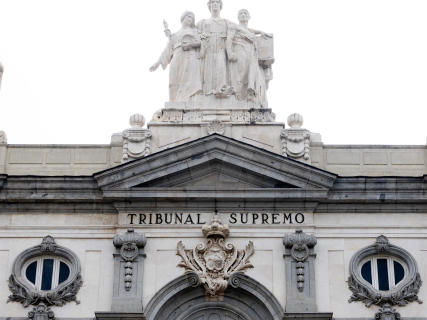
The Supreme Court upholds the suspension of voting by the “grandchildren’s law” and denies having expanded the number of those affected to three days before 29N

The highest court maintains the precautionary measures on the initial list of 163,355 naturalized persons, regardless of their place of residence, and dismisses the appeals filed against the suspension

fotonoticia 20261116103255 1920

fotonoticia 20261116103255 1920

Add DEMÓCRATA to Google

Ask FREN

Published

Last updated

5 minutes

Most read

Hasta el día de las elecciones (29 de noviembre) se muestran los resultados de las elecciones generales anteriores, las del 23 de julio de 2023.

Resultados de las elecciones generales del 29N en directo

Elecciones generales del 23 de julio de 2023 · Congreso de los DiputadosSenado

Escrutado: 100,00 %Votantes: 24.952.447Participación: 66,59 %

Votos

PartidoEscañosVotosPorcentaje
PP1378.160.83733,06 %
PP: 137 escaños. Se presenta con estos nombres:
  • PARTIDO POPULAR (PP)131 escaños
  • PARTIDO POPULAR / PARTIT POPULAR (PP)5 escaños
  • PARTIT POPULAR / PARTIDO POPULAR (PP)1 escaño
PSOE1217.821.71831,68 %
PSOE: 121 escaños. Se presenta con estos nombres:
  • PARTIDO SOCIALISTA OBRERO ESPAÑOL (PSOE)85 escaños
  • PARTIT DELS SOCIALISTES DE CATALUNYA (PSC-PSOE)19 escaños
  • PARTIDO DOS SOCIALISTAS DE GALICIA-PSOE (PSdeG-PSOE)7 escaños
  • PARTIDO SOCIALISTA DE EUSKADI-EUSKADIKO EZKERRA (PSOE)5 escaños
  • PARTIDO SOCIALISTA DE ISLAS BALEARES-PSOE (PSIB-PSOE)3 escaños
  • PARTIDO SOCIALISTA DE NAVARRA-PSOE (PSN-PSOE)2 escaños
Vox333.057.00012,38 %
Sumar313.044.99612,33 %
Sumar: 31 escaños. Se presenta con estos nombres:
  • SUMAR10 escaños
  • SUMAR - EN COMÚ PODEM (SUMAR - ECP)7 escaños
  • SUMAR ANDALUCÍA (SUMAR)5 escaños
  • COMPROMÍS - SUMAR: SUMEM PER GUANYAR (SUMAR - COMPROMÍS)4 escaños
  • SUMAR GALICIA (SUMAR)2 escaños
  • SUMAR CANARIAS (SUMAR)1 escaño
  • SUMAR ARAGÓN1 escaño
  • SUMAR MÉS (MÉS PER MALLORCA-MÉS PER MENORCA-SUMAR)1 escaño
ERC7466.0201,89 %
Junts7395.4291,60 %
EH Bildu6335.1291,36 %
EAJ-PNV5277.2891,12 %
BNG1153.9950,62 %
CCa1116.3630,47 %
UPN152.1880,21 %
PACMA0169.2370,69 %
PACMA: 0 escaños. Se presenta con estos nombres:
  • PARTIDO ANIMALISTA CON EL MEDIO AMBIENTE (PACMA)0 escaños
  • PARTIT ANIMALISTA AMB EL MEDI AMBIENT (PACMA)0 escaños
CUP-PR099.6440,40 %
FO046.2740,19 %
NC-bc045.5950,18 %
PDeCAT-E-CiU032.0160,13 %
RECORTES CERO023.4210,09 %
PUM+J023.2900,09 %
PUM+J: 0 escaños. Se presenta con estos nombres:
  • POR UN MUNDO MÁS JUSTO (PUM+J)0 escaños
  • POR UN MUNDO MAIS XUSTO (PUM+J)0 escaños
  • BIDEZKO MUNDURANTZ (PUM+J)0 escaños
U.P.L.023.2010,09 %
EXISTE020.4400,08 %
EXISTE: 0 escaños. Se presenta con estos nombres:
  • TERUEL EXISTE - COALICIÓN EXISTE (EXISTE)0 escaños
  • ARAGÓN EXISTE - COALICIÓN EXISTE (EXISTE)0 escaños
PCTE013.3820,05 %
GBAI099380,04 %
SY096970,04 %
Adelante091910,04 %
JM+082930,03 %
ESCAÑOS EN BLANCO079860,03 %
XAV073620,03 %
BQEX058070,02 %
CJ056200,02 %
FE de las JONS046830,02 %
PAR041730,02 %
PCTC038750,02 %
ESPAÑA VACIADA031580,01 %
PH029020,01 %
ASTURIAS EXISTE EV023140,01 %
XH019310,01 %
VP019170,01 %
Zsi018430,01 %
VB017740,01 %
POR MI REGIÓN016980,01 %
AHORA CANARIAS-PCPC016740,01 %
PARTIDO AUTÓNOMOS014460,01 %
EVB014420,01 %
CpM012980,01 %
JxG012180,00 %
EV-PCAS-TC011840,00 %
PREPAL09640,00 %
Somos Cc09630,00 %
ALM08740,00 %
PCTG07020,00 %
F.I.A.05060,00 %
3e04840,00 %
Ud.Ca04630,00 %
ESCONS EN BLANC04620,00 %
GITV03660,00 %
PUEDE02690,00 %
EVC02650,00 %
LB02630,00 %
PCTE/ELAK02590,00 %
UNIDOS SI02530,00 %
+RDS+01650,00 %
CCD01530,00 %
FUERZA CÍVICA01150,00 %

Los partidos que se presentan con varios nombres van juntos: pasa por encima del ? para ver el detalle. Porcentajes sobre votos válidos. Resultados definitivos del 23J de 2023.

Escaños (350)

Mayoría: 176
PP: 137 escaños en 2023 (PARTIDO POPULAR: 131; PARTIDO POPULAR / PARTIT POPULAR: 5; PARTIT POPULAR / PARTIDO POPULAR: 1)PSOE: 121 escaños en 2023 (PARTIDO SOCIALISTA OBRERO ESPAÑOL: 85; PARTIT DELS SOCIALISTES DE CATALUNYA (PSC-PSOE): 19; PARTIDO DOS SOCIALISTAS DE GALICIA-PSOE: 7; PARTIDO SOCIALISTA DE EUSKADI-EUSKADIKO EZKERRA (PSOE): 5; PARTIDO SOCIALISTA DE ISLAS BALEARES-PSOE: 3; PARTIDO SOCIALISTA DE NAVARRA-PSOE: 2)Vox: 33 escaños en 2023Sumar: 31 escaños en 2023 (SUMAR: 10; SUMAR - EN COMÚ PODEM: 7; SUMAR ANDALUCÍA: 5; COMPROMÍS - SUMAR: SUMEM PER GUANYAR: 4; SUMAR GALICIA: 2; SUMAR CANARIAS: 1; SUMAR ARAGÓN: 1; SUMAR MÉS: 1)ERC: 7 escaños en 2023Junts: 7 escaños en 2023EH Bildu: 6 escaños en 2023EAJ-PNV: 5 escaños en 2023BNG: 1 escaño en 2023CCa: 1 escaño en 2023UPN: 1 escaño en 2023137121333120232023
  • PP 137
  • PSOE 121
  • Vox 33
  • Sumar 31
  • ERC 7
  • Junts 7
  • EH Bildu 6
  • EAJ-PNV 5
  • BNG 1
  • CCa 1
  • UPN 1

Simulador de Pactos

Pulsa los partidos para sumar sus escaños.Abrir el Simulador de Pactos

Los escaños más ajustados

Quién tiene el último escaño, quién le sigue y los votos que le faltan
  1. GironaJxCAT - JUNTSyPP285 votos

    El último escaño de Girona (el 6.º) es para JxCAT - JUNTS. Le sigue el PP, que necesitaría 285 votos más para quitárselo. Ver Girona ›

  2. CantabriaVOXyPP403 votos

    El último escaño de Cantabria (el 5.º) es para VOX. Le sigue el PP, que necesitaría 403 votos más para quitárselo. Ver Cantabria ›

  3. TarragonaJxCAT - JUNTSyPSC1247 votos

    El último escaño de Tarragona (el 6.º) es para JxCAT - JUNTS. Le sigue el PSC, que necesitaría 1247 votos más para quitárselo. Ver Tarragona ›

  4. AlbacetePSOEyVOX1412 votos

    El último escaño de Albacete (el 4.º) es para el PSOE. Le sigue VOX, que necesitaría 1412 votos más para quitárselo. Ver Albacete ›

  5. SalamancaPPyPSOE1495 votos

    El último escaño de Salamanca (el 4.º) es para el PP. Le sigue el PSOE, que necesitaría 1495 votos más para quitárselo. Ver Salamanca ›

Ver todas las provincias y el mapa

Provincias donde el último escaño cambiaría de manos con menos votos, con lo escrutado hasta ahora. Pulsa una para ver el detalle.

Senado

100,00 % escrutado
PartidoSenadores
PP120
PSOEPSOE: 73 senadoresSe presenta con estos nombres:
  • PSOE48
  • PSC12
  • PSdeG-PSOE4
  • PSE-EE (PSOE)4
  • PSN-PSOE3
  • PSIB-PSOE1
  • PSOE-SUMAR-EUIB-ARA EIVISSA1
73
EH Bildu4
EAJ-PNV4
ERCERC: 3 senadoresSe presenta con estos nombres:
  • ERC-ESQUERRES PER LA INDEPENDÈNCIA2
  • ERC1
3
Junts1
UPN1
A.H.I.1
ASG1

Los partidos que se presentan con varios nombres van juntos: pasa por encima para ver el detalle. Baleares y Canarias eligen sus senadores por islas.

Senadores (208)

Elegidos en las urnas
PP: 120 senadores en 2023PSOE: 73 senadores en 2023 (PSOE: 48; PSC: 12; PSdeG-PSOE: 4; PSE-EE (PSOE): 4; PSN-PSOE: 3; PSIB-PSOE: 1; PSOE-SUMAR-EUIB-ARA EIVISSA: 1)EH Bildu: 4 senadores en 2023EAJ-PNV: 4 senadores en 2023ERC: 3 senadores en 2023 (ERC-ESQUERRES PER LA INDEPENDÈNCIA: 2; ERC: 1)Junts: 1 senador en 2023UPN: 1 senador en 2023A.H.I.: 1 senador en 2023ASG: 1 senador en 20231207320232023
  • PP 120
  • PSOE 73
  • EH Bildu 4
  • EAJ-PNV 4
  • ERC 3
  • Junts 1
  • UPN 1
  • A.H.I. 1
  • ASG 1

Los senadores designados por los parlamentos autonómicos no se eligen en las urnas.

Mapa

Ganador por provincia

    CanariasCeutaMelillaAraba/Álava: PSE-EE (PSOE) 27,7 %Albacete: PP 39,9 %Alicante/Alacant: PP 36,7 %Almería: PP 40,9 %Ávila: PP 43,3 %Badajoz: PSOE 39,2 %Illes Balears: PP 35,6 %Barcelona: PSC 35,7 %Burgos: PP 40,6 %Cáceres: PSOE 38,9 %Cádiz: PP 34,8 %Castellón/Castelló: PP 35,2 %Ciudad Real: PP 40,5 %Córdoba: PP 37,9 %A Coruña: PP 43,1 %Cuenca: PP 39,8 %Girona: PSC 28,9 %Granada: PP 37,0 %Guadalajara: PP 36,3 %Gipuzkoa: EH Bildu 31,2 %Huelva: PP 36,4 %Huesca: PP 38,2 %Jaén: PP 37,3 %León: PP 36,9 %Lleida: PSC 29,5 %La Rioja: PP 45,6 %Lugo: PP 50,2 %Madrid: PP 40,6 %Málaga: PP 38,3 %Murcia: PP 41,2 %Navarra: PSN-PSOE 27,4 %Ourense: PP 50,0 %Asturias: PP 35,7 %Palencia: PP 42,0 %Las Palmas: PSOE 33,2 %Pontevedra: PP 39,7 %Salamanca: PP 46,9 %Santa Cruz de Tenerife: PP 35,4 %Cantabria: PP 42,1 %Segovia: PP 45,0 %Sevilla: PSOE 36,6 %Soria: PP 37,2 %Tarragona: PSC 32,9 %Teruel: PP 35,0 %Toledo: PP 37,8 %Valencia/València: PP 33,6 %Valladolid: PP 40,8 %Bizkaia: EAJ-PNV 26,9 %Zamora: PP 44,7 %Zaragoza: PP 36,0 %Ceuta: PP 38,8 %Melilla: PP 49,2 %

    Pulsa una provincia para ver sus resultados y elegir municipio.

    Mapa

    Partido con más senadores por provincia

    CanariasCeutaMelillaAraba/Álava: PSOE, 3 de 4 senadoresAlbacete: PP, 3 de 4 senadoresAlicante/Alacant: PP, 3 de 4 senadoresAlmería: PP, 3 de 4 senadoresÁvila: PP, 3 de 4 senadoresBadajoz: PSOE, 2 de 4 senadoresIlles Balears: PP, 3 de 6 senadoresBarcelona: PSOE, 3 de 4 senadoresBurgos: PP, 3 de 4 senadoresCáceres: PP, 2 de 4 senadoresCádiz: PP, 3 de 4 senadoresCastellón/Castelló: PP, 3 de 4 senadoresCiudad Real: PP, 3 de 4 senadoresCórdoba: PP, 3 de 4 senadoresA Coruña: PP, 3 de 4 senadoresCuenca: PP, 3 de 4 senadoresGirona: PSOE, 3 de 4 senadoresGranada: PP, 3 de 4 senadoresGuadalajara: PP, 3 de 4 senadoresGipuzkoa: EH BILDU-INDEPENDENTZIA EZKERRETIK, 3 de 4 senadoresHuelva: PP, 2 de 4 senadoresHuesca: PP, 3 de 4 senadoresJaén: PP, 3 de 4 senadoresLeón: PP, 3 de 4 senadoresLleida: PSOE, 3 de 4 senadoresLa Rioja: PP, 3 de 4 senadoresLugo: PP, 3 de 4 senadoresMadrid: PP, 3 de 4 senadoresMálaga: PP, 3 de 4 senadoresMurcia: PP, 3 de 4 senadoresNavarra: PSOE, 3 de 4 senadoresOurense: PP, 3 de 4 senadoresAsturias: PP, 3 de 4 senadoresPalencia: PP, 3 de 4 senadoresLas Palmas: PSOE, 4 de 5 senadoresPontevedra: PP, 3 de 4 senadoresSalamanca: PP, 3 de 4 senadoresSanta Cruz de Tenerife: PSOE, 3 de 6 senadoresCantabria: PP, 3 de 4 senadoresSegovia: PP, 3 de 4 senadoresSevilla: PSOE, 3 de 4 senadoresSoria: PP, 3 de 4 senadoresTarragona: PSOE, 3 de 4 senadoresTeruel: PP, 3 de 4 senadoresToledo: PP, 3 de 4 senadoresValencia/València: PP, 2 de 4 senadoresValladolid: PP, 3 de 4 senadoresBizkaia: EAJ-PNV, 3 de 4 senadoresZamora: PP, 3 de 4 senadoresZaragoza: PP, 3 de 4 senadoresCeuta: PP, 2 de 2 senadoresMelilla: PP, 2 de 2 senadores

    Pulsa una provincia para ver sus senadores y candidatos.

    Resultados definitivos de las elecciones generales del 23 de julio de 2023 (Ministerio del Interior). Mapas: Instituto Geográfico Nacional (es-atlas, CC BY 4.0). Demócrata.

    The Supreme Court has upheld this Thursday, three days before the general elections of November 29, the cautious suspension of the exercise of the right to vote of certain Spanish nationals who have been naturalized under the Democratic Memory Law, known as the “grandchildren law.” The top court has rejected the appeals filed against its previous rulings and has argued that it has not expanded the number of people affected by the measure.

    The Fourth Section of the Contentious-Administrative Chamber insists that the suspension affects the people included in the initial list of 163,355 naturalized persons provided by the General State Administration, regardless of whether they reside abroad or have subsequently moved their residence to Spain.

    The justices specify, however, that the 901 people who have already submitted the corresponding consular certification are excluded from the suspension, as well as those who provide that documentation before election day in the terms established by the court.

    In parallel, the Chamber dismissed the three motions for reconsideration filed against its order of last November 9 by associations of Spanish residents abroad and other affected parties. This latest ruling includes a dissenting opinion by the magistrate María Alicia Millán Herrandis.

    The Supreme Court denies having expanded the suspension

    The top court has responded to the appeal filed by the State Legal Department, on behalf of the Government, which questioned the scope of the precautionary suspension after its application had been extended to the persons on the initial list who appear in the register of residents in Spain.

    In an order collected by Europa Press, the magistrates argue that its latest ruling “neither modified nor expanded the precautionary measure”, but rather “limited itself to recalling that the suspension referred to the persons included in the list provided by the State Administration, regardless of which part of the electoral register they appear in at each moment.”

    The Chamber holds that a change of residence cannot render ineffective a judicial measure whose addressees are specific people. To support its decision, it recalls that the Organic Law on the General Electoral Regime (LOREG) establishes that the electoral register is single, although it is divided between that corresponding to electors residing in Spain (CER) and that of residents who are absent abroad (CERA).

    In this way, the Supreme rejects that it has incorporated new affected individuals and defends that it has limited itself to guaranteeing compliance with the precautionary measures adopted on September 10 of last year.

    The discrepancies between the Supreme Court and the Electoral Census Office

    One of the aspects that the high court addresses in its rulings this Thursday is the difference between the figures initially provided by the General State Administration and those collected in the successive reports of the Electoral Census Office (OCE).

    The initial list identified 163,355 people who had acquired Spanish nationality through the procedure in question. However, the subsequent administrative reports reduced that figure to 113,326, citing the existence of duplicates, minors, unidentified records, and acquisitions of nationality prior to the entry into force of the Law on Democratic Memory.

    The justices describe these changes as "difficult to understand" and reproach the Administration for not having offered a sufficiently clear explanation about the inaccuracies detected in the documentation.

    In addition, a report from the Electoral Census Office dated November 5 identified 11,283 people from the initial list registered in the electoral roll of resident voters in Spain, a circumstance that the court assures it did not know when it adopted the first precautionary measures.

    Precisely, knowledge of this data led the Chamber to expressly remind the electoral Administration that the suspension had to be maintained regardless of the place of residence of the affected individuals.

    The affected votes will be excluded from the ordinary scrutiny

    The Central Electoral Board (JEC) informed the Supreme Court on November 23 of last year of immediate compliance with the judicial ruling. The justices consider that the Electoral Census Office has sufficient information to review the lists that will be made available to the polling stations and political parties.

    The court states that it is up to the electoral Administration to establish the instructions and guarantees necessary so that the votes of the persons whose census registration remains suspended are not introduced into the ordinary ballot boxes of the Congress and the Senate, but instead are kept in the scrutiny files of the corresponding polling stations.

    The measure has a precautionary character and remains in place while the processing of the judicial procedure continues, the merits of which have not yet been resolved.

    The exceptions to the suspension of voting

    The Supreme Court insists that the measure does not affect the entire group of people who have acquired Spanish nationality under the Law of Democratic Memory, but rather those included in the first paragraph of section one of its eighth additional provision, with the exceptions established by the Chamber.

    As reported by Europa Press, 901 people have already submitted the consular certification that proves that they acquired nationality under one of the exile premises expressly contemplated in the legislation.

    Those people who provide the corresponding consular certification before the day of the vote may also be excluded from the suspension, in the terms established by the highest court.

    The measure also does not extend to those naturalized through other routes contemplated in the Law of Democratic Memory, including that set out in section 1.b) of the aforementioned additional provision, corresponding to Annex III of the October 2022 instruction of the Directorate General for Legal Security and Public Faith.

    The Chamber attributes to the Office of the Electoral Census and to the consular offices, under the supervision of the Central Electoral Board, responsibility for carrying out the individual checks necessary to implement the judicial measures.

    The affected parties denounce the violation of the right to vote

    The associations Descendientes Españoles en el Mundo (ADEM) and Cubanos por la Democracia (CDP), together with other appellants, had requested that the precautionary measures be lifted, considering that they violated their fundamental rights to political participation, equality, and effective judicial protection.

    Among their arguments, they maintained that the proximity of the elections turns the temporary suspension into a effective deprivation of the right to vote in the elections of Sunday. They also questioned the absence of an individualized judicial review of the nationality files and the proportionality of the decision.

    The majority of the Chamber rejects these allegations and refers to the arguments set out in its previous rulings, in the understanding that it had already answered the issues raised.

    A new dissenting vote against the suspension

    Judge María Alicia Millán Herrandis once again disagrees with the prevailing criterion of the Supreme Court. In her dissenting vote, she refers to the arguments expressed in the decisions of September 10, October 12 and 23, and November 9, and holds that the three appeals should have been upheld.

    The procedure has its origin in the contentious-administrative appeal filed by the political formation Iustitia Europa against an agreement of the Central Electoral Board of July 16, 2026, in which the body rejected having authority to address certain complaints regarding the supervision of census registrations of these naturalized persons.

    The decision of this Thursday establishes that no appeal lies against the order that rules on the appeals for reconsideration, although the main dispute remains pending resolution. The Chamber has agreed not to impose procedural costs, but it does order the forfeiture of the deposits made in order to appeal.

    Play

    Test your knowledge with FREN!

    How much do you know about this topic? Answer the following 3 questions.

    How many naturalized citizens are affected by the precautionary suspension of the right to vote according to the initial list provided by the General State Administration?

    Question 1 of 3

    Which document allows those affected to be excluded from the precautionary suspension of the right to vote?

    Question 2 of 3

    Which body is responsible for supervising the execution of judicial measures related to the suspension of voting?

    Question 3 of 3