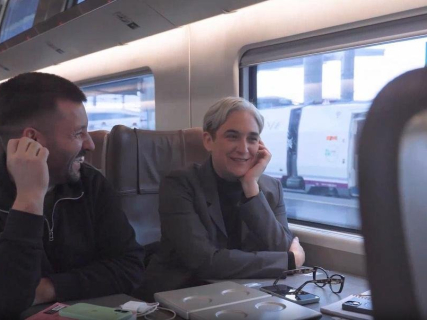
This is how the candidates spend the day of reflection: Feijóo in Ceuta and Colau, returning to Barcelona

The leader of the PP will take advantage of the day prior to the elections to visit Ceuta, while the former mayor of Barcelona will return home to rest with her family after traveling more than 12,000 kilometers during the campaign.

fotonoticia 20261128130629 1920

fotonoticia 20261128130629 1920

Add DEMÓCRATA to Google

Ask FREN

Published

Last updated

1 minute

Most read

Hasta el día de las elecciones (29 de noviembre) se muestran los resultados de las elecciones generales anteriores, las del 23 de julio de 2023.

Resultados de las elecciones generales del 29N en directo

Elecciones generales del 23 de julio de 2023 · Congreso de los DiputadosSenado

Escrutado: 100,00 %Votantes: 24.952.447Participación: 66,59 %

Votos

PartidoEscañosVotosPorcentaje
PP1378.160.83733,06 %
PP: 137 escaños. Se presenta con estos nombres:
  • PARTIDO POPULAR (PP)131 escaños
  • PARTIDO POPULAR / PARTIT POPULAR (PP)5 escaños
  • PARTIT POPULAR / PARTIDO POPULAR (PP)1 escaño
PSOE1217.821.71831,68 %
PSOE: 121 escaños. Se presenta con estos nombres:
  • PARTIDO SOCIALISTA OBRERO ESPAÑOL (PSOE)85 escaños
  • PARTIT DELS SOCIALISTES DE CATALUNYA (PSC-PSOE)19 escaños
  • PARTIDO DOS SOCIALISTAS DE GALICIA-PSOE (PSdeG-PSOE)7 escaños
  • PARTIDO SOCIALISTA DE EUSKADI-EUSKADIKO EZKERRA (PSOE)5 escaños
  • PARTIDO SOCIALISTA DE ISLAS BALEARES-PSOE (PSIB-PSOE)3 escaños
  • PARTIDO SOCIALISTA DE NAVARRA-PSOE (PSN-PSOE)2 escaños
Vox333.057.00012,38 %
Sumar313.044.99612,33 %
Sumar: 31 escaños. Se presenta con estos nombres:
  • SUMAR10 escaños
  • SUMAR - EN COMÚ PODEM (SUMAR - ECP)7 escaños
  • SUMAR ANDALUCÍA (SUMAR)5 escaños
  • COMPROMÍS - SUMAR: SUMEM PER GUANYAR (SUMAR - COMPROMÍS)4 escaños
  • SUMAR GALICIA (SUMAR)2 escaños
  • SUMAR CANARIAS (SUMAR)1 escaño
  • SUMAR ARAGÓN1 escaño
  • SUMAR MÉS (MÉS PER MALLORCA-MÉS PER MENORCA-SUMAR)1 escaño
ERC7466.0201,89 %
Junts7395.4291,60 %
EH Bildu6335.1291,36 %
EAJ-PNV5277.2891,12 %
BNG1153.9950,62 %
CCa1116.3630,47 %
UPN152.1880,21 %
PACMA0169.2370,69 %
PACMA: 0 escaños. Se presenta con estos nombres:
  • PARTIDO ANIMALISTA CON EL MEDIO AMBIENTE (PACMA)0 escaños
  • PARTIT ANIMALISTA AMB EL MEDI AMBIENT (PACMA)0 escaños
CUP-PR099.6440,40 %
FO046.2740,19 %
NC-bc045.5950,18 %
PDeCAT-E-CiU032.0160,13 %
RECORTES CERO023.4210,09 %
PUM+J023.2900,09 %
PUM+J: 0 escaños. Se presenta con estos nombres:
  • POR UN MUNDO MÁS JUSTO (PUM+J)0 escaños
  • POR UN MUNDO MAIS XUSTO (PUM+J)0 escaños
  • BIDEZKO MUNDURANTZ (PUM+J)0 escaños
U.P.L.023.2010,09 %
EXISTE020.4400,08 %
EXISTE: 0 escaños. Se presenta con estos nombres:
  • TERUEL EXISTE - COALICIÓN EXISTE (EXISTE)0 escaños
  • ARAGÓN EXISTE - COALICIÓN EXISTE (EXISTE)0 escaños
PCTE013.3820,05 %
GBAI099380,04 %
SY096970,04 %
Adelante091910,04 %
JM+082930,03 %
ESCAÑOS EN BLANCO079860,03 %
XAV073620,03 %
BQEX058070,02 %
CJ056200,02 %
FE de las JONS046830,02 %
PAR041730,02 %
PCTC038750,02 %
ESPAÑA VACIADA031580,01 %
PH029020,01 %
ASTURIAS EXISTE EV023140,01 %
XH019310,01 %
VP019170,01 %
Zsi018430,01 %
VB017740,01 %
POR MI REGIÓN016980,01 %
AHORA CANARIAS-PCPC016740,01 %
PARTIDO AUTÓNOMOS014460,01 %
EVB014420,01 %
CpM012980,01 %
JxG012180,00 %
EV-PCAS-TC011840,00 %
PREPAL09640,00 %
Somos Cc09630,00 %
ALM08740,00 %
PCTG07020,00 %
F.I.A.05060,00 %
3e04840,00 %
Ud.Ca04630,00 %
ESCONS EN BLANC04620,00 %
GITV03660,00 %
PUEDE02690,00 %
EVC02650,00 %
LB02630,00 %
PCTE/ELAK02590,00 %
UNIDOS SI02530,00 %
+RDS+01650,00 %
CCD01530,00 %
FUERZA CÍVICA01150,00 %

Los partidos que se presentan con varios nombres van juntos: pasa por encima del ? para ver el detalle. Porcentajes sobre votos válidos. Resultados definitivos del 23J de 2023.

Escaños (350)

Mayoría: 176
PP: 137 escaños en 2023 (PARTIDO POPULAR: 131; PARTIDO POPULAR / PARTIT POPULAR: 5; PARTIT POPULAR / PARTIDO POPULAR: 1)PSOE: 121 escaños en 2023 (PARTIDO SOCIALISTA OBRERO ESPAÑOL: 85; PARTIT DELS SOCIALISTES DE CATALUNYA (PSC-PSOE): 19; PARTIDO DOS SOCIALISTAS DE GALICIA-PSOE: 7; PARTIDO SOCIALISTA DE EUSKADI-EUSKADIKO EZKERRA (PSOE): 5; PARTIDO SOCIALISTA DE ISLAS BALEARES-PSOE: 3; PARTIDO SOCIALISTA DE NAVARRA-PSOE: 2)Vox: 33 escaños en 2023Sumar: 31 escaños en 2023 (SUMAR: 10; SUMAR - EN COMÚ PODEM: 7; SUMAR ANDALUCÍA: 5; COMPROMÍS - SUMAR: SUMEM PER GUANYAR: 4; SUMAR GALICIA: 2; SUMAR CANARIAS: 1; SUMAR ARAGÓN: 1; SUMAR MÉS: 1)ERC: 7 escaños en 2023Junts: 7 escaños en 2023EH Bildu: 6 escaños en 2023EAJ-PNV: 5 escaños en 2023BNG: 1 escaño en 2023CCa: 1 escaño en 2023UPN: 1 escaño en 2023137121333120232023
  • PP 137
  • PSOE 121
  • Vox 33
  • Sumar 31
  • ERC 7
  • Junts 7
  • EH Bildu 6
  • EAJ-PNV 5
  • BNG 1
  • CCa 1
  • UPN 1

Simulador de Pactos

Pulsa los partidos para sumar sus escaños.Abrir el Simulador de Pactos

Los escaños más ajustados

Quién tiene el último escaño, quién le sigue y los votos que le faltan
  1. GironaJxCAT - JUNTSyPP285 votos

    El último escaño de Girona (el 6.º) es para JxCAT - JUNTS. Le sigue el PP, que necesitaría 285 votos más para quitárselo. Ver Girona ›

  2. CantabriaVOXyPP403 votos

    El último escaño de Cantabria (el 5.º) es para VOX. Le sigue el PP, que necesitaría 403 votos más para quitárselo. Ver Cantabria ›

  3. TarragonaJxCAT - JUNTSyPSC1247 votos

    El último escaño de Tarragona (el 6.º) es para JxCAT - JUNTS. Le sigue el PSC, que necesitaría 1247 votos más para quitárselo. Ver Tarragona ›

  4. AlbacetePSOEyVOX1412 votos

    El último escaño de Albacete (el 4.º) es para el PSOE. Le sigue VOX, que necesitaría 1412 votos más para quitárselo. Ver Albacete ›

  5. SalamancaPPyPSOE1495 votos

    El último escaño de Salamanca (el 4.º) es para el PP. Le sigue el PSOE, que necesitaría 1495 votos más para quitárselo. Ver Salamanca ›

Ver todas las provincias y el mapa

Provincias donde el último escaño cambiaría de manos con menos votos, con lo escrutado hasta ahora. Pulsa una para ver el detalle.

Senado

100,00 % escrutado
PartidoSenadores
PP120
PSOEPSOE: 73 senadoresSe presenta con estos nombres:
  • PSOE48
  • PSC12
  • PSdeG-PSOE4
  • PSE-EE (PSOE)4
  • PSN-PSOE3
  • PSIB-PSOE1
  • PSOE-SUMAR-EUIB-ARA EIVISSA1
73
EH Bildu4
EAJ-PNV4
ERCERC: 3 senadoresSe presenta con estos nombres:
  • ERC-ESQUERRES PER LA INDEPENDÈNCIA2
  • ERC1
3
Junts1
UPN1
A.H.I.1
ASG1

Los partidos que se presentan con varios nombres van juntos: pasa por encima para ver el detalle. Baleares y Canarias eligen sus senadores por islas.

Senadores (208)

Elegidos en las urnas
PP: 120 senadores en 2023PSOE: 73 senadores en 2023 (PSOE: 48; PSC: 12; PSdeG-PSOE: 4; PSE-EE (PSOE): 4; PSN-PSOE: 3; PSIB-PSOE: 1; PSOE-SUMAR-EUIB-ARA EIVISSA: 1)EH Bildu: 4 senadores en 2023EAJ-PNV: 4 senadores en 2023ERC: 3 senadores en 2023 (ERC-ESQUERRES PER LA INDEPENDÈNCIA: 2; ERC: 1)Junts: 1 senador en 2023UPN: 1 senador en 2023A.H.I.: 1 senador en 2023ASG: 1 senador en 20231207320232023
  • PP 120
  • PSOE 73
  • EH Bildu 4
  • EAJ-PNV 4
  • ERC 3
  • Junts 1
  • UPN 1
  • A.H.I. 1
  • ASG 1

Los senadores designados por los parlamentos autonómicos no se eligen en las urnas.

Mapa

Ganador por provincia

    CanariasCeutaMelillaAraba/Álava: PSE-EE (PSOE) 27,7 %Albacete: PP 39,9 %Alicante/Alacant: PP 36,7 %Almería: PP 40,9 %Ávila: PP 43,3 %Badajoz: PSOE 39,2 %Illes Balears: PP 35,6 %Barcelona: PSC 35,7 %Burgos: PP 40,6 %Cáceres: PSOE 38,9 %Cádiz: PP 34,8 %Castellón/Castelló: PP 35,2 %Ciudad Real: PP 40,5 %Córdoba: PP 37,9 %A Coruña: PP 43,1 %Cuenca: PP 39,8 %Girona: PSC 28,9 %Granada: PP 37,0 %Guadalajara: PP 36,3 %Gipuzkoa: EH Bildu 31,2 %Huelva: PP 36,4 %Huesca: PP 38,2 %Jaén: PP 37,3 %León: PP 36,9 %Lleida: PSC 29,5 %La Rioja: PP 45,6 %Lugo: PP 50,2 %Madrid: PP 40,6 %Málaga: PP 38,3 %Murcia: PP 41,2 %Navarra: PSN-PSOE 27,4 %Ourense: PP 50,0 %Asturias: PP 35,7 %Palencia: PP 42,0 %Las Palmas: PSOE 33,2 %Pontevedra: PP 39,7 %Salamanca: PP 46,9 %Santa Cruz de Tenerife: PP 35,4 %Cantabria: PP 42,1 %Segovia: PP 45,0 %Sevilla: PSOE 36,6 %Soria: PP 37,2 %Tarragona: PSC 32,9 %Teruel: PP 35,0 %Toledo: PP 37,8 %Valencia/València: PP 33,6 %Valladolid: PP 40,8 %Bizkaia: EAJ-PNV 26,9 %Zamora: PP 44,7 %Zaragoza: PP 36,0 %Ceuta: PP 38,8 %Melilla: PP 49,2 %

    Pulsa una provincia para ver sus resultados y elegir municipio.

    Mapa

    Partido con más senadores por provincia

    CanariasCeutaMelillaAraba/Álava: PSOE, 3 de 4 senadoresAlbacete: PP, 3 de 4 senadoresAlicante/Alacant: PP, 3 de 4 senadoresAlmería: PP, 3 de 4 senadoresÁvila: PP, 3 de 4 senadoresBadajoz: PSOE, 2 de 4 senadoresIlles Balears: PP, 3 de 6 senadoresBarcelona: PSOE, 3 de 4 senadoresBurgos: PP, 3 de 4 senadoresCáceres: PP, 2 de 4 senadoresCádiz: PP, 3 de 4 senadoresCastellón/Castelló: PP, 3 de 4 senadoresCiudad Real: PP, 3 de 4 senadoresCórdoba: PP, 3 de 4 senadoresA Coruña: PP, 3 de 4 senadoresCuenca: PP, 3 de 4 senadoresGirona: PSOE, 3 de 4 senadoresGranada: PP, 3 de 4 senadoresGuadalajara: PP, 3 de 4 senadoresGipuzkoa: EH BILDU-INDEPENDENTZIA EZKERRETIK, 3 de 4 senadoresHuelva: PP, 2 de 4 senadoresHuesca: PP, 3 de 4 senadoresJaén: PP, 3 de 4 senadoresLeón: PP, 3 de 4 senadoresLleida: PSOE, 3 de 4 senadoresLa Rioja: PP, 3 de 4 senadoresLugo: PP, 3 de 4 senadoresMadrid: PP, 3 de 4 senadoresMálaga: PP, 3 de 4 senadoresMurcia: PP, 3 de 4 senadoresNavarra: PSOE, 3 de 4 senadoresOurense: PP, 3 de 4 senadoresAsturias: PP, 3 de 4 senadoresPalencia: PP, 3 de 4 senadoresLas Palmas: PSOE, 4 de 5 senadoresPontevedra: PP, 3 de 4 senadoresSalamanca: PP, 3 de 4 senadoresSanta Cruz de Tenerife: PSOE, 3 de 6 senadoresCantabria: PP, 3 de 4 senadoresSegovia: PP, 3 de 4 senadoresSevilla: PSOE, 3 de 4 senadoresSoria: PP, 3 de 4 senadoresTarragona: PSOE, 3 de 4 senadoresTeruel: PP, 3 de 4 senadoresToledo: PP, 3 de 4 senadoresValencia/València: PP, 2 de 4 senadoresValladolid: PP, 3 de 4 senadoresBizkaia: EAJ-PNV, 3 de 4 senadoresZamora: PP, 3 de 4 senadoresZaragoza: PP, 3 de 4 senadoresCeuta: PP, 2 de 2 senadoresMelilla: PP, 2 de 2 senadores

    Pulsa una provincia para ver sus senadores y candidatos.

    Resultados definitivos de las elecciones generales del 23 de julio de 2023 (Ministerio del Interior). Mapas: Instituto Geográfico Nacional (es-atlas, CC BY 4.0). Demócrata.

    After weeks of rallies, interviews, travel and election events, this Saturday the candidates and political leaders face the day of reflection, the last break before citizens go to the polling booths this Sunday 29 November. Far from the campaign scenarios and without political events, each one makes use of these hours in a different way, between personal commitments, travel and time with family.

    Among the plans that have come to light are those of Alberto Núñez Feijóo and Ada Colau. The president of the Partido Popular will travel to Ceuta, where he will spend part of the day as a show of support for the city and for its president, Juan Jesús Vivas. The former mayor of Barcelona, for her part, will return to Catalonia’s capital to meet with her family after a campaign marked by travel around the whole country.

    Feijóo travels to Ceuta and will spend the afternoon with his family

    The PP president and candidate for the Presidency of the Government will visit Ceuta during the morning of this Saturday, in fulfillment of a personal commitment made with the president of the autonomous city, Juan Jesús Vivas. It will be Feijóo’s sixth visit to Ceuta since the end of July.

    The visit will not have an electoral character: the popular leader will not have a public agenda and will not take part in political events. According to what his team has relayed, he will spend part of the day of reflection there as a show of support and solidarity with the people of Ceuta.

    In the afternoon, Feijóo plans to dedicate time to his partner and to his son, before the appointment with the polling booths.

    Colau returns to Barcelona after covering more than 12,000 kilometers

    Ada Colau will spend the day of reflection in Barcelona, the city where she lives, and will take the opportunity to spend the day with her family. The former mayor will return this Saturday from Madrid by train, after an election campaign in which she covered more than 12,000 kilometers across different parts of Spain.

    Colau will vote this Sunday in Barcelona.

    More key points, information and questions with FREN

    AI-GENERATED CONTENT

    What are the powers of the President of the Government according to the Spanish Constitution?

    The Spanish Constitution assigns the President of the Government a central role: to direct the action of the Government and coordinate its members, without replacing the powers and responsibilities of each minister. Additionally, it grants specific faculties to configure their team, interact with the Congress, and propose certain decisions to the king. These powers are subject to parliamentary controls and constitutional conditions.

    1. Direct and coordinate the Government

    Article 98.2 establishes their main competence: "The President directs the action of the Government and coordinates the functions of the other members thereof, without prejudice to the competence and direct responsibility of these in their management."

    This means they set the general political orientation and coordinate the ministers' actions. It does not mean they can freely assume all their decisions: each minister maintains their own powers and is accountable for their management.

    2. Propose the appointment and dismissal of ministers

    According to Article 100, the other members of the Government are appointed and dismissed by the king, at the proposal of its president. Therefore, it is the president's political decision to compose their team and propose changes; the formal appointment or dismissal corresponds to the king.

    Additionally, Article 62.g allows the king to preside over the Council of Ministers' sessions when deemed appropriate to be informed of State affairs, at the request of the President of the Government.

    3. Raise a vote of confidence

    Article 112 allows the president, after deliberation by the Council of Ministers, to raise before Congress a vote of confidence on their program or a general policy statement. That is, they can ask deputies to expressly confirm their political support.

    Confidence is obtained by a simple majority: more favorable votes than opposing. If Congress denies it, the Government must present its resignation to the king and the procedure to elect a new president begins, according to Article 114.1.

    4. Propose the dissolution of the Chambers

    Article 115 allows them to propose to the king the dissolution of the Congress, the Senate, or both Chambers, after deliberation by the Council of Ministers and under their exclusive responsibility. The dissolution decree must set the election date.

    This power has limits: they cannot propose it while a motion of censure is in process and, as a general rule, another dissolution cannot occur before one year has passed since the previous one. Article 116.5 prevents dissolving Congress while any of the states of alarm, exception, or siege are declared.

    5. Propose a consultative referendum

    According to Article 92, they can propose a consultative referendum on political decisions of special significance. They cannot call it alone: prior authorization from Congress is needed and the formal convocation corresponds to the king.

    6. Countersign acts of the king and challenge laws

    Article 64 establishes that the acts of the king are countersigned by the President of the Government or, when appropriate, by the competent ministers. Countersigning means assuming responsibility for the act. There are exceptions: the proposal and appointment of the president, and the dissolution under Article 99, are countersigned by the President of Congress.

    On the other hand, Article 162.1.a allows the president to file constitutional challenges: to contest before the Constitutional Court laws and norms with the force of law.

    An important distinction: Article 97 attributes to the Government, as a collective body, the direction of domestic and foreign policy, administration, and defense, as well as executive function and regulatory power. These are not personal and unlimited powers of the president. The Government is jointly responsible for its political management before Congress, according to Article 108.

    What legal requirements regulate the reflection day in general elections in Spain?

    The reflection day in general elections is mainly regulated by the Organic Law 5/1985, of the General Electoral Regime (LOREG). Its central rule is that, once the campaign has legally ended, electoral propaganda cannot be disseminated nor campaign events held. This prohibition must be applied respecting freedom of expression and information: it does not mean banning all political conversation or all news about the elections.

    What the law prohibits

    Article 53.1 of the LOREG literally states: "Electoral propaganda cannot be disseminated nor any electoral campaign event held once the campaign has legally ended." This is the basis of the restriction characterizing the day before voting, known as the reflection day.

    To understand its scope, it must be related to Article 50.4: the campaign includes activities by candidates, parties, federations, coalitions, and groups aimed at gaining votes. Therefore, what matters is not only that a message mentions politics, but that it constitutes electoral propaganda or campaign activity.

    • Campaign events: cannot be held after the legally authorized period for them has ended.
    • Electoral propaganda: cannot continue to be disseminated during this prohibition period.
    • Voting day: Article 53 does not allow the campaign to resume after the reflection day; its prohibition operates once the campaign has ended.
    Media, interviews, and social networks

    The distinction between informing and making propaganda is especially important for newspapers, radios, televisions, and digital publications. An interview or news item should not automatically be considered illicit for appearing during the reflection day. Its content, purpose, and circumstances of dissemination must be evaluated.

    However, freedom of information does not authorize presenting propaganda as if it were news. Nor should it be assumed that any particular opinion, political comment, or social media post constitutes electoral campaigning. The medium used does not replace the analysis of the specific conduct.

    The Constitutional Court Ruling 14/2021 precisely addresses problems related to these prohibitions and sanctions on media responsible parties. Among the issues examined are the precision of sanctionable conduct, identification of the responsible party, and protection of freedom of information.

    Sanctions and responsible parties

    Article 153.1 of the LOREG provides that violations of its mandatory rules that do not constitute a crime shall be sanctioned by the competent electoral board. It establishes these fines:

    • Authorities or officials: from 300 to 3,000 euros.
    • Individuals: from 100 to 1,000 euros.

    It is not enough to generically attribute a publication to a party, media, or person. To impose a sanction, the breached obligation must be identified and the corresponding responsibility justified, respecting the guarantees of sanctioning law. Also, these administrative fines should not be confused with consequences of conduct that may constitute electoral crimes.

    Other restrictions to distinguish

    Polls, institutional advertising, and certain acts of public authorities have specific electoral rules. It should not be assumed that all begin only on the reflection day nor that they share exactly its duration. To assess a specific action, these restrictions must be separated from the general prohibition of Article 53.

    In summary: the essential obligation is to stop the campaign and electoral propaganda, not to silence information or eliminate citizen debate. The legal qualification depends on what is done, with what content, and who is responsible.

    What has been Ada Colau's political trajectory before becoming mayor of Barcelona?

    Before becoming mayor of Barcelona, Ada Colau developed her trajectory mainly in social movements, not in public office or through a conventional party career. Her path went from university activism and social rights to leading the Platform for People Affected by Mortgages (PAH), and then to creating a municipal candidacy. This process culminated with her investiture on June 13, 2015.

    Early years: social activism and housing

    Born in Barcelona in 1974 and raised in Guinardó, Colau studied Philosophy at the University of Barcelona, although she did not complete the degree. During her university years, she participated in assemblies and mobilizations defending public university. In the 1990s and early 2000s, she was also linked to anti-globalization movements and human rights defense.

    Before gaining public notoriety, she combined social participation with temporary jobs in communication, audiovisual production, and hospitality. Her approach to the housing problem consolidated around 2006, when she participated in mobilizations for decent housing amid rising real estate prices. These backgrounds are recorded in the 20minutos profile.

    In 2007, she began working at the Observatori de Drets Econòmics, Socials i Culturals, known as Observatori DESC. There she developed cooperation tasks and later those related to housing and the right to the city, according to her municipal curriculum.

    2009-2014: founding and spokesperson of the PAH

    The main turning point was her participation in the founding of the PAH in Barcelona in 2009. The platform organized people who could not meet their mortgages and were threatened by foreclosures or evictions. Colau served as one of its main spokespersons until May 2014.

    The central demands included stopping evictions, expanding social rent, and approving retroactive payment in kind: allowing handing over the home to cancel the mortgage debt, also for already affected people. The PAH combined family support, negotiation with banks, and citizen mobilization.

    Its national projection grew especially in 2013, with her appearance before the Economy Commission of Congress during the debate on mortgage demands. That intervention made Colau one of the most recognizable figures of the anti-eviction movement. Her leadership thus came from a social organization autonomous from parties, not from a seat or governmental responsibility.

    2014-2015: from activism to municipal candidacy

    In May 2014, she left the PAH spokesperson role. In June, she participated in the presentation of Guanyem Barcelona, a citizen platform seeking to run in municipal elections and bring social demands to City Hall. It gathered activists, neighborhood movement people, and sectors linked to defending public services.

    The project ended up presenting itself as Barcelona en Comú, after a conflict over the electoral use of the name Guanyem. The candidacy incorporated ICV-EUiA, Podemos, Procés Constituent, and Equo, among other spaces. Colau was chosen as lead candidate through open primaries in March 2015, as recorded in the La Vanguardia profile.

    Barcelona en Comú won the elections on May 24, 2015 with 11 councilors, without an absolute majority. On June 13, Colau became the first female mayor of Barcelona. In summary, her previous trajectory was that of a social rights activist who went from organizing and representing citizen demands to leading a municipal government project.

    Play

    Test your knowledge with FREN!

    How much do you know about this topic? Answer the following 3 questions.

    Where will Pedro Sánchez spend the reflection day before the general elections?

    Question 1 of 3

    What is the main reason for Feijóo's trip to Ceuta during the reflection day?

    Question 2 of 3

    How many kilometers has Ada Colau traveled during the electoral campaign according to the news?

    Question 3 of 3