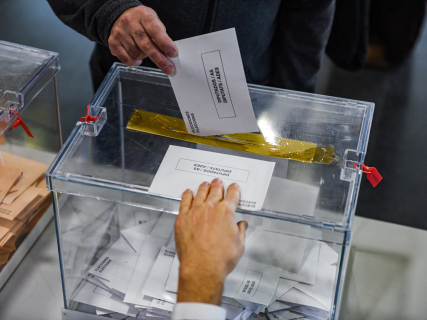

The celebration of the general elections of 29 November does not entail an immediate change in the person who leads the Executive. Although the Government resigns after the electoral call, its members remain in office until the next cabinet is formed and its members take office.
This is established by Article 101 of the Spanish Constitution, which expressly contemplates the resignation of the Government after general elections and determines that the outgoing Executive must continue in office until the new one takes office.
Therefore, the result of the ballot boxes does not, by itself, bring about the change in the Moncloa. The president and the ministers of the outgoing Government continue to carry out their functions during the process of constituting the Cortes and negotiating the investiture.
What a Government in office may do
Continuity of the Executive does not mean that it can act exactly the same as a Government with full powers. Article 21 of the Government Law establishes that its management must be limited to the ordinary handling of public affairs.
The rule also states that it must facilitate the process of forming the new Executive and the transfer of powers. It may adopt other measures in duly accredited cases of urgency or for reasons of general interest whose expressed justification so requires.
In addition, the law establishes specific limitations for the president of the Government in office, among them the impossibility of proposing to the king the dissolution of any of the Chambers or calling a consultative referendum.
When the change of Government occurs
The replacement arrives after the Congress grants its confidence to a candidate for the Presidency. Once the investiture has been overcome, the king appoints the new president and the other members of the Government are appointed at his proposal.
The previous Executive remains in office until the new one takes office. Therefore, there is no automatic change date set for the day after the elections: it depends on the constitution of the Cortes, political negotiations, and the result of the investiture.
If no candidate obtains the confidence of Congress and two months pass from the first vote without an investiture, the Constitution provides for the dissolution of the Chambers and the calling of new elections.