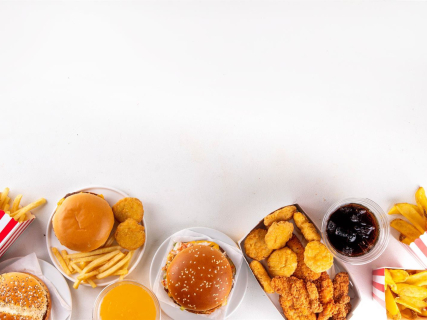

A job developed by a team of Spanish researchers has confirmed the existence of a two-way relationship between depression and the intake of ultra-processed foods. The study has detected that 71.2 percent of those who suffer from major depressive disorder consume in large quantities this type of product, compared with 39.4 percent of the population without this diagnosis.
The research, led by the Institut de Recerca Sant Joan de Déu and the Parc Sanitari Sant Joan de Déu in Barcelona, and in which the Universidad Complutense de Madrid (UCM) and the Centro de Investigación Biomédica en Red de Salud Mental (CIBERSAM) have also taken part, has been carried out with a sample of residents of Madrid and Barcelona. In this way, it has been verified that people with a high consumption of highly processed foods are more likely to present major depressive disorder and, at the same time, that those who suffer from this disorder tend to ingest more of these products.
"Unlike many previous studies that use questionnaires on depressive symptoms, we evaluate the presence of major depressive disorder during the previous 12 months through a standardized diagnostic interview, based on clinical criteria," has indicated the member of the Institut de Recerca Sant Joan de Déu, of the Parc Sanitari Sant Joan de Déu and of the CIBERSAM, and first author of the study, Íngrid Gete Alejandro, who has added that "this allows studying in a more specific way its association with the consumption of highly processed foods".
Dual focus of the study and methodology
In the detailed analysis of the data, published in the scientific journal 'Scientific Reports', it has been assessed not only whether the intake of highly processed products is linked to depression, but also whether the presence of this disorder is related to a higher consumption of those foods. The results show that the prevalence of depression reaches 4.7 percent among those who take the most ultra-processed foods, compared with 0.8 percent recorded in the group with the lowest consumption.
To reach these conclusions, the team has used information from the project 'Edad con Salud', which includes 1,380 adult people from Madrid and Barcelona. The consumption of highly processed foods has been measured by means of a validated questionnaire that collects the intake frequency of 14 groups of foods and beverages, such as fatty or sugary dairy products, processed meats, fats, fermented alcoholic beverages, sweets, refined cereals, sauces or fried foods, among others.
Subsequently, statistical analyses have been carried out in order to examine the relationship between depression and the consumption of ultra-processed foods, adjusting for possible confounding factors, including age, sex, educational level, marital status, and the presence of chronic physical conditions. "These results reinforce the importance of addressing diet and mental health together, both from clinical practice and from public health," the member of the Department of Personality, Assessment and Clinical Psychology of the UCM and of CIBERSAM, Elvira Lara, has summarized.