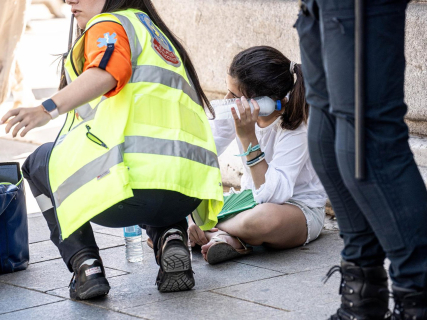


The director of the iQtra Clinic, Ángel Villamor, has warned that heatstroke can cause very serious damage and even be life-threatening when the body loses its ability to control its temperature and cool down properly.
Spain is facing the first heatwave of the summer these days and, with it, the risk of suffering heatstroke increases, a medical emergency that requires thousands of health interventions each year and can lead to serious consequences if not treated quickly.
In this scenario, Villamor emphasizes that hydration is the most effective preventive measure against heatstroke. "When we feel thirsty, the dehydration process has already begun. The correct thing to do is to drink water regularly throughout the day, even if we don't feel thirsty," he explains.
The importance of this habit is so high that even in the current Football World Cup, referees have incorporated specific hydration breaks during matches. "If elite athletes need to stop to drink water, it is a good sign that we should all take hydration more seriously during these days," points out the specialist.
The expert also insists on the need to identify warning signs. He recalls that heatstroke does not usually manifest abruptly, but rather the body usually warns beforehand. "Intense headache, dizziness, weakness, rapid breathing, muscle cramps, confusion, or a disproportionate feeling of exhaustion are symptoms that we should not ignore," warns Villamor, who points out that in more severe cases, vomiting, loss of consciousness, or seizures can occur.
In case of the slightest suspicion of heatstroke, the director of the iQtra Clinic emphasizes that every minute is decisive. "The first thing to do is call 112, move the person to a cool place or shade, and start lowering body temperature as soon as possible," says the doctor. He details that the areas where cold acts most effectively are the head, neck, armpits, and groin. He also advises removing excess clothing and using water, fans, or hand fans to help lower body temperature.
Along with these actions, specialists advise avoiding intense physical exercise during the central hours of the day, wearing light and breathable clothing, and staying in cool environments whenever possible. "Heatstroke is one of the most preventable medical emergencies of the summer. Listening to your body, hydrating correctly, and acting quickly at the first symptoms can make the difference," concludes Villamor.