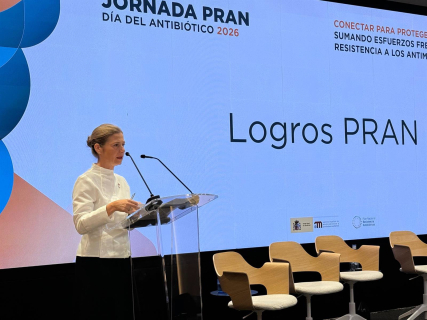

The director of the Spanish Agency of Medicines and Health Products (AEMPS), María Jesús Lamas, has highlighted that the use of antibiotics in Spain has been reduced by around 19 percent in the field of human health and by more than 52 percent in the animal health sector since 2015, the year in which the National Plan against Antimicrobial Resistance (PRAN) began to be applied.
"Spain has shown that it is possible to reduce antibiotic consumption, improve the quality of prescribing, and build a solid surveillance network from a 'One Health' perspective," Lamas noted during the PRAN Day event for the European Day for Prudent Use of Antibiotics, organized under the slogan "Connecting to protect: combining efforts in the face of antimicrobial resistance".
Among the most relevant achievements of the past year, the head of the AEMPS has highlighted the consolidation of the microbiological surveillance network RedLabRA, the strengthening of environmental surveillance of resistances, the review of the antimicrobial therapeutic guide of the National Health System, and the adaptation of antibiotic formats promoted by the AEMPS, with the aim of minimizing leftover treatments and curbing self-medication.
Similarly, she has advanced the imminent rollout of the CertificaPROA certification module, a national accreditation system that will make it possible to recognize those healthcare centers that have incorporated the optimization of the use of antimicrobials as a structural policy.
Lastly, the director of the AEMPS has reviewed the progress made in the environmental and veterinary areas, where, during 2026, the first PROA groups specific to this field have been established and the first veterinary clinical management guides promoted by the PRAN have been disseminated, aimed at supporting evidence-based decision-making and fostering prudent use of antimicrobials.
Outreach and awareness-raising
The day has also included a space dedicated to outreach and social awareness through art. In this context, the coordinator of the PRAN environment area, Ricardo Carapeto, has presented "Dibujando la resistencia", a European initiative developed within the framework of the European Joint Action on Antimicrobial Resistance and Healthcare-Associated Infections (EU-JAMRAI 2), which aims to bring home to the public the challenge posed by antimicrobial resistance from a "One Health" approach.
The project is built around an illustrated album that brings together works by artists from 30 European countries to show citizens the problem of antimicrobial resistance and the international exhibition "Sketching AMR", composed of the 30 illustrations by these creators. This campaign encourages reflection on the interrelationship between human, animal and environmental health, as well as on the relevance of preserving the effectiveness of antimicrobials for future generations.
The exhibition, present throughout the day, featured a message from Spanish illustrator 72 Kilos, the author of one of the pieces, who highlighted the power of illustration to transform complex scientific concepts into accessible messages capable of generating awareness and fostering changes in behavior.
Veterinary in dialogue
Another of the key moments of the event has been the round table "Veterinaria en diálogo: desafíos actuales, uso responsable de los antimicrobianos y construcción conjunta de soluciones", which brought together representatives from different areas of the veterinary profession.
During the exchange, the speakers agreed in recognizing the notable effort made by the veterinary sector in the last decade to reduce antibiotic consumption and optimize its use. They also emphasized that these advances have been possible thanks to the commitment of professionals, improved biosecurity, ongoing training, the development of surveillance systems, and close cooperation between administrations and productive sectors.
Experts have also analyzed the challenges arising from the evolution of the European and national regulatory framework on veterinary medicines and antimicrobials. In this context, the importance of continuing to work to align public health objectives and the fight against resistance with the daily clinical reality of veterinarians, animal welfare and the viability of livestock farms has been emphasized.
All participants at the table have agreed that consolidating the achievements made will require strengthening dialogue between administrations, professionals, universities and productive sectors, in addition to continuing to promote decision-support tools for clinical practice, diagnosis, epidemiological surveillance and training for future generations of veterinarians.