
The European Commission indicated this Friday that there is no detected transit of migrants from Ceuta and Melilla to other member states and defended that the particular regime provided in the Schengen Borders Code for both autonomous cities allows for maintaining controls over those leaving these territories, after several European governments expressed concern about a possible impact of the crisis on free movement within the EU.
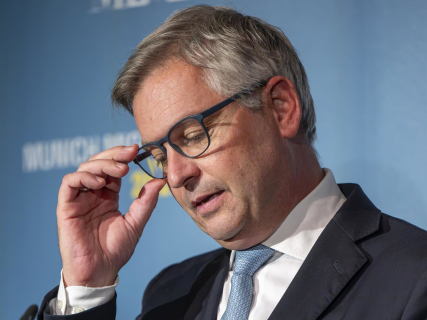
The European Commissioner for Home Affairs and Migration, Magnus Brunner, confirmed that "there are no subsequent displacements to the European continent or to other member states" and emphasized that the specific provisions that apply to the two Spanish enclaves "remain in force," so the situation is being addressed in accordance with the existing legal framework.
Community sources have recalled that "Ceuta and Melilla are subject, under Article 41 of the Schengen Borders Code, to a specific regime, so no one can leave Ceuta for mainland Spain or for other EU member states without undergoing controls at the external border. For these purposes, Ceuta is considered the external border of the European Union and the corresponding controls must be applied."
At the same time, from Brussels, they have avoided commenting on the demands of some governments that propose suspending Spain from the Schengen area and have emphasized that, if a "serious deficiency in the application of the rules" were detected, the Commission would prepare a report that would first be discussed with the affected country and subsequently in the Council, which would be the body responsible for deciding the measures to be taken.
The same sources have also declined to enter into the debate about the causes of the massive arrival of migrants or about a possible instrumentalization of the flows by Morocco, insisting that the situation "continues to evolve" and that, for now, Brussels does not have "all the facts" necessary for a complete assessment. "We should not speculate at this stage," they insisted.
"VERY CONSTRUCTIVE COOPERATION" FROM MOROCCO
In any case, the community institutions have supported the actions of the Moroccan authorities, ensuring that "they have reacted very quickly" and have "fully mobilized" to contain the situation, adopting measures to curb new departures towards Ceuta and maintaining "very constructive" cooperation with the EU and with Spain.
Brunner has also highlighted the "close cooperation" between Madrid and Rabat to manage the crisis and ensure the "rapid return" of those who have entered the city irregularly from the neighboring country, which he has reminded is on the list of "safe countries of origin" of the Union.
The Austrian commissioner has indicated that Brussels will continue to work with the Spanish authorities to ensure an "effective implementation" of the instruments of the new Pact on Migration and Asylum and provide additional support at the European level, also through the European Border and Coast Guard Agency (Frontex).
"I am willing to travel to the critical points, as the situation evolves constantly. Our immediate priority is to support Spain in the effective and orderly protection and management of the EU's external border. This includes combating illicit migrant smuggling networks and preventing people from undertaking dangerous journeys," he stated.
DEPLOYMENT OF FRONTEX
Community sources have specified that Frontex already has personnel at the port of Ceuta to "collaborate in the usual controls" and have pointed out that the agency is "prepared" to increase its presence if Spain requests it, although they have clarified that, for now, no additional request has been registered.
In this scenario, they have emphasized that it is up to the Spanish authorities to decide whether the conditions are met to request the activation of the Crisis and Force Majeure Regulation, one of the instruments of the Pact on Migration and Asylum to respond to episodes of exceptional migratory pressure, the implementation of which must be promoted by the affected member state.
However, they have indicated that a first meeting has already been held with Spain to analyze the most urgent needs arising from the crisis, including the supply of food, blankets, and hygiene facilities, as well as a possible reinforcement of maritime rescue and border management capabilities.
Furthermore, they have explained that the European Commission keeps the other partners informed through the European network for coordinating migration movements, created for the exchange of information in this type of scenarios, and that this same Friday it has been used to communicate to the capitals the evolution of the situation.
AVOID NEW DEPARTURES FROM MOROCCO
The consulted sources have reiterated that the immediate priority is to prevent new departures from the Maghreb country and ensure the "rapid return" of those who have already arrived in Ceuta. "We have evidence that many voluntary returns to Morocco are already taking place and we continue to work closely with the Moroccan side to ensure that new departures are avoided," they added.
For her part, the European Commissioner for the Mediterranean, Dubravka Suica, has stated that she is following the development of the crisis "closely" and has emphasized that cooperation between the EU and Morocco is "essential," while explaining that she maintains contacts with the Moroccan authorities to "control the situation and achieve concrete results."
Also, the President of the European Commission, Ursula von der Leyen, has referred to the situation, calling the images from Ceuta "unacceptable" and demanding to stop the arrivals "immediately." "We cannot allow anyone to enter our Union without respecting our rules," she stated in a message on social media.
The migration crisis remains open this Friday as the returns of the people who crossed into Ceuta advance: around 48,300 had already returned to the neighboring country by noon, according to the Ministry of the Interior, as part of the operation launched after a massive entry that the authorities estimate at about 60,000 people and which has left 57 deceased, according to the latest balance from the Government Delegation.