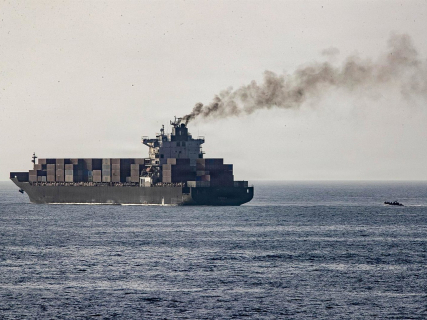

The Iranian Foreign Minister, Abbas Araqchi, confirmed this Sunday that negotiations with Oman to set the future status of the Strait of Hormuz have entered their "final phase." At the same time, he emphasized that the United States is completely sidelined from these conversations, which are solely focused on establishing a safe maritime route and do not involve in any case a reopening of the passage.
For weeks, Tehran and Muscat have been maintaining bilateral contacts to outline a safe corridor for the navigation of vessels and to agree with the Omani government on a stable coordination system. Iran has stressed that, despite this dialogue, Oman will not have the authority to impose or lift restrictions on its own.
Tehran insists that its control over the strait is total, with the consequent impact on the global crude market, and considers it its main strategic asset in the standoff with Washington, which has so far only managed to establish an outer blockade.
While Araqchi declared the decisive phase of the talks has begun, the spokesperson for the Foreign Ministry, Esmaeil Baqaei, intervened in an interview with the state radio and television IRIB to reiterate that "the Strait of Hormuz will not return to its previous state under any circumstances," referring to the free circulation prior to the outbreak of the war.
Baqaei clarified, however, that Iran maintains its commitment to the diplomatic route with Oman with the aim of reaching a "mutual agreement" that "serves Iranian interests" and remains free from pressures from the United States.
"The talks between Iran and Oman are bilateral and do not concern the other party," Baqaei emphasized on IRIB. "The agreement between Iran and Oman on the new route has nothing to do with the opening or closing of the Strait of Hormuz," he pointed out, "but rather it is about creating a route that guarantees the sovereign rights of both parties."
The spokesperson also clarified that the dialogue with Oman is governed by the Memorandum of Understanding signed with the United States, which remains the framework for the conversations and stipulates that the Omani authorities will only have a "consultative" role, according to the Iranian reading of Article 5 of the document. This provision establishes that Iran and Oman will negotiate to "define the future administration and maritime services in the Strait of Hormuz."
According to Baqaei, Tehran's goal is to ensure full long-term security guarantees. "Iran has gone through a very difficult experience in recent months; therefore, it must be guaranteed that this strategic maritime route is not misused again by aggressors against the Islamic Republic of Iran," he indicated.
In parallel, Iranian political officials and military leaders have come out in recent hours to refute the latest message disseminated early in the morning by U.S. President Donald Trump, in which he referred to a supposed reopening of the strait.
The Iranian agency Tasnim, close to the Revolutionary Guard, has also rejected Trump's message, in which he claimed to have decided to stop the latest operations against Iran, supposedly at Tehran's request, with a view to a possible reopening of the maritime passage.
Furthermore, the head of Iranian diplomacy conveyed this Saturday night to his Saudi counterpart, Faisal bin Farhan, that the situation in Hormuz remains unchanged and that the Islamic Republic is ready to respond to any U.S. offensive. The content of this conversation was subsequently communicated by Saudi Crown Prince Mohamed bin Salman during the phone call he had with Trump this Sunday.