
The Iranian Foreign Ministry has argued that the latest attacks launched by its Armed Forces against two military bases used by the United States in the region are covered by its right to "legitimate self-defense" in the face of U.S. bombardments on the south coast of Iran. At the same time, it has lashed out at the surrounding countries that allow their territory to be used for operations against Tehran.
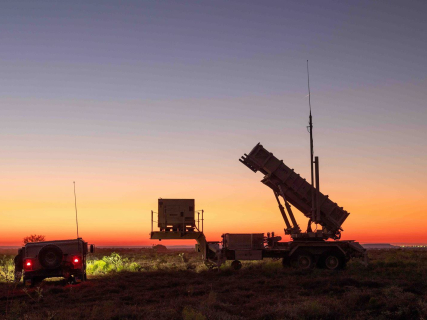
In an official note, Iran's diplomacy denounced "the aggressive actions of the American terrorist army against points in our country located on the south coast during the last few days" — with reference to the attacks attributed to the island of Qeshm, near the Strait of Hormuz — and specified that, as retaliation, Iranian forces struck "Patriot defense systems and drone and missile launch platforms" at two bases that acted as "a command and support center" for Washington.
Tehran has stated that the legal and international responsibility for this escalation rests solely with the United States, accusing it of violating the prohibition on the use of force set out in the United Nations Charter, and has warned the region's Executives that authorizing the offensive deployment of the United States from their soil breaches the principle of good neighborliness.
"The fact that the countries of the region have not prevented the United States from using their territory and facilities to prepare and carry out acts of aggression against Iran (...) constitutes an act of aggression and authorizes and gives Iran full right to adopt defensive measures against them," the Foreign Ministry has reiterated, citing Article 3 of UN General Assembly Resolution 3314.
Despite this, the Iranian Executive has insisted that, until now, it has acted "with the utmost moderation" and that its actions have strictly adhered to "U.S. military bases and assets in those countries." It has also asked the Gulf States — including Bahrain or Kuwait, where in the last hours drone interceptions have been recorded and criticisms from the Gulf Cooperation Council (GCC) — to "stop complaining about Iran's legitimate self-defense" and to prevent Washington from using their facilities.
Finally, the Ministry of Foreign Affairs has urged the Security Council and the UN Secretary-General to break "silence and inaction" in the face of what it considers violations of International Law by a permanent member, and has warned that any new hostile action against its sovereignty or territorial integrity will obtain "a decisive and regrettable response" from the Iranian Armed Forces.