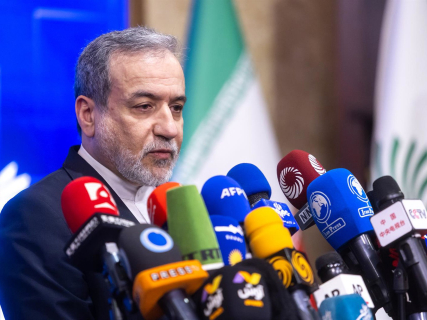

Iran has delivered this Saturday in Islamabad a formal list of "responses" to the proposals put forward by the United States to consolidate the current ceasefire, in a diplomatic move that keeps indirect contacts open but pushes away, for now, the possibility of a face-to-face negotiation between both parties.
The document has been hand-delivered by the Iranian Foreign Minister, Abbas Araqchi, to the head of the Pakistani Army, General Asim Munir, a key figure in the mediation promoted by Islamabad after the latest weeks of military escalation in the region.
No direct meeting with the US delegation
Despite the exchange of messages through Pakistan, Iranian authorities have ruled out for the moment holding a direct meeting with the US delegation also deployed to the Pakistani capital. Among Washington's representatives are Jared Kushner, President Donald Trump's son-in-law, and the envoy for the Middle East Steve Witkoff.
The Iranian refusal reflects the persistent distrust between both parties, especially after the failure of previous contacts and the deterioration of the situation following the conflict that began at the end of February.
Tehran activates the regional path
Araqchi's visit to Pakistan constitutes the first stop of a broader diplomatic tour with which Iran seeks to strengthen regional and international support. In the coming days, the head of Iranian diplomacy will travel to Oman, a country that has already acted as a mediator in previous talks on the Iranian nuclear program, and subsequently to Russia, Tehran's main strategic partner.
With this move, the Islamic Republic attempts to combine diplomatic pressure and external backing at a time when the ceasefire remains in effect, but without guarantees of lasting stability.
Fragile truce and indirect negotiation
Although the exchange of proposals keeps the diplomatic channel alive, the absence of a direct meeting shows that positions remain far apart. Islamabad thus consolidates itself as a communication channel between two historical adversaries who continue to negotiate at a distance while the regional balance remains in a highly fragile situation.