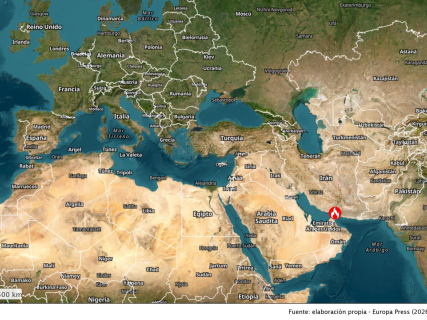

The Iranian authorities have communicated this Sunday that two oil tankers have burned in waters located to the east of the Strait of Hormuz after colliding with sea mines, according to information released by their Armed Forces.
"Two tankers that entered this morning into restricted waters to the east of the Strait of Hormuz have caught fire after striking a naval mine despite previous warnings and after deactivating their detection and navigation systems," the Iranian Navy reported in a statement.
With this message, Tehran underlines that "shipowners, operators, and pilots of the vessels who ignore the warnings and sail through prohibited areas by turning off their navigation systems will be directly responsible for the consequences and damage to the tankers."
Iran maintains declared the closure of the Strait of Hormuz, a key route for the transit of crude oil from the Persian Gulf, after the military offensive launched in February by the United States and Israel. Iranian authorities insist that navigation is only safe if it is carried out through the corridors approved and monitored by its Armed Forces.
Washington, in contrast, denies that there is a real blockade in the strait and says that it maintains military control outside the passage. It also claims that it escorts merchant vessels with the aim of keeping open the flow of energy exports from the Middle East.