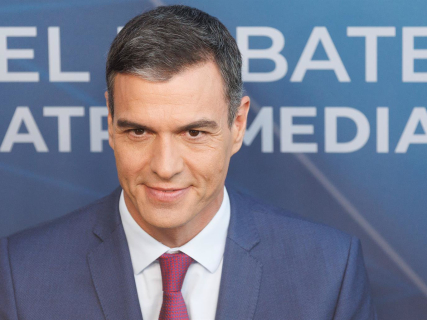
The poll of polls of 29N: PP and PSOE gain two tenths after the debate and Vox drops from 19%

The PP reaches 31.0% of the votes, the PSOE rises to 27.8% and Vox falls back to 18.9% in the average of 19 institutes of Demócrata. Eight days before the general elections, Popular and Vox bring together 194 deputies in the 16 parliamentary projections available, 18 above the absolute majority

fotonoticia 20261118182320 1920

fotonoticia 20261118182320 1920

Add DEMÓCRATA to Google

Ask FREN

Published

Last updated

4 minutes

Most read

Elecciones 29N · Encuestas

La media de las encuestas

Media a 21 de noviembre de 2026 · 19 institutos

  • PP30,9 %
  • PSOE27,9 %
  • Vox19,0 %
  • Frente Amplio6,3 %
  • ERC2,6 %
01020304050ene 2024jul 2024ene 2025jul 2025ene 2026jul 2026

Media del último estudio de cada instituto en 30 días y su evolución semanal desde el 23J. Partidos con al menos un 2 %.

Todas las encuestas

Elecciones generales del 29 de noviembre · Demócrata

Alberto Núñez Feijóo and Pedro Sánchez reach the last weekend before the election week with a shared novelty: both improve compared to the morning of the face-to-face. The PP goes from 30.8% to 31.0% and the PSOE, from 27.6% to 27.8%. Vox takes the opposite route, from 19.1% to 18.9%. It is the first time in the five editions of *La encuesta de las encuestas* by Demócrata that the party of Santiago Abascal falls below 19%.

The result has a consequence that is lost when looking only at who goes up and who goes down. The PP and Vox add up to 49.9% of the estimated vote, practically the same proportion as before the debate. The popular advance offsets Vox’s retreat in the national average. In Congress, the projections compiled leave both at 194 representatives out of a total of 350.

What has changed since the face-to-face of Sánchez and Feijóo

The comparison with Thursday is made using the same 19 polling firms. Six have refreshed their measurement: 40dB., Data10, Sigma Dos, Sondaxe, SW Demoscopia and More in Common. Each new edition replaces the previous one from its institute. The daily tracking that it publishes weighs the same as the signature that only disseminated one study during the campaign.

The two surveys with interviews up to Friday 20 provide different readings. 40dB. leaves the PSOE seven tenths behind the PP: 31.2% versus 31.9%. In its follow-up for EL PAÍS and the Cadena SER, the socialists gain one point compared to the previous edition of that firm. Data10, on the other hand, places the popular advantage at 5.7 points: 32.3% versus 26.6%. For this latest study, the percentages published by OKDiario are used, the outlet that commissioned the poll.

Therefore, there are five points of difference between the advantages that they attribute to Feijóodos studies that reach the day after the debate. It also matters when they started asking: 40dB.’s fieldwork spans from November 16 to 20 and brings together answers before and after the face-to-face. In the other four updates, the field ends on Thursday 19. The average makes it possible to describe how the parties are this Saturday.

A week of polls: the PSOE gains half a point and the PP recovers 31%

The perspective changes when taking last Saturday as the reference. The PSOE began the series at 27.3%, repeated that percentage on Monday, and then chained three deliveries upward: 27.5%, 27.6% and 27.8%. It is the party that has advanced the most since the first cut, with half a point of difference between the percentages published on 14 and 21 November.

The path of the PP is different. It began at 30.9%, fell to 30.8% and now reaches 31.0%, its best figure in the series. Vox started at 19.1% and is two tenths lower one week later. In the last three cuts, the same firms participate. The first delivery brought together 17, so the weekly comparison also includes the increase in the number of studies.

29N general elections: evolution of Demócrata’s average vote
November cut PP PSOE Vox Firms
14 Nov. 30,9% 27,3% 19,1% 17
16 Nov. 30,9% 27,3% 19,0% 18
18 Nov. 30,8% 27,5% 19,1% 19
19 Nov. 30,8% 27,6% 19,1% 19
21 Nov. 31,0% 27,8% 18,9% 19

Source: Demócrata’s survey of surveys. Simple average with CIS and one measurement per institute. Percentages rounded to one decimal place.

Seats: 130 for the PP, 112 for the PSOE and 64 for Vox

The 16 parliamentary projections with complete data for the three parties place the PP at 130 deputies, the PSOE at 112 and Vox at 64. The sum of Popular and Vox reaches 194, the same rounded total as in Thursday’s delivery. The number of available studies has indeed varied: then there were 17. For this corte, Sondaxe provides its vote estimate and is left out of the parliamentary average because it was not possible to verify the full distribution of its latest delivery.

Compared with the 23J general elections, the average leaves the PSOE nine seats below the 121 it obtained in 2023. Vox appears with 31 more than its 33 at that time. The PP stands seven below its 137 deputies, with one caveat: some polling firms group the PP and UPN in Navarre, while the 137 of 2023 correspond to the PP separately.

Disagreement about who is closest to the absolute majority is also reflected in the individual data. Data10 projects 198 deputies for PP and Vox and 40dB., 189. SW Demoscopia assigns them 175: 122 to the PP and 53 to Vox, one below the threshold. The difference between those three forecasts matters more for the investiture than a variation of tenths in the national vote.

How seats have evolved in The survey of surveys
Cutoff PP PSOE Vox PP + Vox Signatures
Nov. 14 130 110 66 195 15
Nov. 16 129 110 66 195 17
Nov. 18 128 111 65 194 17
Nov. 19 129 111 65 194 17
Nov. 21 130 112 64 194 16

Source: projections compiled by Demócrata. Absolute majority: 176. Each party and the sum PP + Vox are rounded separately. The PP includes UPN when the signatory publishes the grouped candidacy.

The six polls that update the average as of November 21

More in Common places PP and PSOE at nine-tenths, while Sondaxe separates them by 1.6 points. Sigma Dos widens the gap to 3.6 points. Of the six updated firms, SW Demoscopia is the only one that puts the PSOE first, with 32.1%, compared with the PP’s 29.6%. These differences help to understand why a notable advance in a tracking results in a much smaller change when it is incorporated into the whole.

Latest polls incorporated to the cutoff of November 21, 2026
Institute and outlet Fieldwork end PP PSOE Vox
40dB. · EL PAÍS and Cadena SER Nov. 20 31.9% 31.2% 17.1%
Data10 · OKDiario Nov. 20 32.3% 26.6% 19.0%
SW Demoscopia · La Séptima Nov. 19 29.6% 32.1% 16.3%
Sigma Dos · El Mundo Nov. 19 31.2% 27.6% 18.9%
Sondaxe · La Voz de Galicia Nov. 19 29.5% 27.9% 19.8%
More in Common Nov. 19 28.9% 28.0% 19.8%

Source: latest measurements compiled for each institute. The date indicates the end of the interviews. The Data10 percentages correspond to those published by the outlet that commissioned the poll.

How it is calculated: Demócrata takes the latest national measurement compiled from each of the 19 firms in the series and gives them the same weight, including the CIS. In addition to the six updates, SocioMétrica, DYM, IMOP, GAD3, Ateneo del Dato, NC Report, Celeste-Tel, Target Point, Hamalgama Métrica, Winston, YouGov, InvyMark and the CIS also participate. For the seats, the central figure published is used or the midpoint of the range when the firm only provides an interval. The cutoff corresponds to the morning of Saturday, November 21.

More key points, information and questions with FREN

AI-GENERATED CONTENT

What are the next parliamentary procedures following the general elections on November 29 in Spain?

After the general elections on November 29, the main steps will be to constitute the new Chambers, elect their bodies, and process the investiture of the President of the Government. These are distinct procedures: electing the Presidency of the Congress does not mean choosing who will govern. Also, the deadline to avoid a repeat election starts with the first investiture vote, not with the elections.

1. Constitution of the Chambers

The elected Congress must be convened within 25 days following the elections, according to article 68.6 of the Constitution. The constitutive session is held on the day and time indicated by the royal decree of electoral convocation; this maximum deadline should not be confused with a specific date already set.

The session begins presided over by the oldest deputy present, assisted by the two youngest. After reading the electoral documentation, the Board is elected. Then, its members take their seats, swear or promise to uphold the Constitution, and the Congress is declared constituted. The Senate separately constitutes its own bodies.

2. Election of the Congress Board

The Board, which organizes and directs parliamentary work, has a Presidency, four Vice Presidencies, and four Secretariats. Its election is carried out by ballots:

  • Presidency: requires an absolute majority in the first vote. If no one achieves it, the two candidates with the most votes compete and the one with more votes wins.
  • Vice Presidencies and Secretariats: are elected in separate votes for each category; each deputy writes a name and the four most voted persons are elected.

These rules are found in articles 30 and 37 of the Congress Regulations.

3. Groups, committees, and solemn opening

Parliamentary groups must be constituted by written notice to the Board within five days following the constitutive session. Fifteen deputies are required, or at least five and 15% of the votes in the constituencies where they ran or 5% nationally. Those not integrated join the Mixed Group.

The spokespersons form the Board of Spokespersons, which intervenes in organizing the work. The Regulations also establish ten days to constitute permanent committees and fifteen for the solemn opening of the legislature. These regulatory deadlines are generally counted in working days, with the computation provisions of article 90.

4. King's consultations and investiture

After the renewal of the Congress, the King consults political representatives with parliamentary representation and proposes a candidate through the Presidency of the Congress. The Constitution does not set a specific deadline to complete these consultations or present the proposal.

The Presidency calls the debate: the candidate presents their program, requests confidence, and responds to the groups. The vote is public, by roll call:

  • First vote: requires an absolute majority of the members of Congress.
  • Second vote: if the first fails, it is held 48 hours later and more favorable than opposing votes suffice.

If confidence is obtained, the Presidency of the Congress communicates it to the King for appointment. The Senate does not participate in this vote.

5. If no candidacy prospers

New proposals may be processed. If two months pass from the first investiture vote without any candidate gaining confidence, the King dissolves both Chambers and calls elections, with the endorsement of the Presidency of the Congress.

6. Institutional continuity

Until the new Cortes are constituted, the Permanent Deputations maintain their constitutional functions. The Congress's can decide on decree-laws and exercise powers related to states of alarm, exception, and siege; afterwards it must inform the new Plenary. It does not replace all ordinary activity. The outgoing Government continues in office until the new Government takes office.

What powers does the President of the Government have according to the Spanish Constitution?

The President of the Government is the central figure of executive power in Spain. The 1978 Constitution does not provide a single, closed list of their powers, but distributes them throughout several provisions, especially articles 97, 98, and those related to Government‑Cortes and Government‑King relations. From these, their main functions can be grouped.

1. Direction of the Government and political action (arts. 97 and 98 CE)
  • Headship of the Government: The Constitution establishes that the Government directs domestic and foreign policy, civil and military administration, and the defense of the State (art. 97), and within the Government, the president is who sets the general political orientation and assumes the highest responsibility.
  • Determination of political guidelines: Article 98.2 CE indicates that the president directs the Government's action and coordinates the functions of other members. This implies:
    • Defining the main lines of economic, social, foreign, defense policy, etc.
    • Resolving coordination conflicts between ministries.
    • Promoting or halting normative initiatives of the Government itself.
2. Appointment and dismissal of ministers (arts. 98 and 100 CE)
  • Proposal of Government composition: Ministers are appointed and dismissed by the King at the proposal of the President of the Government (arts. 98.1 and 100 CE). This means that:
    • The president decides who integrates the Government.
    • They can restructure ministerial portfolios (create, suppress, or group them) through the corresponding norms, always within the legal framework.
    • They can dismiss a minister at any time, proposing their replacement to the King.
  • Political configuration of the Executive: Although the Constitution does not detail this, these powers imply that the president is mainly responsible for the cohesion and stability of the cabinet.
3. Relations with the Cortes Generales (arts. 108, 112, 113, 115 CE)
  • Political responsibility before the Congress: The Government as a whole is politically responsible before the Congress of Deputies (art. 108 CE), and the president is its main responsible. They must:
    • Appear before the Congress when required by the Chamber.
    • Answer for the overall orientation of governmental action.
  • Raising the question of confidence (art. 112 CE): The president can raise before the Congress a question of confidence on their program or a general policy declaration. If lost, they must resign to the King, opening a new investiture phase.
  • Participation in the motion of censure (art. 113 CE): Although the motion of censure is initiated by deputies, the president is its direct political object, because the motion necessarily implies proposing a new president of the Government (constructive motion of censure).
  • Proposal of dissolution of the Cortes (art. 115 CE): It corresponds to the president to propose to the King the dissolution of the Congress, Senate, or Cortes Generales, with the consequent call for elections. The King formalizes the act, but the initiative is presidential.
4. Relations with the King and other constitutional powers
  • Appointment and dismissal of ministers and other authorities: As noted, the president proposes to the King the appointment and dismissal of ministers (art. 100 CE). In practice, they also politically intervene in other appointments that the Constitution or laws formally attribute to the King or Government.
  • Authorization of the King's acts: Many acts of the King require the countersignature (signature of agreement) of the President of the Government or, where appropriate, the competent minister. The countersignature makes the president politically responsible for those acts before the Cortes.
  • Consultation and proposal of referendum (art. 92 CE): The consultative referendum on political decisions of special importance is convened by the King, but at the proposal of the President of the Government, with prior authorization from the Congress. Again, the political initiative originates with the president.
5. Resignation and dismissal (arts. 99 and 101 CE)
  • Relation with investiture (art. 99 CE): The president assumes office after an investiture procedure in the Congress, at the King's proposal. Once invested, their position is conditioned by maintaining parliamentary confidence.
  • Dismissal of the president (art. 101 CE): The Government ceases due to:
    • Holding general elections.
    • Losing a question of confidence.
    • Approval of a motion of censure.
    • Resignation or death of the President of the Government.
    Until the new Government takes office, the president and their cabinet remain in office, with powers limited by legislation and constitutional practice.

In summary, according to the Spanish Constitution, the President of the Government concentrates the political direction of the Executive, the capacity to structure and lead the Council of Ministers, important levers before the Cortes (question of confidence, proposal of dissolution), and a key role in the King's acts and the general configuration of the political system.

Could you detail the investiture procedure of the President of the Government step by step? What differences are there between the functions of the President of the Government and those of the King according to the Constitution? How exactly are the powers of the president limited when the Government is acting in a caretaker capacity?

What has been Alberto Núñez Feijóo's political trajectory before leading the PP?

Before assuming the national presidency of the PP on April 2, 2022, Alberto Núñez Feijóo had developed a career of more than three decades between the Galician Administration, state public bodies, and the Government of Galicia. His path had three major stages: administrative and health management, his incorporation into Manuel Fraga's Executive, and leadership of the Galician PP, with which he achieved four consecutive absolute majorities.

From civil servant to health official

Graduated in Law from the University of Santiago de Compostela, he joined the senior body of the Xunta Administration in 1985. His starting point was, therefore, public service before holding politically appointed responsibilities. In 1991 he was appointed technical secretary general of the Ministry of Agriculture, Livestock, and Forests, one of his first positions of responsibility in the regional Government (Nueva Economía Fórum).

Between 1992 and 1996 he moved to the health sector: he was secretary general of the Ministry of Health and vice president of the Galician Health Service, Sergas. During this first stage, he was linked to José Manuel Romay Beccaría, with whom he worked in the Galician Administration before moving to Madrid (ABC Profile).

His state stage: Insalud and Correos

In 1996 he assumed responsibilities in the state health administration as secretary general of Health Assistance and president of the National Health Institute, Insalud. He remained in this area until 2000, expanding at the state level the health experience he had acquired in Galicia (El Confidencial Profile).

He then moved to Correos. Between May 2000 and June 2001 he was counselor-general director of the public business entity; from June 2001 until January 2003 he presided over the State Society Correos y Telégrafos. Before returning to regional politics, he had thus accumulated managerial responsibilities both in health and in a state public company (Stage at Correos).

Return to Galicia and succession of Fraga

In 2003, Manuel Fraga incorporated him into the Xunta as minister of Territorial Policy, Public Works, and Housing. He replaced Xosé Cuiña in the context of the political crisis following the Prestige disaster. In 2004 he was promoted to first vice president of the Xunta, a position he held until 2005 (Trajectory in the Xunta).

The Galician elections of 2005 marked the next turn: he obtained a seat for Pontevedra and the PPdeG lost the regional Government. In January 2006 he assumed the presidency of the party in Galicia, succeeding Fraga. His responsibility ceased to be mainly administrative: he began to lead a political organization and head its opposition to the regional Government (Political chronology).

Thirteen years at the head of the Xunta

In 2009 he won the regional elections by absolute majority and became president of the Xunta, ending the coalition Government of PSdeG and BNG. He renewed that majority in 2012, 2016, and 2020: four consecutive victories that allowed him to preside over Galicia between 2009 and 2022 (Presidency of Galicia).

That was his main background before the national leap. On April 2, 2022, the 20th Extraordinary National Congress of the PP, held in Seville, elected him president with 98.35% of the votes, as successor to Pablo Casado. He arrived, therefore, after leading the PPdeG and governing Galicia, not directly from his first technical positions (Cadena SER Profile).

Play

Test your knowledge with FREN!

How much do you know about this topic? Answer the following 3 questions.

What percentage of votes does the PP reach in the latest half published by Demócrata after the debate?

Question 1 of 3

How many seats would PP and Vox jointly add up to according to the latest projection by Demócrata?

Question 2 of 3

Which party falls below 19% for the first time according to the Demócrata survey?

Question 3 of 3