
The Israeli military prosecution has stated that it will bring before the courts the first formal request for the death penalty under the new legislation, directed against Qadri Samara, arrested for the death of the Israeli settler Netanel Shukrun at a spring near the Jewish settlement of Neve Tzuf, in the West Bank, on the past 20 September.
According to information conveyed to Shukrun’s family, the suspect will be charged with the offense of intentional killing contemplated in Security Order Section 209(A1) of the Israeli military legislation in force in the West Bank, as the newspaper "The Times of Israel" points out.
The indictment states that Samara drove to the spring just a few hours before the start of the Jewish festival of Yom Kippur, carrying an assault rifle. When several Israelis were bathing, he opened fire and ended the life of Shukrun, who remained inside his vehicle. Members of the Regional Brigade Binyamin of the Israeli Army struck him with a shot, but his arrest did not take place until several hours later, near a hospital in Ramallah.
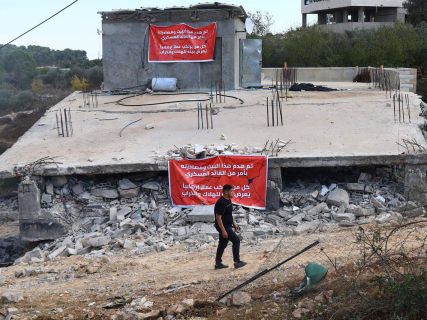
On 10 October, Israeli forces demolished Samara’s family home in the town of Biddu, northwest of Jerusalem, as retaliation for the attack.
Defense Minister Israel Katz has publicly backed the step taken by the prosecution. "It is an appropriate punishment for this despicable terrorist, a measure of justice for the Shukrun family," he emphasized.
On 30 March, the Israeli Parliament, the Knesset, gave the green light to a legal reform that allows the death penalty by hanging and in secret to be applied for terrorism offenses resulting in death, but limited to Palestinians, as Israeli citizens are excluded. The power to issue this type of sentence lies with the Israeli military courts, with exclusive jurisdiction over the Palestinian population in the occupied territories, an aspect that has prompted harsh criticism at the international level.