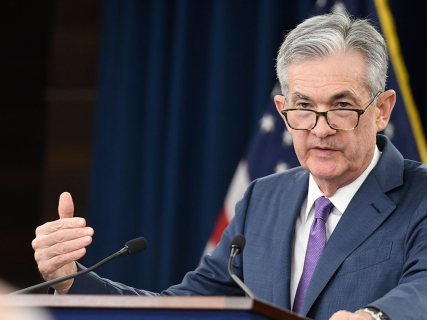
The chairman of the Federal Reserve, Jerome Powell, has faced his last monetary policy meeting at the helm of the organization this Wednesday with a decision marked by caution: interest rates remain unchanged in the range of 3.5%-3.75%, in a context of persistent inflation, economic uncertainty, and strong geopolitical tensions.
The decision of the US central bank reflects a strategy of prudence that Powell has defended during the last year under a clear premise: wait before acting. However, this last meeting also leaves an unusual image within the monetary committee: a significant internal division.
A divided committee in full uncertainty
The decision was approved, but not unanimously. Four of the twelve voting members were against it, evidencing growing tensions within the Federal Open Market Committee.
One of the dissenting votes was that of Stephen Miran, an economist aligned with Donald Trump's political circle, a supporter of an immediate rate cut. Three other members expressed reservations about the change in tone introduced in the final statement, considered slightly less aggressive regarding inflation control.
The institution recognizes that the international scenario complicates any move. The war in Iran and the pressure on energy markets have increased global economic uncertainty, affecting both growth expectations and the future evolution of prices.
Powell closes a chapter marked by political pressure
After eight years at the helm of the Federal Reserve, Powell leaves office at one of the most sensitive moments for the independence of the US central bank. His term began during Trump's first presidency and now concludes with the Republican once again installed in the White House.
During the last months, Trump has intensified his criticisms against Powell for refusing to reduce rates more quickly. The US president even turned the monetary official into a recurring political target, publicly questioning his management and accusing him of slowing down the economy.
Even so, Powell has maintained a prudent position, avoiding directly responding to pressure and defending the institutional independence of the Fed.
Kevin Warsh, favorite to take over
Everything points to the replacement falling to Kevin Warsh, backed by Trump and increasingly close to overcoming the necessary parliamentary procedure to assume the position.
His arrival could mark a turning point in US monetary policy. Markets are watching closely to see if the Fed's new direction will adopt a more favorable stance towards rate cuts, especially in a context where economic slowdown is beginning to worry as much as inflation.