









The Kremlin reiterated this Tuesday its reservations about Europe’s involvement in the talks between Russia and Ukraine, once again questioning the “added value” that its presence could bring in the next round of contacts, which will be held again in Abu Dhabi, the capital of the United Arab Emirates, even though no confirmed date has yet been set.
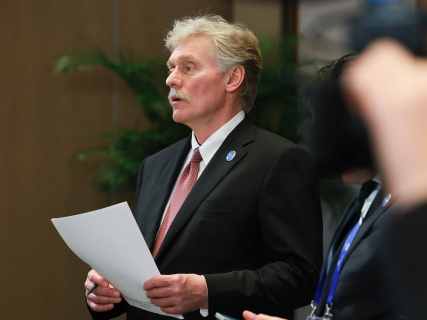
“The Europeans insist that it be a four-party format. We still do not fully understand the added value that the European participation could bring, nor the additional contribution that it could make to the process of a peaceful resolution,” the Kremlin spokesperson, Dimitri Peskov, said.
Peskov admitted, however, that all the parties involved agree that “these negotiations must continue,” although “dates have not yet been set” for a new meeting in the emirate’s capital, according to information released by the Russian agency TASS.
As for the possible presence of European representatives at the next meeting, the positions of the actors involved in the dialogue remain divergent. The United States keeps the option open, while Russia argues that, as long as Europe continues to supply weapons to Ukraine, it should not participate in the negotiating format.
For their part, the European partners have defended precisely that military support as one of the reasons for being at the negotiating table, along with their aspiration to participate in the design of the Euro-Atlantic security architecture that conditions the stability of the continent. Ukraine likewise argues that its future is closely linked to that of Europe, even more so in light of the intense pressures it continues to receive from both Washington and Moscow.
At the EU summit held in mid-month in Dublin, the Twenty-Seven agreed to send a delegation made up of representatives of the European Commission, of the European Council and security advisers from the E5 — Germany, France, Italy, Poland and the United Kingdom — in order to be present in the negotiating process.