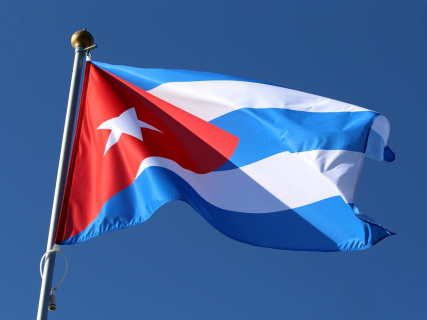


The National Assembly of People's Power (ANPP) of Cuba has given its approval this Thursday to a broad package of "economic" and "social" reforms aimed at advancing the liberalization of the island's economy and confronting the deep crisis the country is going through.
These measures, aimed at "dynamizing" national development and aligned with the Economic and Social Program for the year 2026 presented a week ago by Cuban President Miguel Díaz-Canel, are structured around 23 axes and include 176 transformations. The plan includes changes in the business framework, with an emphasis on modernizing production structures and diversifying management methods, among other aspects, as explained by Prime Minister Manuel Marrero during an extraordinary plenary session.
Díaz-Canel himself spoke at the same session, who, in a speech of about half an hour, stressed that Cuba "is living through the most difficult hours of this century" and that "reality imposes urgent and necessary changes." Alluding to the United States blockade against the island, the leader directly confronted Washington to state that "if they really want to help," they should allow the country to "trade, buy its medicines, import its fuel, receive investments, credits, and financing, and relate normally with its emigrants and with the world."
"To the United States Government we say, without hatred, but without fear: If you really want to help the Cuban people, let us live," proclaimed Díaz-Canel, calling such a potential rectification "something truly novel and ennobling on the part of the adversary."
Despite this, the Cuban leader emphasized that the approved changes do not respond "to the pressures of the Yankees" but are being promoted "in a sovereign manner" because, he pointed out, the country has reached a "moment of maturity and reflection, characteristic of the debate that has taken place over all these years, which is telling us that we must continue defending socialism, but building it with some transformations."
Food, energy, and foreign investment
In another part of his speech, the president announced that food will be treated as a "national security matter," with the aim of "ending idle lands." "Every piece of land that is today covered by marabú when it should be producing food, will have to have a clear answer: either it is put into production or it is handed over to whoever is willing to do so."
He also pointed out as a priority "recovering energy capacity" and reducing external dependence, while promoting decentralized solutions and increasing the incorporation of solar energy and other renewable sources into the country's economic system.
To advance in that objective, he detailed, the "direct entry" of foreign companies supplying panels, batteries, inverters, and associated solutions will be facilitated, "reducing intermediaries that increase costs for the population and for the country."
"Tariffs on the import of solar technologies, storage systems, and energy-saving equipment have already been eliminated. Now we will also move forward in eliminating taxes on their sale and on services related to their installation and maintenance," the leader added.
Regarding fuels, the Cuban government has given the green light to the commercialization of fuels through state management forms, always under state regulation and supervision and with "reasonable and transparent" profit margins.
Immediately after, Díaz-Canel highlighted the need for banks to be "more agile, more digital, closer to the people, and more useful to those who produce, export, import, invest, or undertake, opening space under strict regulation for financial institutions."
In the same vein, he emphasized direct foreign investment in the national private sector, assuring that "any Cuban citizen, resident in Cuba or abroad who is interested in investing, donating, contributing technology, opening a market, or undertaking a project in the country, will have a clear, stable, and respectful framework, as will foreign investors."
"To those who want to build with Cuba without trying to impose anything on Cuba, we say tonight with our hearts in our hands, here is your home and here is the open door," he concluded.