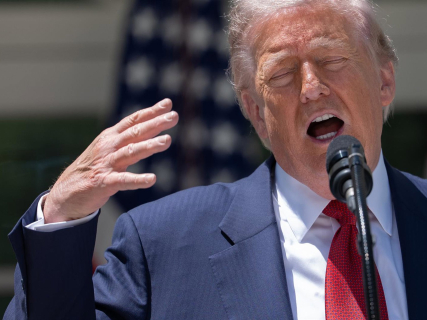

The President of the United States, Donald Trump, has announced that he will not attend his eldest son's wedding, Donald Trump Jr., this weekend, citing the need to remain in Washington at a time marked by growing tension with Iran and threats of a possible escalation of the conflict in the Middle East.
As the leader himself explained on his social network Truth Social, his decision responds to what he described as his "commitment to the country" and the need to remain in the US capital during a period he called "critical" for national security.
Iran and Cuba at the center of the US security agenda
Trump's absence from a high-profile family event coincides with a context of maximum geopolitical sensitivity, in which the relationship between the United States and Iran is once again at the center of international debate.
Although the White House has not publicly detailed new operations, the president has alluded in recent days to the existence of threats and the need to maintain the government's attention on foreign security matters.
The scenario has reactivated concerns about a possible military escalation in the region, the impact on global energy routes, and the stability of strategic allies in the Middle East.
Likewise, attention is also focused on Cuba, with the recent indictment of former leader Raúl Castro and the escalation of tension between the two countries.
"A moment when I cannot be absent"
In recent statements, Trump has affirmed that, despite his initial intention to attend the wedding, the current situation forces him to remain at the White House.
The president has insisted that the decision does not respond to a personal conflict, but to institutional responsibility in an international context that he defined as "delicate".