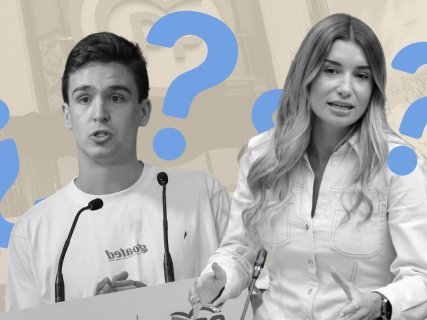

The presidency of the youth wing of a political party is not a symbolic position. It provides access to the main decision-making bodies, management, and public presence. In Génova, they are aware of this and are holding their breath in anticipation of a possible struggle between two of their main territorial delegations ahead of the next congress of Nuevas Generaciones, scheduled for July, in which the current leadership, headed by the woman from Bilbao Beatriz Fanjul, will be renewed.
Everything points to the fact that, on the playing field, two territories will clash to lead the youth organization in the coming years. The Community of Madrid has already made its choice public: they want the current president of the Madrid popular youth, Ignacio Dancausa, to access one of the positions of greatest visibility within the daily agenda of the Popular Party.
Featured story
Anglés, Dancausa and Landamburu: the names in the battle to chair the PP youth wing
4 minutes
Party officials at the regional level have already publicly shown their support for the young Madrid leader through social media, in a move interpreted within the PP as the first step of an organic campaign that threatens to raise internal tension in the coming weeks.
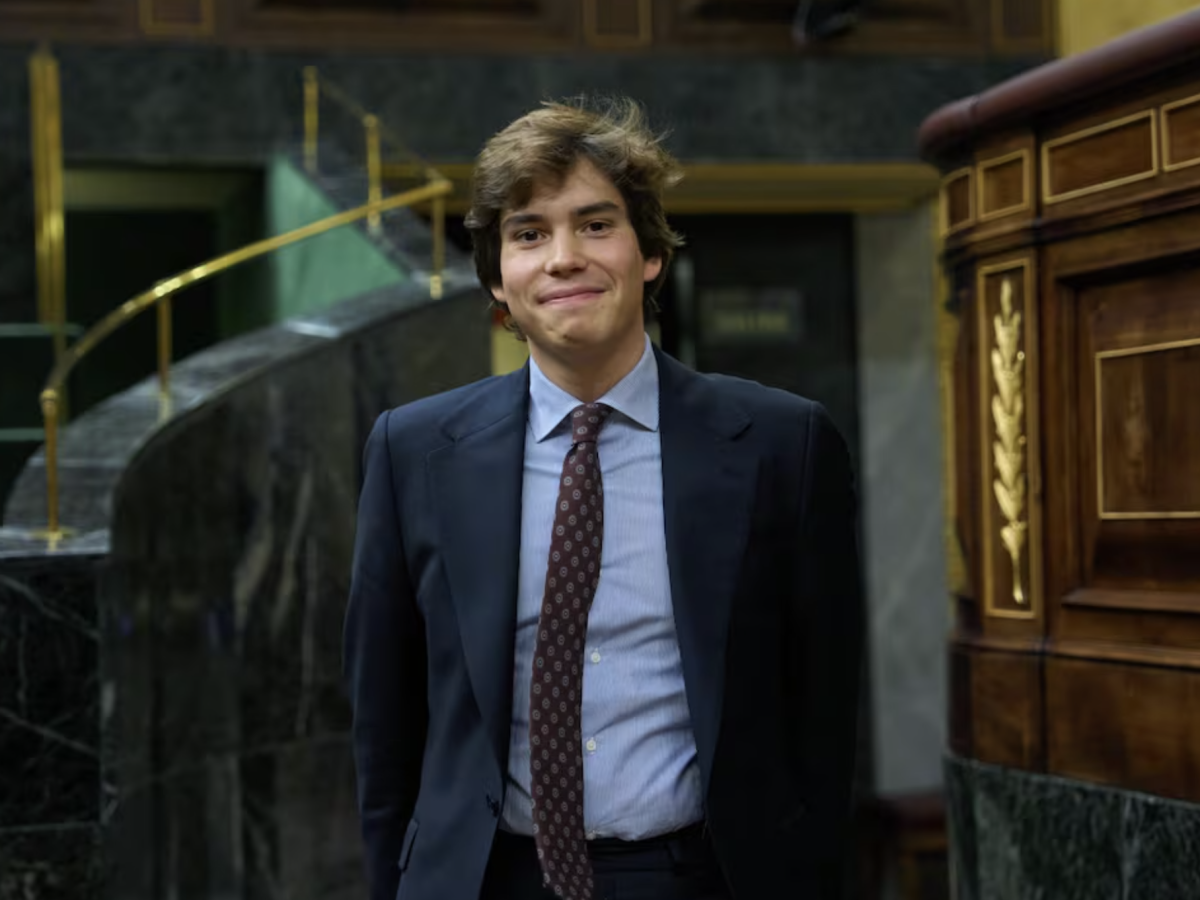
“This morning I have conveyed my decision to the national leadership of the Party and of NNGG. I want to lead an inclusive candidacy that unites Spanish youth and the organization, the largest in Spain at this crucial moment for our generation,” Dancausa himself announced on social media.
A move that, although expected due to his recent media appearances and the growing prominence he had assumed within the party's youth structure, has not been equally well received in all sectors of Génova.
Tengo mucha ilusión por movilizar a la juventud española para que llevemos pronto a Alberto Núñez Feijóo a la Moncloa, por eso he decidido presentarme a la presidencia de Nuevas Generaciones de España en el Congreso que se convocará este lunes.
— Ignacio Dancausa (@Idancausa) May 20, 2026
Esta mañana he trasladado mi…
There are voices at the national headquarters of Génova 13 that consider the step taken by the Madrid leader precipitous, especially considering that the current board of directors has not yet been officially dissolved. These sectors advocated waiting until next Monday —the date set for the formal dissolution of the current leadership— before the different teams interested in running for the process began to make their candidacies public.
Dancausa's anticipation has caused discomfort in some national offices and, at the same time, has forced other potential aspirants to accelerate internal movements, territorial contacts, and positioning strategies for the congress.
Candela Anglés, the Valencian alternative
As Demócrata learned, that would have been precisely the case of the Valencian Candela Anglés, one of the rising profiles within the Popular Party of the Valencian Community and one of the young leaders with the greatest organic and institutional projection within the popular space.
From her circle, they convey that her eventual candidacy would seek to distance itself from the centralism that, historically, has characterized a large part of the Madrid teams within New Generations. The regional deputy also represents a profile with strong territorial roots. Before making the leap to Les Corts Valencianes, she served as a councilor and president of the PP in her hometown of Càlig, in the province of Castellón, consolidating a career linked to municipalism and grassroots organic work.
No puedo estar mejor rodeada. #EntreTodos pic.twitter.com/oY84vzmelm
— CANDELA (@candelaangless) February 5, 2023
Anglés has become one of the young faces with the greatest political and digital reach for the formation in the Valencian Community. Her presence on social media has been steadily growing in recent months, and various internal party studies highlight her impact among young voters. In fact, the Vinces Digital Power ranking places her among the political leaders with the greatest digital reach at the national level, reinforcing her image as one of the emerging profiles of the PP's new communication ecosystem.
On the academic level, she stands out for a solid multidisciplinary preparation oriented towards social sciences, politics, and international relations. She holds degrees in Political Science and Government and in International Relations from the Universidad Rey Juan Carlos, qualifications she completed in 2023.
To this, she adds a Master's degree in Political Science and Government from the Universidad Francisco de Vitoria, taken between 2023 and 2024, reinforcing a political profile that the party considers especially competitive for connecting with new generations of voters.
Miguel Ángel Sastre, in the spotlight
Amidst all these internal movements, the figure of the current secretary general of Nuevas Generaciones, Miguel Ángel Sastre, also does not go unnoticed, as he has reportedly ruled out, at least for now, directly entering the race for the presidency of the youth organization.
However, this very Thursday he will attend an event in Valencian territory, a gesture that some internal sectors interpret as a possible nod to Anglés' candidacy.
Despite this, different voices within the PP downplay the political interpretations of the meeting and recall that the meeting in Paiporta had been agreed upon even before the national president of the party, Alberto Núñez Feijóo, officially announced the renewal of Nuevas Generaciones.
Much more than a youth dispute
Far from being a process limited solely to the youth ranks of the Popular Party, in numerous party offices the battle for Nuevas Generaciones is interpreted as a genuine territorial and strategic struggle within the Partido Popular.
After the Andalusian president, Juanma Moreno Bonilla, lost his absolute majority, the internal debate in Génova has intensified regarding the ideological and electoral direction the party should adopt in the coming years.
The discussion is already framed in very concrete terms: the Andalusian path of a moderate profile or the conservative and confrontational political model represented by Isabel Díaz Ayuso?
Feijóo's teams are fully aware that a large part of their chances of reaching La Moncloa depend on rebuilding their connection with young voters, especially after a significant portion of that segment ended up shifting to other ballots in the 2023 elections.
Territorial balance once again marks the internal debate
It is precisely there where the enormous importance of this process for Génova lies. The Valencian Community has historically had a decisive weight within the national leadership bodies of the Popular Party.
Currently, however, its representation within the party's hard core would be concentrated practically in the figure of the head of the Popular delegation in the European Parliament, Esteban González Pons.
Madrid, on the contrary, saw its position reinforced after the last national congress held in the summer of 2025. There, the figure of Alma Ezcurra, a former regional deputy from Madrid, gained specific weight, rising to third place within the national blue hierarchy.
Now, the battle for New Generations threatens to also become a new tug-of-war over the distribution of territorial power within the Popular Party.