
The heads of State and Government of 22 countries of the European Union have warned that decisions such as the regularization of a "very high number" of migrant people can become "attraction factors" and have linked the recent crisis in Ceuta with the ruling of the Supreme Court that confirmed that Spanish immigration law does not allow so-called hot returns. According to them, this ruling would have been used to "trigger this attack" and "abuse" the European migration and asylum system.
In a letter sent to the presidents of the European Council and the European Commission, António Costa and Ursula von der Leyen, as well as to the Irish Prime Minister, --presidency---, the signatories request the urgent convening of a videoconference of the EU Interior Ministers. Furthermore, they warn that they are prepared to "reinforce or reintroduce temporary controls" at internal borders in order to address the risk of secondary movements, despite the fact that no unauthorized displacement from Ceuta to other European countries has yet been confirmed.
"We cannot allow uncontrolled mass crossings, the instrumentalization of migration, or other hybrid threats to create the perception that it is possible to enter the European Union illegally," the leaders state in the letter, emphasizing the danger that the idea may take hold that "the illegal entry of a migrant can become a legal stay."
In their opinion, this perception could encourage new attempts to enter, undermine confidence in common migration policy, and bring "repercussions for all member States." For this reason, they insist that the European Union has the obligation to "effectively deter and tirelessly combat illegal migration," through coordinated action, the strengthening of external borders, and the review of "all policies that may serve as attraction factors."
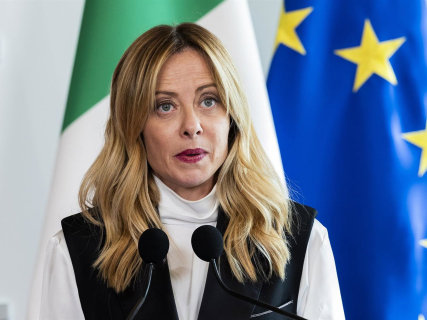
The letter is signed by the leaders of Italy, Germany, Austria, Belgium, Bulgaria, Croatia, Cyprus, Denmark, Slovakia, Slovenia, Estonia, Finland, Greece, Hungary, Latvia, Lithuania, Malta, the Netherlands, Poland, the Czech Republic, Romania, and Sweden. Many of these governments had already previously claimed a tougher stance at the European level; some, like Giorgia Meloni's Executive, have even suggested the re-establishment of internal border controls or that the possible suspension of Spain from the Schengen area be analyzed.