Moreno Bonilla's investiture fails after Vox's refusal

The PP candidate does not achieve an absolute majority in the first vote and keeps negotiations open with Vox before the second vote, scheduled in 48 hours. If it also fails, the two-month period to avoid a repeat election will begin.

2 minutes

EuropaPress 7632381 presidente funciones junta candidato pp reeleccion juanma moreno interviene

EuropaPress 7632381 presidente funciones junta candidato pp reeleccion juanma moreno interviene

Add DEMÓCRATA to Google

Ask FREN

Published

Last updated

2 minutes

Most read

The re-election of Juanma Moreno will have to wait. The acting president of the Junta and PP-A candidate to regain office has not obtained the necessary support this Tuesday to overcome the first vote of the investiture debate held in the Parliament of Andalusia.

The populars, who in the regional elections of last May 17 obtained 53 deputies, two less than the 55 seats that mark the absolute majority of the Chamber, needed the support of Vox, which has 15 parliamentarians. However, the formation of Santiago Abascal has maintained its rejection due to the lack of a political agreement with the PP.

During the two days of debate, Moreno defended the management of his previous governments and presented a program focused on economic growth, tax reduction, strengthening public services, and institutional stability. The popular candidate also insisted on his willingness to continue dialoguing with all political forces to form a "stable" Executive for the next four years.
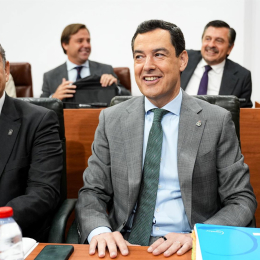
The opposition took advantage of the debate to distance themselves from the PP's project. From the PSOE-A, Moreno was reproached for his dependence on Vox to continue at the head of the Junta, while Por Andalucía and Adelante Andalucía accused him of hiding the concessions he would be willing to make to guarantee the support of Abascal's formation.
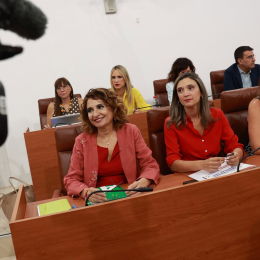
For his part, the regional leader of Vox, José Antonio Fuster, maintained negotiation pressure throughout his speech. In this regard, the national leadership had already warned in the previous hours that they would not support the investiture without an agreement that guaranteed the fulfillment of their main programmatic demands, even leaving open the possibility of prolonging the blockade if the PP does not modify its position.

And now what

The Statute of Autonomy and the Rules of the Parliament establish that, after the first vote fails, the candidate may submit to a second vote after 48 hours, in which absolute majority will no longer be necessary, but only a simple majority, that is, more votes in favor than against. That vote is scheduled for Thursday, July 2.

If Juanma Moreno also fails to be invested in that second opportunity, the period of two months provided for by the Statute of Autonomy for Parliament to elect a president of the Board will begin to count. During that period, new rounds of consultations may be held and new investiture debates may be presented, both with Moreno and with any other candidate who gathers sufficient support.

In the event that those two months pass without any candidate obtaining the confidence of the Chamber, Parliament will be automatically dissolved and new regional elections will be called. If the calendar provided for by Andalusian legislation is maintained, the elections could be held at the end of October.

More key points, information and questions with FREN

AI-GENERATED CONTENT

What legislative steps remain in the investiture process in the Parliament of Andalusia if a simple majority is also not achieved in the second vote?

After consulting the available sources, there is no sufficiently detailed and updated information on the specific procedure followed by the Parliament of Andalusia when, after a first failed investiture vote, a simple majority is also not reached in the second vote. This means I cannot rigorously describe all the concrete steps that are activated from that moment on (exact deadlines, limits on new candidacies, or the precise moment when a possible dissolution of the Chamber would occur). It is known that the applicable framework is the Statute of Autonomy of Andalusia and the Rules of the Parliament of Andalusia, but the details of their articles are not available in the consulted sources. Below I explain the general context and which aspects would need to be checked in those regulations to answer your question precisely.

1. Applicable regulatory framework in Andalusia

The investiture procedure in Andalusia is regulated, firstly, by the Statute of Autonomy for Andalusia, which sets the foundations of the autonomous parliamentary system (election of the Presidency of the Junta, confidence relationship between Parliament and Government, and cases of early dissolution). Secondly, the Rules of the Parliament of Andalusia develop the procedural details: organization of debates, voting system, deadlines between candidate proposals, and, if applicable, the chaining of different investiture sessions.

To know exactly what happens after a second vote fails (without a simple majority), it would be essential to refer to the literal text of these documents: the Statute usually specifies the figure of investiture and the possibility of dissolving the Chamber if no president is elected within a certain period; the Rules specify how candidate proposals and different sessions succeed each other.

2. General outline of autonomous investitures in Spain

Although the specific Andalusian regulation is not available in the consulted sources, most autonomous communities follow a similar pattern in their parliamentary systems:

First, an investiture session is held in which the proposed candidate presents their program and, after debate, is subjected to a first vote that usually requires an absolute majority of the Chamber. If that majority is not reached, a second vote is held (usually 24 or 48 hours later), in which a simple majority (more votes in favor than against) is usually sufficient.

If a simple majority is also not achieved in that second vote, what usually happens in many autonomous parliaments is that:

a) The investiture procedure with that candidate is not “blocked” automatically, but the Presidency of the Parliament can open a new cycle of consultations with political groups to propose another candidate, or even the same one if new parliamentary support circumstances exist.
b) A maximum global deadline is opened (for example, counted from the first investiture vote or from the constitution of the Parliament) within which a president must have been elected. If that deadline passes without any candidacy succeeding, the community's Statute usually provides for the automatic dissolution of the parliament and the calling of new autonomous elections by the president of the community or, failing that, by the body designated by the regulation.

3. Key elements to verify for Andalusia

To answer your question exactly in the specific case of Andalusia (what happens after the second vote fails), it would be necessary to check, article by article, the following points in the Statute of Autonomy and the Rules of the Parliament:

1) Number of attempts and possible candidates: whether, after a candidate fails in two votes, they can be proposed again, or if the Presidency of the Chamber must seek another candidacy. It is also advisable to know if there is a limit on investiture proposals within the same legislative blockage period.

2) Maximum investiture deadline: the Statute usually indicates a number of days for the Parliament to elect a president from a specific milestone (for example, the first failed vote or the date of the Chamber's constitution). Once that deadline expires without election, dissolution and electoral call are normally activated.

3) Role of the Presidency of the Parliament: the Rules usually detail how the Presidency conducts consultation rounds with groups, how it formalizes the candidate proposal, how it convenes new investiture sessions, and whether it has leeway to space or group different candidacies within the maximum deadline.

4) Relation to the dissolution of the Chamber: the Statute usually determines whether dissolution is automatic or requires a formal act (decree) by the Presidency of the Junta of Andalusia, and how the date of new autonomous elections is set once the investiture blockage is confirmed.

4. Limitation of available information

Since the consulted sources do not provide the specific text of the Statute of Autonomy of Andalusia nor the Rules of the Parliament of Andalusia, it is not possible to specify the exact deadlines or the closed sequence of steps after a second failed vote. For a legally exact answer, it is appropriate to go directly to these two regulations and review the provisions dedicated to the election of the Presidency of the Junta and the investiture procedure. Without that literal content, any more detailed description would risk being inaccurate or transferring rules from other autonomous parliaments to the Andalusian case.

What are the powers and functions of the president of the Junta of Andalusia according to the Statute of Autonomy?

The Statute of Autonomy for Andalusia assigns the president of the Junta a set of powers that place them at the center of the autonomous executive power. According to the Organic Law 2/2007, reforming the Statute, they direct and coordinate the activity of the Council of Government and the Andalusian Administration, appoint and dismiss councilors, and hold the supreme representation of the Autonomous Community and the ordinary representation of the State in Andalusia. Additionally, they promulgate Andalusian laws in the name of the King, are politically accountable before the Parliament, and can promote popular consultations on matters of general interest in autonomous or local matters. Their election corresponds to the Andalusian Parliament, and their criminal responsibility is demanded before the Criminal Chamber of the Supreme Court.

1. Function of directing the Government and Administration

The Statute establishes that the president of the Junta “directs and coordinates the activity of the Council of Government” and “coordinates the Administration of the Autonomous Community.” This means that:

In the governmental sphere, they set the general lines of the Junta's political action, ensure the cohesion of the Council of Government, and guide the drafting of regulations and other executive decisions corresponding to the Council of Government itself, which is the collegiate body that “exercises the political direction of the Autonomous Community, directs the Administration, and develops the executive and administrative functions of the Junta of Andalusia.”

In the administrative sphere, the presidency coordinates the entire autonomous administration, ensuring that the ministries act coherently with the government program and the competencies of the Autonomous Community.

2. Appointment and dismissal of councilors

The Statute expressly indicates that the president “appoints and dismisses the Councilors.” Once elected by the Parliament and appointed by the King, they proceed to “appoint the members of the Council of Government and distribute among them the corresponding executive functions.” This power grants direct control over the configuration of the autonomous executive and the distribution of competencies among the ministries.

3. Institutional representation

The president “holds the supreme representation of the Autonomous Community and the ordinary representation of the State in Andalusia.” The first dimension implies being the highest political authority in Andalusia both internally and externally. The second means acting, in Andalusian territory, as the ordinary representative of the State, in coherence with the constitutional and statutory framework.

4. Promulgation of Andalusian laws

The Statute provides that “the laws of Andalusia shall be promulgated, in the name of the King, by the President of the Junta, who shall order their publication in the Official Bulletin of the Junta of Andalusia within fifteen days of their approval, as well as in the Official State Bulletin.” For validity purposes, the publication date in the BOJA applies. This power makes the president the authority that completes the autonomous legislative procedure, ensuring the entry into force of the norms approved by the Parliament.

5. Political responsibility and relationship with the Parliament

The Statute states that “the President is politically responsible before the Parliament.” This is framed within a parliamentary system in which:

The Parliament elects the president of the Junta from among its members. After the proposal by the president of the Parliament, the candidate presents their program before the Chamber, which must grant its confidence: in the first vote by absolute majority and, if not achieved, by simple majority in subsequent votes.

The Parliament can demand political responsibility from the Council of Government, and the Statute itself assigns the Chamber, among its competencies, the “election of the President of the Junta” and the “appreciation, if applicable, of the incapacity of the President of the Junta.” Thus, the president is subject both to political control and to the possible assessment of their incapacity by the Andalusian legislature.

6. Popular consultations

The statutory text foresees that “the President may propose on their own initiative or at the request of citizens, in accordance with the provisions of article 78 and State legislation, the holding of popular consultations within the Autonomous Community, on matters of general interest in autonomous or local matters.” This power is always exercised within the margins set by State legislation and the Statute itself.

7. Delegation of functions and criminal responsibility

The president may “temporarily delegate their own executive functions to one of the Vice Presidents or Councilors,” which ensures continuity in the exercise of executive power in specific situations.

In the legal-criminal sphere, the Statute provides that “the criminal responsibility of the President of the Junta shall be enforceable before the Criminal Chamber of the Supreme Court. Before the same Court, civil liability incurred by the President of the Junta on occasion of the exercise of their office shall also be enforceable.” This establishes a specific jurisdiction linked to the institutional importance of the office.

What were the results and the final composition of the Andalusian Parliament after the autonomous elections on May 17?

After the Andalusian autonomous elections on May 17, 2026, the Parliament of Andalusia was composed of 109 deputies distributed among five parties: PP (53 seats), PSOE-A (28), Vox (15), Adelante Andalucía (8), and Por Andalucía (5). The PP won with 41.6% of the votes but lost the absolute majority it had achieved in 2022 (then it had 58 seats), falling two seats short of the 55-seat threshold. PSOE-A recorded its worst historical result with 28 deputies, while the alternative left was reorganized between Adelante Andalucía and Por Andalucía. Governance depends on an understanding between PP and Vox, which together hold 68 seats and comfortably exceed the absolute majority.

Overall results and seats by party

The final composition of the Andalusian Parliament after May 17, 2026, is as follows:

Seat distribution (out of 109):

People's Party (PP): 53 seats, with around 41.6% of the votes cast.
Spanish Socialist Workers' Party of Andalusia (PSOE-A): 28 seats, with 22.71–22.72% of the votes.
Vox: 15 seats, with 13.82% of the votes.
Adelante Andalucía: 8 seats, with 9.62% of the votes.
Por Andalucía: 5 seats, with 6.31% of the votes.

These data appear consistently in official results and major electoral data aggregators, such as the Andalusian Electoral Board and specific statistical tools, accessible through the Andalusian Electoral Board, RTVE, EpData, or the summary on Wikipedia.

From political journalism, El Demócrata summarizes the same picture: PP as the leading force, PSOE-A at historic lows, Vox consolidated as the third force, and an alternative left split between Adelante Andalucía and Por Andalucía, which retains representation though far from previous peaks.

Absolute majority and parliamentary blocs

The Andalusian Parliament sets the absolute majority at 55 seats (half plus one of 109). In 2026:

PP (53) falls two short of that absolute majority, unlike in 2022 when it reached 58 deputies. This means it cannot govern alone.
PP + Vox sum 68 seats, a clearly majority bloc in the Chamber.
Left bloc (PSOE-A + Adelante Andalucía + Por Andalucía) gathers 41 seats, well behind the right bloc.

In this context, specialized media analyses highlight that PP needs some kind of understanding with Vox for investiture and key votes during the legislature. Some sectoral reports, such as the analysis on health negotiation published in Redacción Médica, indicate that Vox conditions its support on measures like “national priority” in access to public healthcare, following models from other communities.

Participation and electoral behavior

Participation was around 63–65% (various official and media sources place it between 63.0–64.8%), with an increase of about 7–8 points compared to previous autonomous elections. The Junta of Andalusia highlights this widespread increase by provinces, noting cases like Córdoba (close to 69% participation) or the strong rise in Almería, which exceeded 62%. Details can be consulted in institutional information disseminated by the Junta, for example in this official note.

In territorial terms, aggregated data show that:

PP was the leading force in all Andalusian provinces, consolidating a very broad territorial hegemony.
PSOE-A remained the second force in most constituencies, except in Almería, where Vox overtook it in votes.
Adelante Andalucía competed strongly in Seville and Cádiz, where it even challenged Vox for third place, while Por Andalucía maintained a more modest but stable presence.

The newspaper El Demócrata puts these results in historical perspective: PSOE, which in 1982 reached 66 seats and dominated the community for almost four decades, chains successive lows (33 in 2018, 30 in 2022, and 28 in 2026), while PP went from being a secondary force in the eighties to achieving an absolute majority in 2022 and now remaining as a clear leading force though without its own majority.

Political balance after the Andalusian May 17

May 17, 2026 confirms a new political cycle in Andalusia: the center-right (PP + Vox) clearly dominates the Chamber, and PSOE-A fails to reverse its decline. The left to the left of PSOE remains fragmented into two spaces (Adelante Andalucía and Por Andalucía), which gives it parliamentary visibility but limits its capacity to compete for the hegemony of the progressive bloc. Post-election analyses, including those from El Demócrata, agree that the challenge of the legislature will be managing that PP-Vox majority and the role of an opposition weakened numerically but with a long institutional tradition in the community.

How were the seats exactly distributed by provinces in the Andalusian elections of May 17, 2026? What investiture pacts or agreements did PP and Vox finally reach after those results in the Andalusian Parliament? How do these 2026 results compare with the Andalusian elections of 2018 and 2022 in terms of votes and seats by party?

Play

Test your knowledge with FREN!

How much do you know about this topic? Answer the following 3 questions.

How many deputies did the PP-A obtain in the regional elections on May 17?

Question 1 of 3

What majority is required in the second vote of the investiture debate in Andalusia?

Question 2 of 3

What happens if after two months no candidate obtains the confidence of the Andalusian Parliament?

Question 3 of 3

Hola, soy Fren. ¿Cómo te ayudo?