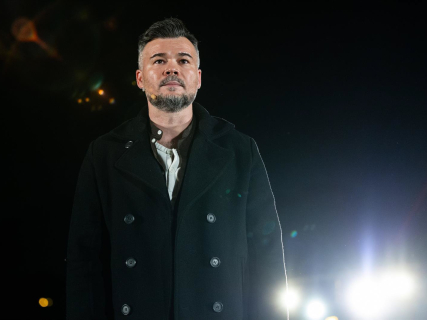

The top of the ERC list for Congress for Barcelona in the next general elections, Gabriel Rufián, says that the logic of “the worse, the better” is “toxic” for the independence movement and emphasizes that he rejects the idea that his political project should be built on the suffering of citizens.
“I’d rather persuade with facts, with a speech that talks about a country project, about living conditions, housing, transport, instead of waiting for a scenario in which people suffer and then coming out as the savior. That is what a part of the independence movement sometimes wants,” he said in an interview with “La Vanguardia,” collected by Europa Press this Sunday.
In this context, he has directed his criticism at Junts: “If I were the creator of the Junts campaign, I would change it from top to bottom. It’s a huge mistake to place yourself in the middle of a scenario of fascism and anti-fascism,” he said.
Likewise, Rufián described the Executive’s housing policy as an “enormous failure,” and also questioned the management of high-speed rail, which, in his view, has become a failed bet on the part of the State.
When asked about his proposal for a concentration Govern in Catalonia in the event that PP and Vox come to power in the State, he admitted that he tends to open too many fronts, but he maintains that “what’s coming is so brutal that it requires a national commitment.”