
The new map of Sumar's leaderships: who is in charge after Yolanda Díaz and who could aspire to La Moncloa

Verónica M. Barbero and Rosa Martínez take the reins in the post Yolanda Díaz era, but the incógnita of who will lead the coalition in the general elections remains unresolved

3 minutes

ILUSTRACIONES TEMAS (19)

ILUSTRACIONES TEMAS (19)

Add DEMÓCRATA to Google

Ask FREN

Published

3 minutes

Most read

The alternative left to the PSOE is in full reconstruction. This Saturday, July 11, Sumar celebrates its General Assembly, a milestone with which the magentas will begin to paint the canvas of what they intend to be in the post-Yolanda Díaz era. A vital step also towards a unified candidacy with Izquierda Unida, Más Madrid, and the Comunes. What is moving? What is the map of leadership on the left?

A tandem to pilot a new horizon

The political document that will emerge from the conclave will redefine the ideological identity of the project: “Eco-socialist laborism”. And the tandem that will lead the Movement embodies both souls and unites the two poles with the most weight within the organization.

On the one hand, the more laborist perspective, with Verónica Martínez Barbero at the helm. A labor inspector, she was the Director General of Labor and came from Yolanda Díaz, who entrusted her with the parliamentary spokesperson role after Íñigo Errejón's departure.
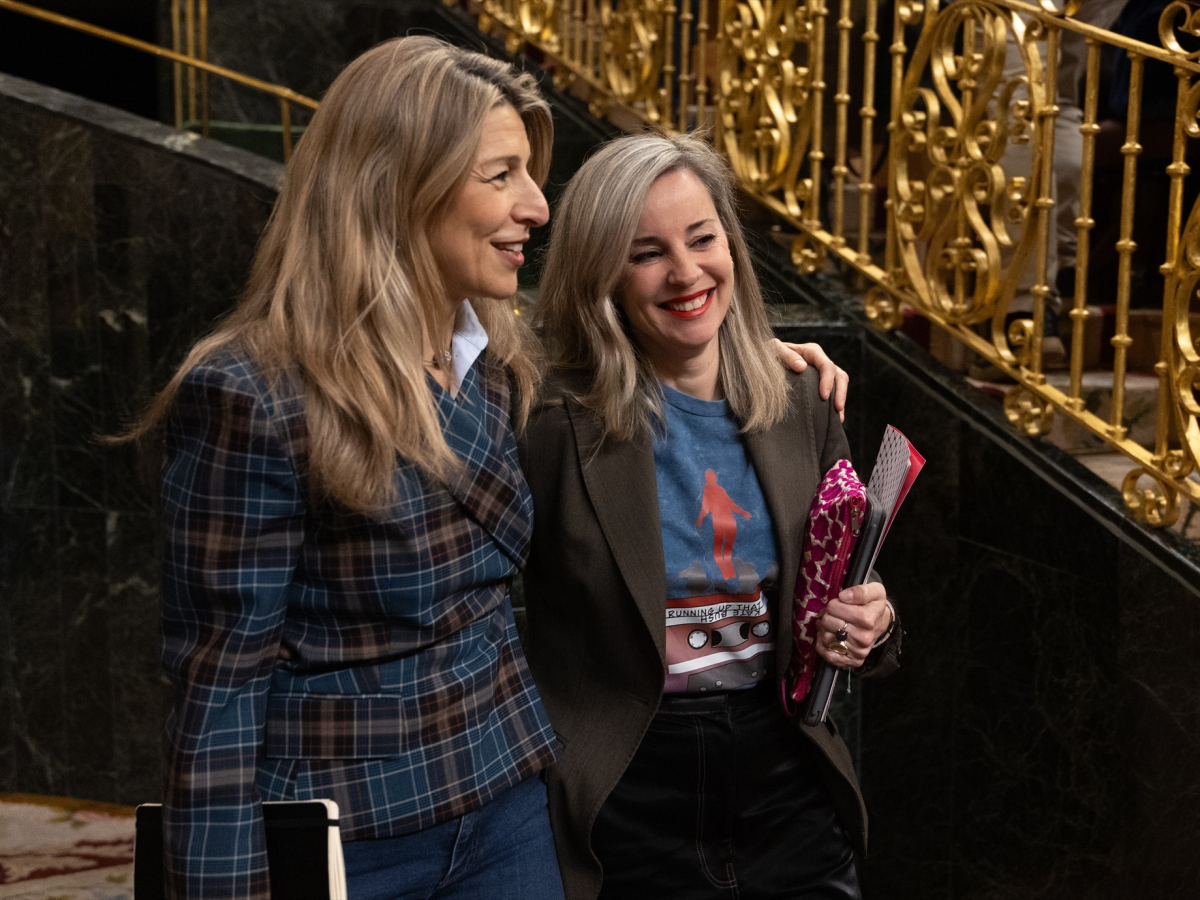
The Second Vice President and Minister of Labor and Social Economy, Yolanda Díaz (left), and the spokesperson for Sumar in Congress, Verónica Martínez Barbero (right), during a government control session | Eduardo Parra (Europa Press).
The Second Vice President and Minister of Labor and Social Economy, Yolanda Díaz (left), and the spokesperson for Sumar in Congress, Verónica Martínez Barbero (right), during a government control session | Eduardo Parra (Europa Press). -

Alongside her, Rosa Martínez, who was a co-spokesperson for Equo. She is currently the Secretary of State for Social Rights, Pablo Bustinduy's second-in-command at the Ministry.
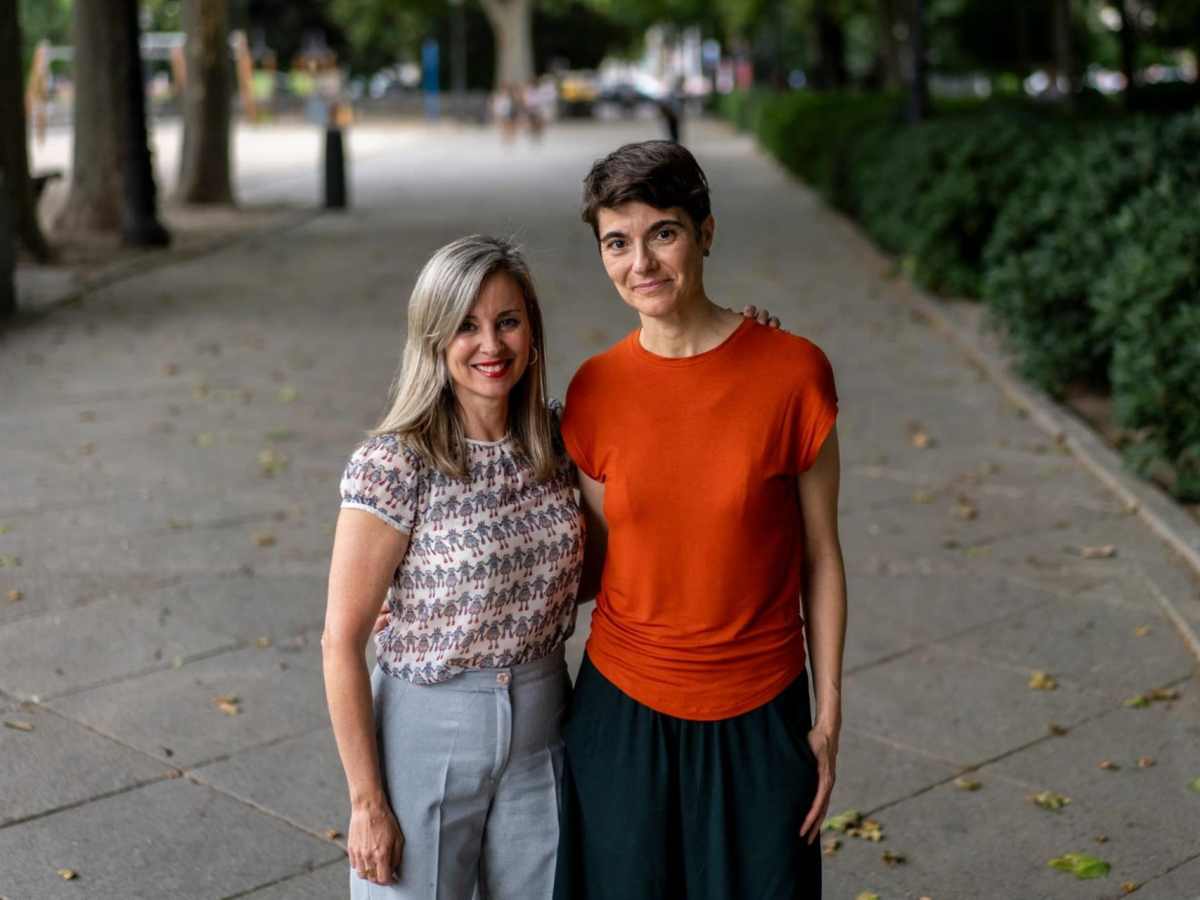
The spokesperson for Sumar in Congress, Verónica Martínez Barbero, and the Secretary of State for Social Rights, Rosa Martínez. MOVIMIENTO SUMAR
The spokesperson for Sumar in Congress, Verónica Martínez Barbero, and the Secretary of State for Social Rights, Rosa Martínez. MOVIMIENTO SUMAR -

The new leadership seeks to symbolize the balance between the laborist profile and ecological sensitivity. It also represents the continuity of two of the main spheres of influence within the space: Yolanda Díaz's and Pablo Bustinduy's.

And the candidate?

Verónica Martínez Barbero and Rosa Martínez will lead the Movimiento Sumar, but the candidate for the general elections (expected in February) is far from defined - and the unknown will not be revealed this Saturday.

The favorite of the magentas remains the Minister of Social Rights, Consumer Affairs and the 2030 Agenda, Pablo Bustinduy, who insists on rejecting the offer. Without him, the equation to solve the X becomes complex due to the lack of profiles.
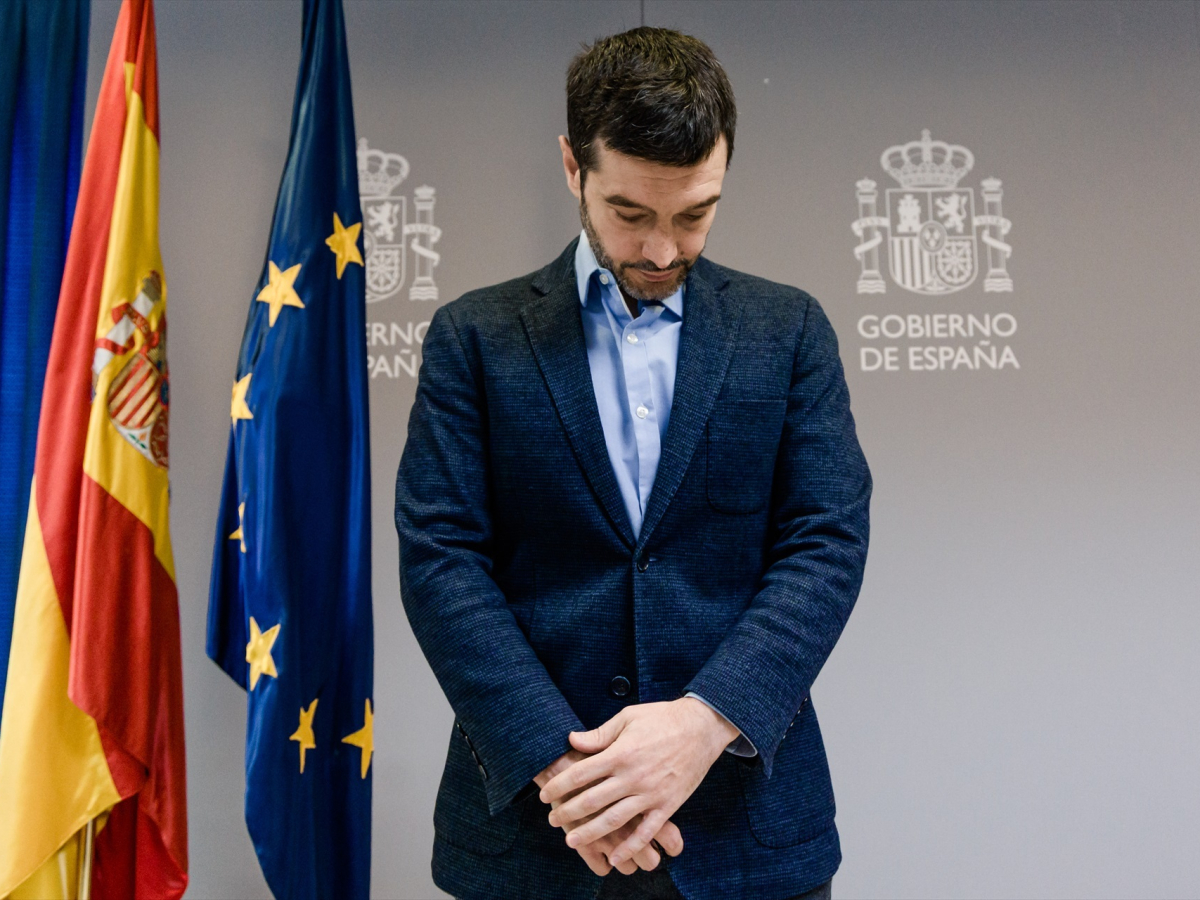
The Minister of Social Rights, Consumer Affairs and the 2030 Agenda, Pablo Bustinduy, gives a press conference, at the Ministry's headquarters, on March 23, 2026, in Madrid (Spain) | Carlos Luján
The Minister of Social Rights, Consumer Affairs and the 2030 Agenda, Pablo Bustinduy, gives a press conference, at the Ministry's headquarters, on March 23, 2026, in Madrid (Spain) | Carlos Luján -

In Movimiento Sumar, visible faces with great media focus are not abundant. The only minister, and therefore recognizable face, who will join the new leadership will be Ernest Urtasun, head of Culture, who will combine his militancy with his Comuns membership card. His name is one of the most powerful, he is the current spokesperson and is rumored to lead the candidacy in 2027, although some voices dismiss him.

The unitary list of Sumar's leadership includes other leaders who were part of the top management and will repeat: the Secretary of Feminisms, Amanda Andrades, and four deputies from the group, namely, Lander Martínez, Laura Vergara, Viviane Ogou, and Esther Gil. Profiles that were better known, but close to the former coordinator, Lara Hernández, such as Txema Guijarro, are left out.

Looking outside: less room to negotiate

Sumar has changed. It will no longer be the structure created specifically for Yolanda Díaz. From an umbrella, it will become an organization that integrates the alliance with IU, Más Madrid, and Comuns. A coalition in which, moreover, it will lose weight due to its current weakness after the departure of its most recognizable figures and the internal war over the harassment accusations against Lara Hernández.

Of the four parties that will form the alliance, none has a clear contender for Moncloa. The leader of Más Madrid, Mónica García, will contest the elections for the Community of Madrid and Rita Maestre, the mayoralty of the capital, after winning the primaries. For his part, Antonio Maíllo does not seem to be an alternative. The general coordinator of IU will remain in the Parliament of Andalusia and his results were not particularly good, being surpassed by José Ignacio García, from Adelante Andalucía.

Sumar's new leadership is born with a dual mission: to rebuild the party after Yolanda Díaz's departure and to negotiate, from a weaker position than two years ago, the future unitary candidacy of the left alternative to the PSOE. The leadership of the space remains, for now, ownerless.

More key points, information and questions with FREN

AI-GENERATED CONTENT

What are the parliamentary procedures necessary for Sumar to present a unified candidacy in the upcoming general elections?

Based on the information available from the consulted sources, the only procedures that can be detailed precisely are the parliamentary procedures related to the formation of parliamentary groups after general elections, not the complete set of legal-electoral steps (before the Electoral Board, etc.) necessary for a platform like Sumar to present a unified candidacy. Nevertheless, these parliamentary procedures are key to understanding what happens once the unified candidacy obtains seats in the Congress and the Senate. Regarding the requirements and procedures for registering coalitions before the electoral administration, endorsements or signatures, and other strictly electoral matters, no further information is available in the consulted sources.

Formation of a parliamentary group after the elections

If a unified candidacy like Sumar runs in the general elections and obtains deputies, the central parliamentary step is the formation of its parliamentary group in the Congress of Deputies. According to the available information, the basic requirements to form a group in the Congress are as follows:

  • Minimum number of deputies: a minimum of 15 deputies is required.
  • Quantitative exception: a group can also be formed with at least 5 deputies, provided that 15% of the votes were obtained in the constituencies where they ran or 5% of the votes at the national level.
  • No duplication: no deputy can be part of more than one parliamentary group.
  • Deadline: the request to form a group must be submitted within five days following the constitutive session of the Congress.
  • Name: the group must adopt a name that clearly identifies it.
  • Admission: the Congress Board is the body that accepts or rejects the formation of the group.

Deputies who do not meet these requirements join the Mixed Group. All this is regulated in the Congress Rules, in articles 23 and 24, according to the available information.

Participation of multiple parties in the same candidacy and group

An important element for a unified candidacy is that several political parties can be integrated into the same parliamentary group. The available information indicates that this is perfectly possible and, in fact, common when different formations run in electoral coalitions or under the same brand:

  • Allied parties or those that have run in coalition can form a single parliamentary group to pool forces and meet the minimum seat and vote requirements.
  • This practice is especially used by small or regional forces that, united, obtain better representation conditions and access to resources.
  • The Congress Board must authorize the creation of these groups and can reject it if it considers it an “artificial” group to circumvent the rule.

Therefore, from a parliamentary perspective, for a “unified candidacy” to project itself as such in the Cortes, it is necessary that, once seats are obtained, a single parliamentary group is configured that groups the elected deputies from the different formations that supported that candidacy.

Internal operating rules of the coalition in Parliament

In addition to the general rules of the Congress, the available information emphasizes that parliamentary groups can have internal statutes or their own regulations. These are not legally mandatory but are common and serve to organize coexistence among different parties within the same group:

  • Regulate the election of the spokesperson and other internal positions.
  • Distribute speaking times in the Plenary and committees.
  • Establish decision-making procedures within the group.
  • Set criteria for voting discipline and management of internal disagreements.
  • Appoint representatives in committees and other parliamentary bodies.

These statutes cannot contradict the Congress Rules but can adapt to the political needs and balances among the parties that make up the unified candidacy. In the case of a broad platform like Sumar, this type of internal rules would be a key instrument to convey to Parliament the political agreements previously reached among the forces that compose it.

Limited role of the Chambers in the unified candidacy

Based on the available information, it can be stated that the role of the Congress and the Senate is concentrated in the post-election phase (formation of groups, internal organization, and parliamentary action). There are no specific procedures before the Chambers prior to the presentation of a unified candidacy to the general elections in the consulted sources. Those prior steps fall within the scope of electoral regulations and the electoral administration (coalition registration, presentation of lists by constituency, endorsements, etc.), about which no further detail is available in the sources used.

What specific requirements does the electoral regulation establish to register a coalition like Sumar before general elections? How does the Congress Board decide if a group of deputies constitutes an “artificial” parliamentary group and can deny it? What practical advantages would it have for Sumar to form a single parliamentary group instead of its parties joining the Mixed Group?

What legal powers does the Minister of Social Rights, Consumer Affairs, and Agenda 2030 have in the Government of Spain?

The Minister of Social Rights, Consumer Affairs, and Agenda 2030 is responsible for proposing and executing the Government's policy in matters of social welfare, disability and dependency, consumer affairs and gambling, animal protection, and promotion of Agenda 2030. These powers are mainly established in Royal Decree 829/2023, of November 20, which restructures ministerial departments, modified by Royal Decree 1230/2023, of December 29. Additionally, as head of a ministerial department, the minister exercises the general functions attributed to all ministers by the legal system (department management, submission of legislative and budgetary initiatives, etc.). Below are detailed the minister's material powers and the basic regulatory framework that supports them.

1. Basic regulatory framework

The powers of the Ministry of Social Rights, Consumer Affairs, and Agenda 2030 and, by extension, its head, are supported by two key pieces:

  • Royal Decree 829/2023, of November 20, which restructures ministerial departments, creates the Ministry of Social Rights, Consumer Affairs, and Agenda 2030, and defines its material scope. It can be consulted in the BOE at this royal decree.
  • Royal Decree 1230/2023, of December 29, which modifies the previous one and updates some aspects, including the section related to the ministry's senior structure. It is available in this modifying royal decree.

Additionally, the basic organic structure of ministerial departments is set by Royal Decree 1009/2023, of December 5, but the consulted sources do not provide details of its articles specifically applicable to the Ministry of Social Rights, Consumer Affairs, and Agenda 2030. No further information is available on this specific point in the consulted sources.

2. Material powers of the Ministry (and, in practice, of the minister)

The article related to the Ministry of Social Rights, Consumer Affairs, and Agenda 2030 in Royal Decree 829/2023, according to the wording in force after Royal Decree 1230/2023, establishes that:

  • Social welfare, cohesion, and care for dependency and disability: “The Ministry of Social Rights, Consumer Affairs, and Agenda 2030 is responsible for proposing and executing the Government's policy in social welfare, cohesion, and care for dependent persons or those with disabilities.” The minister directs, promotes, and coordinates state policies in these areas (social services, support for personal autonomy, inclusion, etc.).
  • Animal protection: The same provision attributes to it the Government's policy “as well as animal protection.” From this derive the ministry's powers in animal welfare and protection, beyond those corresponding to autonomous communities or other departments.
  • Consumer affairs and consumer protection: The royal decree adds that “the Ministry is responsible for proposing and executing the Government's policy in consumer affairs and consumer protection.” The minister is, therefore, the political authority responsible for the state consumer policy (basic regulations, market surveillance at the state level, coordination with autonomous communities, etc.).
  • Gambling: Within the same section, competence in “gambling” is specifically included. This covers state regulation and supervision of gambling at the national level (state lotteries, state-competent online gambling, etc.) through bodies attached to the ministry.
  • Promotion of Agenda 2030: Finally, the royal decree indicates that “likewise, the Ministry is responsible for proposing and executing the Government's policy to promote the implementation of the United Nations Agenda 2030.” The minister thus leads the coordination and monitoring of state public policies linked to the Sustainable Development Goals (SDGs).

3. Functions as a Government member and department head

Beyond the material distribution above, the Minister of Social Rights, Consumer Affairs, and Agenda 2030:

  • Leads the Ministry: exercises the department's leadership, sets political priorities, approves internal instructions, and coordinates the actions of the State Secretariat for Social Rights and other senior and management bodies assigned to it.
  • Proposes regulations and policies to the Council of Ministers: submits draft laws, royal decrees, and agreements in matters within its scope (social services, disability, consumer affairs, gambling, Agenda 2030, animal protection), as well as programs and strategic plans.
  • Manages the department's budget and resources: promotes the preparation of the ministry's budget within its competence and supervises its execution through the undersecretariat and other management bodies.
  • Representation and interministerial coordination: acts as the Government's representative in its material sphere, participates in delegated commissions and collegiate bodies, and coordinates with other ministries policies affecting social rights, consumer affairs, or Agenda 2030.

4. Bodies through which it exercises its powers

The Royal Decree 829/2023 itself specifies that the Ministry of Social Rights, Consumer Affairs, and Agenda 2030 “has, as a superior body, the State Secretariat for Social Rights.” Through this State Secretariat and other bodies developed in subsequent regulations, the minister deploys his powers in various areas (childhood and family, disability, social services, consumer affairs, gambling, SDGs, etc.). No further information is available in the consulted sources about the details of that developed structure.

What specific bodies depend on the Ministry of Social Rights, Consumer Affairs, and Agenda 2030 and how are these powers distributed among them? How are the powers of the Minister of Social Rights, Consumer Affairs, and Agenda 2030 coordinated with those of the autonomous communities in social services and consumer affairs? What role does this ministry play in the practical implementation of Agenda 2030 and the Sustainable Development Goals in Spain?

What were the results of the latest elections in the Community of Madrid for Más Madrid and Adelante Andalucía?

In the latest regional elections held in each territory, Más Madrid and Adelante Andalucía obtained very different results. In the Community of Madrid, in the elections of May 28, 2023, Más Madrid achieved 27 seats and around 18.3% of the votes, consolidating itself as the main left-wing force according to several reports and subsequent polls, such as those from Sigma Dos and Telemadrid. In Andalusia, the most recent elections were on May 17, 2026, where Adelante Andalucía obtained 8 seats and 9.62% of the votes, according to the official note from the Junta de Andalucía (Andalusian election results 2026). In the previous 2022 elections, this same formation had only obtained 2 deputies and 4.58%.

Community of Madrid: Más Madrid's result in 2023

The last regional elections in Madrid were held on May 28, 2023. There has been no new election in the Community since then, so these are still the “current” results for Más Madrid.

Various electoral analysis pieces and subsequent polls, such as the one from Sigma Dos for Telemadrid and others collected by the newspaper Demócrata, cite as reference that in 2023:

  • Más Madrid obtained 27 seats in the Assembly of Madrid.
  • Its support was around 18.3% of the votes (a figure that in some sources is specified as 18.37%).

In several subsequent polls, such as those published by Sigma Dos for Telemadrid and another from Sigma Dos for Telemadrid 2025, it is expressly recalled that in the 2023 regional elections the PP obtained 70 deputies, and that PSOE and Más Madrid tied with 27, a fact that places Más Madrid as the second left-wing force. Other polling pieces, such as the Sigma Dos for El Mundo poll or the one from Data10, use that result (27 seats and around 18% of the vote) as a basis to project the party's subsequent evolution.

Other external summaries, such as those linking to the official results of the Community of Madrid and statistical aggregators (official 2023 results, RTVE special, or the historical record at Electoral History), also place Más Madrid at those 27 deputies and around 18% of the votes. No further percentage detail is available in the Demócrata pieces consulted, but all converge on that magnitude.

Andalusia: Adelante Andalucía's result

Andalusian elections of 2026 (latest call)

In Andalusia, the last regional election was on May 17, 2026. The official press release from the Junta, titled “Result of the Andalusian elections: PP, 53 seats; PSOE-A, 28; Vox, 15; Adelante Andalucía, 8 and Por Andalucía, 5”, sets the distribution as follows:

  • Adelante Andalucía: 8 seats and 9.62% of the votes.
  • In a Parliament of 109 deputies, it was the fourth force, behind PP, PSOE, and Vox, but ahead of Por Andalucía (5 seats and 6.31%).

Other political and health chronicles, such as those from Redacción Médica or the post-electoral analyses collected by Nueva Economía Fórum, use the same official figures and emphasize that the PP remained at 53 deputies, so the sum with Vox (15) and other minor forces defines governability, with Adelante Andalucía positioned as a relevant actor within the left-wing bloc.

Comparison with the 2022 elections

To understand the magnitude of the change, several journalistic pieces recall Adelante Andalucía's starting point in 2022. Demócrata's special on the 2022 elections records that, after the June 19, 2022 regional elections, the Parliament was as follows:

  • Adelante Andalucía: 2 seats and 4.58% of the votes, according to the results summary cited by Demócrata.

Another detailed report on the party, in eldiario.es, specifies that in 2022 the formation obtained 216,797 votes, 4.58%, and two deputies (one for Seville and another for Cádiz). That is, between 2022 and 2026 Adelante Andalucía went from 2 to 8 seats and from 4.58% to 9.62%, more than doubling its representation and electoral weight.

In summary, the latest available results are:

  • Más Madrid (Community of Madrid 2023): 27 seats and around 18.3% of the votes.
  • Adelante Andalucía (Andalusia 2026): 8 seats and 9.62% of the votes.
How did the PP, PSOE, and Vox fare in those same regional elections of Madrid 2023 and Andalusia 2026? What evolution have Más Madrid and Adelante Andalucía had in seats and percentage since the previous elections in each territory? What possible government pacts were opened in Andalusia after the 2026 seat distribution?

Play

Test your knowledge with FREN!

How much do you know about this topic? Answer the following 3 questions.

What ideological axis will Movimiento Sumar adopt after its July General Assembly?

Question 1 of 3

Who will be the main leaders of the new leadership of Movimiento Sumar?

Question 2 of 3

What is the main challenge facing the new leadership of Sumar?

Question 3 of 3

Hola, soy Fren. ¿Cómo te ayudo?