Spain-Argentina, a possible final with political undertones: the clash between Sánchez and Milei adds tension to the World Cup

If Argentina defeats England, the 2026 World Cup final will pit Spain against La Albiceleste in a duel that will go far beyond football. The diplomatic crisis between Pedro Sánchez and Javier Milei, the Argentine president's close relationship with Isabel Díaz Ayuso, and two years of political disagreements would turn the match into one of the most symbolic of the tournament.

2 minutes

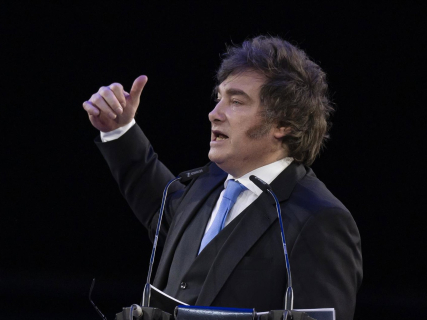
The Argentine president, Javier Milei Europa Press/Contacto/Atilano Garcia

The Argentine president, Javier Milei Europa Press/Contacto/Atilano Garcia

Add DEMÓCRATA to Google

Ask FREN

Published

Last updated

2 minutes

Most read

Spain's qualification for the 2026 World Cup final opens the door to a scenario with significant political implications. If Argentina defeats England in the second semi-final, the title match would bring together two national teams whose governments maintain one of the most tense relationships in recent years.

Although the final will be decided solely by what happens on the field, the political context would turn the encounter into much more than a sporting duel.

The diplomatic crisis between Sánchez and Milei remains open

Relations between the governments of Pedro Sánchez and Javier Milei have been undergoing a period of severe strain since 2024.

The tension reached its peak after Milei described Begoña Gómez as "corrupt" during a political rally held in Madrid. The crisis led the Spanish government to temporarily recall its ambassador to Buenos Aires and sparked one of the biggest diplomatic conflicts between the two countries in decades.

Although diplomatic representation was restored over the months, high-level political contacts have practically disappeared.

Milei has visited Spain six times without meeting Sánchez

Since taking office at the Casa Rosada, Javier Milei has traveled to Spain on several occasions. However, on none of his most recent visits has he held official meetings with Pedro Sánchez or members of the Spanish government, reflecting the existing institutional distance between the two administrations.

His last trip to Madrid again took place without meetings with the Prime Minister, focusing his agenda on academic, economic, and political events.

Rapport with Ayuso, in contrast to Moncloa

While the relationship with the central government remains practically frozen, Javier Milei has strengthened his ties with the president of the Community of Madrid, Isabel Díaz Ayuso.

Both leaders have coincided at numerous public events over the past two years and have repeatedly exchanged praise. Ayuso decorated Milei during one of his visits to Madrid and later met with him again at the Casa Rosada, where they both advocated for collaboration between Argentina and the Community of Madrid.

This contrast between institutional closeness with the Madrid government and the absence of relations with Moncloa has been a constant since the Argentine president came to power.

A final with an inevitable political reading

If Argentina manages to qualify for the final, the match against Spain will take place in a very different context than usual.

On one side will be the Government of Pedro Sánchez, which has had numerous disagreements with Javier Milei. On the other, an Argentine president who has turned Spain into one of the international stages where he has most projected his political discourse and who has found in Isabel Díaz Ayuso one of his main institutional allies in Europe.

None of this will influence the development of the match, which will be decided exclusively on the pitch, but it does add a symbolic component to a possible final between two countries whose political relations have repeatedly made headlines in recent years.

Argentina must first overcome England

That scenario, however, still depends on the second semifinal of the World Cup.

Argentina will have to defeat England to become Spain's rival in the final. If the English team qualifies, the geopolitical component derived from the relationship between Milei and the Spanish government will take a back seat, and it will be England who disputes the title against Luis de la Fuente's team.

More key points, information and questions with FREN

AI-GENERATED CONTENT

What is the current status of the processing of diplomatic proposals to normalize relations between Argentina and Spain?

Diplomatic relations between Argentina and Spain are today formally normalized: both countries have ambassadors in their capitals and active cooperation in various areas. The crisis opened in May 2024 by Javier Milei's insults led to the withdrawal of the Spanish ambassador, but that gap was closed with the appointment of Joaquín María de Arístegui as ambassador in Buenos Aires and a joint statement appealing to respect and cooperation. There is currently no “processing” pending of normalization proposals in the strict sense, but rather a relationship already restored, although the political distance between Milei and Pedro Sánchez persists, who have not yet met. The priority has shifted to rebuilding the economic, cultural, and Ibero-American agenda based on that pragmatic normalization.

From the crisis to the ambassador's withdrawal

The starting point was the Vox event in Madrid in May 2024, when Milei called Begoña Gómez “corrupt.” That same May 19, Minister José Manuel Albares read a harsh institutional statement, where he stated that Milei had taken relations “to their most serious moment” and announced that he was recalling the ambassador in Buenos Aires “sine die” and demanded public apologies, warning that Spain would take “all appropriate measures.”

The next day, Pedro Sánchez insisted on the need for a rectification. At the CREO economic forum, he defended that “Spain and Argentina are two brother countries” but that “respect is non-negotiable,” and warned that the Government's response would be “in accordance with the dignity” of Spanish democracy, as recorded in another official intervention at La Moncloa (Sánchez's intervention).

Proposals and pressures to restore the relationship

During the following months, the crisis remained frozen: without a Spanish ambassador and with a very tense political climate. In June 2024, Sánchez was still responding on television about “when the ambassador will return,” in the TVE interview recorded by Moncloa (TVE interview).

Meanwhile, the opposition and the Senate pressured to accelerate normalization. The PP registered a motion demanding the Government to restore “normality in diplomatic relations between Spain and Argentina”; the party itself disseminated it on its website (PP note). That motion was finally approved in the Ibero-American Affairs Commission, as reflected by the Senate in a note detailing that the Executive is urged to “restore normality in diplomatic relations between Spain and Argentina” (Commission note).

In the field of so-called “parliamentary diplomacy,” the Senate maintained contacts with Argentine authorities: reception of Ambassador Roberto Bosch in September 2024 (meeting with the ambassador) and a subsequent meeting with the Argentine Vice President and Senate President, Victoria Villarruel, in October (Villarruel's visit).

Appointment of the new ambassador and formal normalization

The key turn came at the end of 2024. In a PSOE note about the Democratic Action Plan, the Government confirmed the appointment of diplomat Joaquín María de Arístegui as “new ambassador to Argentina” and emphasized that “the Spanish ambassador returns to Buenos Aires,” insisting that “Spain and Argentina are brother peoples” and that relations must be “worthy” of those ties (PSOE statement).

Subsequent documents in the BOE, such as agreements of the Spanish Embassy in Buenos Aires with companies for the National Holiday (for example, with Naturgy or Técnicas Reunidas), certify that Joaquín María de Arístegui already acts as Spain's ambassador in Argentina (agreement with Naturgy, agreement with Técnicas Reunidas, agreement with Latina de Gestión Hotelera, agreement with Autopistas del Sol). More recently, the Xunta de Galicia reported a meeting of its councilor Diego Calvo with the “Spanish ambassador in Argentina, Joaquín Arístegui,” in May 2026, to address the situation of the Galician community in the country (Xunta note).

Adding to this dynamic is what international media published and was collected in the prior investigation: on October 29, 2025, the Council of Ministers would have formally approved Arístegui's appointment, and within less than 24 hours Argentina granted the agrément; furthermore, both governments would have issued a joint statement committing to “achieve the highest level of mutual trust and respect” and to boost economic and cultural cooperation, including promoting the EU-Mercosur Agreement, according to media such as DW or Swissinfo.

Current status: pragmatic normalization, political distancing

In summary, there is no “process underway” today of diplomatic proposals to normalize the relationship, because that normalization has already been consummated: there are ambassadors, active agreements, and sectoral cooperation. However, the political relationship at the highest level remains strained: as the newspaper Demócrata recalled in June 2026, Milei has returned several times to Spain without official meetings with the King or Sánchez, and the first crisis left a mark in the lack of bilateral contacts at the highest rank (Demócrata report).

The current scenario is, therefore, one of pragmatic normalization: diplomatic channels restored, economic and cultural cooperation underway, and a formal framework of mutual respect, but without a personal political rapprochement between the two leaders nor a major symbolic gesture of public reconciliation.

Additional references: [link], [link], [link], [link], [link], [link], [link], [link], [link], [link], [link], [link].

What exactly does the joint statement issued by Spain and Argentina contain upon closing the diplomatic crisis? What role have the Spanish Cortes (Congress and Senate) played in the political monitoring of this crisis with Argentina? What impact is the political tension between Sánchez and Milei having on bilateral investments and trade?

What are the powers and attributions of the President of the Community of Madrid according to the Statute of Autonomy of Madrid?

The Statute of Autonomy of the Community of Madrid attributes to the President of the Community a set of key functions as a self-government institution: she is part of the basic institutional core along with the Assembly and the Government, has a direct role in the electoral process of the Assembly, promulgates regional laws and orders their publication, and assumes specific functions in relation to the judicial power in Madrid. However, in the available excerpts of the Statute only some of these powers appear expressly, so the list offered here is not exhaustive. Below are systematized the attributions that do appear expressly in the current wording consulted.

1. Institutional position of the President

The Statute, reformed by Organic Law 5/1998, incorporates a key provision according to which:

  • The powers of the Community of Madrid are exercised through the Assembly, the Government, and the President of the Community (article 8, according to the new wording introduced by article 1.6 of Organic Law 5/1998).

This places the President as one of the three main self-government institutions of the Community, along with the Assembly and the Government, which has constitutional and institutional relevance, although in the available fragments no further specific functions are detailed in that article.

2. Competences in the electoral matter of the Assembly

The Statute regulates the electoral system of the Assembly of Madrid and attributes a direct competence to the President in this area. In the article relating to the Assembly it is indicated that:

  • Elections to the Assembly are convened by the President of the Community, in accordance with the provisions of the Statute itself (article 10.4, according to the wording given by article 1.7 of Organic Law 5/1998).

This attribution is complemented by the specific reform of the electoral calendar carried out by Organic Law 2/1991, which modified number 5 of article 11 (then in force) to fix that elections are held on the fourth Sunday of May every four years. Although this reform affects the timing of the elections and does not directly alter the competence of convening, it consolidates the role of the Presidency as the authority that formally initiates the regional electoral process.

3. Promulgation and publication of regional laws

The Statute expressly attributes to the President the function of promulgating the laws of the Assembly and guaranteeing their official publication. The corresponding provision, renumbered by the 1998 reform, states that:

  • Laws approved by the Assembly shall be promulgated in the name of the King by the President of the Community, who shall order their publication in the “Official Bulletin of the Community of Madrid” and in the “Official State Bulletin” (article renumbered by article 1.31 of Organic Law 5/1998, derived from the former article 41 of Organic Law 3/1983).

This provision configures the President as the authority who, once the Assembly approves a law, makes it fully effective from a legal point of view by promulgating it in the name of the King and ensuring its publication in the official state and regional gazettes.

The same article also establishes that:

  • Regulations approved by the Government are published in the “Official Bulletin of the Community of Madrid” and, where appropriate, in the “Official State Bulletin,” by order of the President of the Government of the Community. This provision formally places the President as the axis of the final phase of regional normative production, at least regarding laws.

4. Functions in relation to the judicial power

In the Title dedicated to the judicial power, the Statute attributes to the President a specific function in relation to the highest jurisdictional body of the Community. The corresponding provision establishes that:

  • The President of the Superior Court of Justice of Madrid shall be appointed by the King, at the proposal of the General Council of the Judiciary, and the President of the Community shall order the publication of said appointment in the “Official Bulletin of the Community of Madrid” (article renumbered by article 1.36 of Organic Law 5/1998, based on the original text of Organic Law 3/1983).

This competence shows the President's role as an institutional link between the Community of Madrid and the state judicial power regarding the Superior Court of Justice, as she is responsible for giving official regional publicity to the appointment of its president.

5. Observation on the partial nature of the list

The Statute of Autonomy of the Community of Madrid, approved by Organic Law 3/1983 and amended by Organic Law 10/1994, Organic Law 2/1991, and Organic Law 5/1998, contains other provisions about the Government and the Presidency (such as its election, dismissal, or possible additional powers) that do not appear fully in the excerpts handled. Therefore, the competences outlined here are only those that appear expressly in the fragments consulted and cannot be considered a closed enumeration of all statutory powers of the President of the Community of Madrid.

In which complete articles of the Statute are the election, appointment, and dismissal of the President of the Community of Madrid regulated? What differences did the 1994 and 1998 reforms introduce in the legal regime of the President of the Community of Madrid? How are the competences of the President of the Community of Madrid coordinated with those of the regional Government according to the Statute?

What is the professional and political background of Javier Milei before becoming president of Argentina?

Before reaching the Casa Rosada in December 2023, Javier Milei developed a trajectory mainly as an economist in the private sector, university professor, and media commentator, and only in the last stage did he make the leap to institutional politics. His first elected office came in 2021, when he was elected national deputy for the City of Buenos Aires, and from there he projected his presidential candidacy. His figure was built as a liberal-libertarian outsider who came “from the world of talk shows and X,” in the words of the director of ABC, rather than from traditional parties, and who turned that media notoriety into political capital.

Education and early professional steps

According to various biographical profiles, Milei graduated in Economics from the University of Belgrano and completed postgraduate studies at the Institute of Economic and Social Development (IDES) and at the Torcuato Di Tella University, where he also taught, as recorded by the profile of Chequeado and other biographical summaries (profile at Chequeado, CNN en Español, CIDOB, El País Argentina, Buscabiografías, English Wikipedia, Portuguese Wikipedia).

His professional career developed mainly in the financial and economic consulting sector:

  • Principal economist at the pension fund insurer Máxima AFJP and at Estudio Broda.
  • Senior economist at HSBC bank.
  • Positions related to risk analysis and finance at Corporación América, the conglomerate of Eduardo Eurnekian, where he worked for more than a decade.
  • Chief economist of the Fundación Acordar, linked to Peronist Daniel Scioli.

Biographies also mention a controversial stage as advisor to General Antonio Bussi, governor of Tucumán in the 1990s and later convicted of crimes against humanity, which has been used by his critics to question his democratic credentials (Chequeado, Perfil).

Teaching, books, and media projection

Alongside his private activity, Milei was a university economics professor at several institutions and began publishing economic essays of a liberal and libertarian nature. This facet is highlighted, for example, by the CEU San Pablo University when justifying the Honor Medal it plans to award him for his role as economist, teacher, and promoter of ideas of economic freedom (CEU event).

The turning point was his leap to the media: he became a regular economic commentator on television and radio, known for his vehement and confrontational style. Various analyses emphasize that it was on “social networks and virtual communities” where his leadership and direct link with followers were built, even before his full entry into electoral politics (analysis in El País). The director of ABC summarized it by pointing out that Milei “comes from the world of talk shows and X and before being a ruler he was a polemicist” (intervention at Nueva Economía Fórum).

Beginnings in political activity

Milei's entry into party politics is late. Biographical sources agree in pointing to 2019 as the year of his formal approach to the Libertarian Party, where he received an honorary title of president and temporarily aligned with the liberal candidacy of José Luis Espert, with whom he later broke due to strategic disagreements (Misión Verdad, Portuguese Wikipedia).

Between 2020 and 2021 he promoted his own space, La Libertad Avanza (LLA), with the aim of competing in the Autonomous City of Buenos Aires. He ran as a candidate for national deputy in the 2021 legislative elections and obtained around 17% of the votes in the city, winning a seat that he assumed on December 10, 2021. That is his first public office in the Argentine State (Chequeado, BBC Mundo, RFI).

In the Chamber of Deputies he positioned himself on the far right of the Argentine spectrum, voting, for example, against the agreement with the International Monetary Fund in 2022; in that debate he stated that the debt represents “future taxes” for generations that have not voted, a position that contrasts with the agreement he now promotes as president, analyzed in detail by media such as elDiarioAR (article on Milei and the IMF).

Building the presidential candidacy

Already as a deputy and with a consolidated presence in media and networks, Milei very early began to profile himself as a presidential candidate. Various profiles emphasize that he announced his intention to compete in 2023 well in advance, positioning himself as the representative of a “first libertarian government in the world” and capitalizing on economic discontent and disenchantment with Peronism and traditional right-wing parties (BBC Mundo, El País Argentina).

That candidacy is supported by a still incipient party structure, but very active on networks, and by a confrontational discourse against the “political caste” that he had already tested on television and in public events. His victory in 2023 allows him to project that previous professional trajectory —company economist, teacher, talk show participant, and deputy with little experience— directly to the presidency, maintaining many of the style traits he had cultivated in his polemicist stage.

Other resources that expand information about his profile are the analyses of Misión Verdad ([link]), the introductory summary of CNN (CNN profile), and the biographical synthesis of the University of San Andrés about his “life and rise” ([link]), as well as the chronologies of his personal and professional life from Argentine media such as Perfil (Perfil profile).

What exact role did La Libertad Avanza play in the 2021 legislative campaign and how was it organized around Milei? What were Javier Milei's main votes and positions as a national deputy before becoming president? How does Milei's economic discourse as a talk show participant compare to the one he applies now from the presidency?

Play

Test your knowledge with FREN!

How much do you know about this topic? Answer the following 3 questions.

What was the main reason for the diplomatic crisis between Spain and Argentina in 2024?

Question 1 of 3

With which Spanish leader has Javier Milei shown the greatest institutional rapport?

Question 2 of 3

What must happen for Spain and Argentina to face each other in the 2026 World Cup final?

Question 3 of 3

Hola, soy Fren. ¿Cómo te ayudo?