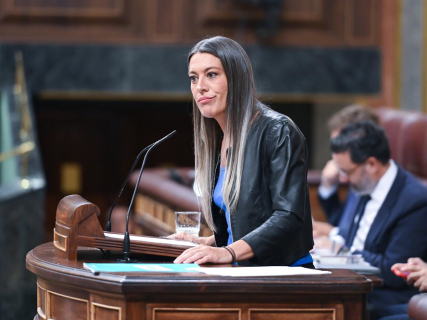
The Junts fiscal package to revolutionize the Film Law: more deductions, reduced VAT, and aid for artists

Carles Puigdemont's formation proposes a broad fiscal reform with changes in Corporate Tax, VAT reductions for the cultural sector, reduced contributions for artists, and new audiovisual financing mechanisms

2 minutes

fotonoticia 20260628102753 1920

fotonoticia 20260628102753 1920

Add DEMÓCRATA to Google

Ask FREN

Published

2 minutes

Most read

The parliamentary groups have already shown their hands for the Draft Law on Cinema. The amendments to the articles are on the table. The parties that make up the Government, the PSOE and Sumar, have paid special attention to the support for co-official languages —out of conviction and, incidentally, as a nod to Junts to attract them towards a 'yes'—. For its part, the Catalan party proposes a profound fiscal reform of the audiovisual sector's management model.

The bulk of its amendments focus on a reform of the fiscal treatment of the audiovisual sector, with changes to Corporate Tax, VAT, and financing mechanisms.

Deductions: modifications to Corporate Tax

The party led by Carles Puigdemont has registered an amendment so that film exhibition is expressly recognized as an area eligible for tax incentives, in the same way as production.

In line with this, it proposes an increase in deduction percentages for investments in Spanish productions to 40% on the first million, and 30% on the remainder. For independent producers, it proposes 50% on the first 200,000 euros, 40% up to one million, and 30% thereafter.

It also proposes raising the limit of joint deduction with other aid to 80% when it comes to productions filmed entirely in co-official languages other than Castilian Spanish or in municipalities with fewer than 2,000 inhabitants.

Similarly, Junts wants to establish a 25% deduction for the production costs of live performing arts and musical shows; regulate the participation of investor taxpayers in the financing of productions, improving the legal certainty of financing contracts and allowing them to apply a deduction of up to 25% or 50% of their full tax liability; and include fiction, animation, or documentary series in Corporate Tax deductions.

Reduced VAT and fees

The amendments are not limited to Corporate Tax. Junts also proposes changes in the taxation of the art market and certain cultural activities, specifically, to reduce the VAT to 10% applicable to deliveries and imports of works of art, collectors' items, and antiques.

They also demand reduced VAT at 10% for entry to zoos and aquariums; and the repeal of the export tax on goods of Spanish Historical Heritage.

Other fiscal mechanisms and Social Security

Another of the amendments provides for modifying the payment in kind of tax debts so that contemporary works of art made by living artists are accepted as payment of taxes.

Junts also proposes changes in the contribution of certain self-employed workers in the cultural field in order to help professionals. To this end, they propose a reduced contribution to Social Security for artists with net annual income below 4,000 euros, setting a fee of around 90 euros per month for the year 2026.

Finally, it urges the Institute of Cinematography and Audiovisual Arts (ICAA) to create a mechanism for advance loans on the future refund of the international tax incentive to improve the liquidity of productions.

With this package of amendments, Junts seeks to strengthen tax incentives for the audiovisual sector, alleviate the burden on certain cultural professionals, and expand the financing tools provided for in the Cinema Bill, a norm that remains pending the committee's report. Puigdemont anticipated that this is one of the laws that has his endorsement for negotiation, and this is the price.

More key points, information and questions with FREN

AI-GENERATED CONTENT

At what stage of parliamentary processing is the Film Law Project currently?

The so-called Film Law Project is, in fact, the Film and Audiovisual Culture Law Project (file 121/000026). As of today, it is still in the Congress of Deputies, in the phase of work in the subcommittee and Culture Commission, once the amendment period has closed and the general debate has been passed. The Plenary has already rejected the total amendments (by 172 votes in favor, 175 against, and 0 abstentions) and has agreed to the referral to the Plenary, so the report approved by the Commission must return to the Plenary before being sent to the Senate. It has not yet started its processing in the Senate, nor is it definitively approved.

Project identification

The project you refer to is:

  • Parliamentary title: Film and Audiovisual Culture Law Project
  • Congress identifier: 121/000026
  • Type: Bill (Government initiative)
  • Starting chamber: Congress of Deputies, 15th Legislature
  • Initial publication of the text: Official Bulletin of the General Courts, Series A, no. 26-1, June 21, 2024 (BOCG 26-1)

The Bulletin records the agreement of the Board to entrust its approval to the Culture Commission with full legislative competence, and the opening of an amendment period initially ending on September 10, 2024, as seen in the bulletin itself and in the Congress initiative file (initiative file).

Phases already passed in the Congress

Government origin and referral to Congress

The Film and Audiovisual Culture Law Project was first approved by the Council of Ministers, within the commitments of the Recovery, Transformation and Resilience Plan (component 25, “Spain Audiovisual Hub”). This agreement is recorded in the Council of Ministers reference of June 11, 2024, where the FILM AND AUDIOVISUAL CULTURE LAW PROJECT is expressly mentioned.

Once referred to Congress:

  • 06/14/2024: Registration of the initiative (Congress).
  • 06/18/2024: Qualification and admission for processing.
  • 06/21/2024: Publication of the text in the BOCG Series A, no. 26-1 (BOCG 26-1).
  • 06/28/2024: Approval of processing by urgent procedure, reflected in BOCG Series A, no. 26-2 (BOCG 26-2).

Since then, the amendment period for the articles was extended numerous times (up to 69 extensions), as can be verified in successive updates of the initiative file on the Congress website, for example those of September 2024, October 2024, November 2024 and December 2024, as well as in the extensions of 2025 and 2026 (all visible in the same file, updated periodically).

Total amendments and referral to Plenary

Once total amendments were registered, on June 8, 2026, they were published in BOCG Series A, no. 26-3 (BOCG 26-3). On June 18, 2026, the Plenary held the total debate, with two key votes:

  • Total return amendments: 172 yes, 175 no, 0 abstentions. Being rejected, the project continued its ordinary processing.
  • Request for referral to Plenary (presented by the Junts per Catalunya Group): 345 yes, 1 no, 0 abstentions, according to the voting record of the Congress associated with this project.

The confirmation of the referral was published in BOCG Series A, no. 26-4, June 23, 2026 (BOCG 26-4), making clear that, although the Culture Commission has full legislative competence, the Plenary has decided to reserve the final vote on the report before sending it to the Senate.

Closing of the amendment period for the articles

After successive extensions of the amendment period, on June 24, 2026, the period for submitting amendments to the articles was definitively closed, as again reflected in the Congress initiative file (processing link).

On July 10, 2026, the amendments to the articles were published in BOCG Series A, no. 26-5 (BOCG 26-5), which collects the set of partial amendments presented by the groups.

Current situation: subcommittee and Commission phase

With the amendment period closed and the amendments published, the project is now in the subcommittee phase within the Culture Commission. The next step is:

  • That the subcommittee (whose members appear as “Subcommittee Members” in the documentation associated with the process) studies all the amendments and prepares a subcommittee report.
  • That the Culture Commission debates and votes on that report, turning it into a Commission report.
  • Due to the approved referral (345-1), said report must then go to the Congress Plenary for a final vote before sending the text to the Senate.

Therefore, the Film and Audiovisual Culture Law Project:

  • Has not yet reached the Senate.
  • Is not definitively approved.
  • Is in the final stretch of the congressional phase, pending subcommittee work, Culture Commission report, and subsequent final vote in Plenary.
What main amendments have the different parliamentary groups presented to the Film and Audiovisual Culture Law Project? What is the expected schedule the Congress is managing to approve the report of the Film Law Project and send it to the Senate? How is this new Film Law Project coordinated with the currently effective Law 55/2007 and with Royal Decree 400/2026 on subsidies for older cinema?

What are the competencies of the Institute of Cinematography and Audiovisual Arts (ICAA) according to Spanish legislation?

The Institute of Cinematography and Audiovisual Arts (ICAA) is an autonomous body of the General State Administration, attached to the Ministry of Culture, with its own legal personality. Its competencies are mainly regulated by Royal Decree 7/1997, of January 10, on its organizational structure and functions, partially amended by Royal Decree 1322/2004. From this regulation it follows that the ICAA's central mission is the comprehensive promotion of Spanish cinema and audiovisuals, the protection of cinematographic heritage, and the basic regulation of the sector, including promotion, regulation, management of aid, classification of works, and inspection and sanctioning powers.

Basic legal framework and general purposes

According to Royal Decree 7/1997, the ICAA is an autonomous administrative body, created by Law 50/1984 of the General State Budgets, and subject to the legislation of autonomous bodies and the General Budget Law. The article defining its purposes establishes that it is responsible, in summary, for:

  • Developing creation, increasing production, and promoting the distribution of Spanish productions.
  • Achieving an acceptable proportion of domestic market share to maintain the entire Spanish film industry.
  • Improving competitiveness of sector companies and encouraging the application of new technologies.
  • Promoting the external projection of Spanish cinematography and audiovisual arts.
  • Guaranteeing the safeguarding and dissemination of Spanish cinematographic heritage.
  • Fostering cultural communication between autonomous communities in cinematography and audiovisual arts.

These purposes mark the overall competence framework: the ICAA not only finances and supports but also regulates, coordinates, and preserves the cinematographic and audiovisual system.

General functions of the body

The same royal decree details the functions exercised by the ICAA in fulfillment of these purposes. Among the main general competencies are:

  • Promotion, encouragement, and regulation of Spanish cinematographic and audiovisual activities in their three phases: production, distribution, and exhibition.
  • Specific promotion of Spanish cinematography and audiovisual arts, both domestically and abroad.
  • Recovery, restoration, conservation, research, and dissemination of cinematographic heritage.
  • Cooperation in the training of professionals in various cinematographic specialties.
  • Relations with international and foreign organizations and institutions with similar purposes, including European programs and bodies.
  • Cooperation with autonomous communities in cinematography and audiovisual arts, coordinating actions within their respective competencies.

Additionally, the Royal Decree assigns the institute competencies over public aid and subsidies to the sector, through the General Directorate, which is expressly attributed the granting of aid and subsidies that the body must award.

Competencies of the General Directorate and internal structure

The Director General of the ICAA, whose appointment regime is modified by Royal Decree 1322/2004 (allowing that he/she does not have to be a civil servant), concentrates much of the executive powers:

  • Direction of the body and its personnel.
  • Preparation and execution of general action plans.
  • Representation of the body.
  • Preparation of the annual report and draft budget.
  • Contracting on behalf of the body, disposition of expenses within legal limits, and ordering of payments.
  • Granting of the ICAA's aid and subsidies.
  • Cooperation activities in professional training.

Under the General Directorate, several Deputy Directorates General are articulated, whose functions further specify the competence catalog:

  • Deputy Directorate General for Promotion of the Cinematographic and Audiovisual Industry: promotion of production, distribution, and exhibition; age classification of films and other audiovisual works; regulation and monitoring of distribution in theaters and cinematographic and audiovisual exploitation; preparation of sector censuses and statistics; collection and processing of documentation; and coordination with autonomous communities.
  • Deputy Directorate General for Promotion and International Relations: domestic and foreign promotion of Spanish production; support for national and international festivals and contests in Spain; relations with international organizations and institutions; representation in European programs and bodies; and promotion of international coproduction agreements, also coordinating with autonomous communities.
  • Spanish Film Archive (Deputy Directorate General): recovery, preservation, restoration, documentation, and cataloging of cinematographic heritage and other elements linked to cinematographic practice; safeguarding and custody of the archive of films and audiovisual works on any medium, as well as cinematographic collections.
  • General Secretariat: human resources management; financial and budgetary administration; general services; budget preparation; control of agreements; legal assistance to the body; and inspection and processing of sanctioning proceedings deriving from the Institute's powers.

Regulatory, classification, and sanctioning powers

From the combination of these provisions, it is deduced that the ICAA exercises, in addition to promotion functions, true public powers:

  • Power of basic regulation of the cinematographic and audiovisual market (distribution, exhibition, exploitation).
  • Exclusive competence in the age classification of films and audiovisual works for public exhibition or distribution.
  • Inspection and sanctioning authority in matters within its attributions, through the General Secretariat.
  • Capacity to establish criteria, procedures, and conditions in areas such as granting aid, classification, and cultural certificates, developed in subsequent resolutions issued “in accordance with” Royal Decree 7/1997.

Overall, the legislation configures the ICAA as the governing body of the state cinematographic and audiovisual sector, combining economic support policies, cultural promotion, technical-administrative regulation, heritage custody, and exercise of inspection and sanctioning powers.

What specific competencies does the ICAA have regarding age classification of films and other audiovisual works? How is cooperation between the ICAA and the autonomous communities articulated in film and audiovisual policies? What specific functions does the Spanish Film Archive perform within the ICAA according to Royal Decree 7/1997?

What legal requirements must artists meet to access the reduced Social Security contribution proposed by Junts?

The “reduced contribution” for artists already exists today in Spanish legislation for certain profiles of low-income self-employed artists; Junts' proposal does not create this figure from scratch but seeks to expand who can access it and define a specific bracket for musicians and performing arts. According to the newspaper Demócrata, Junts' amendment linked to the Copyright Law proposes extending the reduced contribution also to artists with somewhat higher incomes, provided their return is very low compared to the SMI. And, according to Junts' official communication on the Film and Audiovisual Culture Law, the party has negotiated a “specific, reduced, and adapted contribution” for self-employed musicians, although without detailing its fine print yet.

1. Current regime of reduced contribution for artists

The current legal framework of social protection for the cultural sector is based on the Artist Statute and several Social Security and tax reforms that the Government has been developing. A note from the Ministry of Inclusion expressly states that a reduced contribution has been made available to low-income self-employed artists, along with the regulation of pensioners' contributions who perform artistic activities, who only contribute for professional contingencies and pay a special solidarity contribution of 9% for common contingencies, according to the Ministry of Inclusion note.

In summary, information gathered from Social Security itself and specialized analyses indicates that, to access the current reduced contribution, among other requirements, these must be met:

  • Be a self-employed artist: be registered in the Special Regime for Self-Employed Workers (RETA) in the corresponding artistic activity. See general information at Social Security and the SEPE artist guide available in this SEPE document.
  • Income limit: have net annual earnings equal to or less than €3,000. This figure is set as a threshold for low-income self-employed artists in the cited materials (for example, in analyses such as [link] and article 313 bis of the LGSS commented in [link]).
  • Accreditation: incomes are verified through the income tax return and fiscal data managed by the General Treasury of Social Security, which annually regularizes artists' contributions. The automated management of these regularizations is addressed in the resolution published in the BOE, accessible in this BOE.
  • Application: the reduced base and quota are applied within the framework of the real income contribution system and are adjusted in the annual regularization. Additional technical information can be consulted in Social Security fact sheets such as [link] and in sector documents such as [link].

This scheme is complemented by the development of the Artist Statute described by the Ministry of Culture, which cites, among priorities, a specific contribution system for cultural self-employed workers and an unemployment benefit adapted to intermittency, as recorded in official department notes, for example in this note and in [link] and [link].

2. What does Junts add?

The newspaper Demócrata details the content of a Junts amendment —the so-called “amendment 49”— to the bill creating the Copyright Office. According to that information, Junts intends to modify Royal Decree-law 5/2022 to expand the reduced contribution:

  • Today it applies to artists with annual earnings below €3,000 registered in RETA.
  • Junts proposes that those who obtain a return below 30% of the current SMI each year, even if they exceed €3,000, maintaining the condition of self-employed artists in RETA, can also access it. All this is included in Demócrata's analysis on “25% deductions and reduced contributions for musicians,” visible in this Demócrata article.

That is, the additional criterion proposed by Junts does not change the legal basis (self-employed artist, artist contribution system), but opens the door so that, besides the fixed threshold of €3,000, there is a relative criterion linked to the SMI: if the musician's or artist's annual return is below 30% of the minimum wage, they could access the reduced contribution.

In parallel, Junts has disseminated that, in the processing of the future Film and Audiovisual Culture Law, it has agreed on the creation of a “specific contribution for self-employed musicians, reduced and adapted to the sector's reality”, as the party itself states in its note “Junts achieves key improvements in the Film Law…”, available on the party's website: Junts statement.

That communication does not specify numerically the requirements (income thresholds, specific bases, etc.), only indicating that it will be a contribution “reduced and adapted to the sector's reality” with the aim of combating precariousness and the mismatch of the general self-employed regime with the real activity of musicians.

3. Real scope today: what is in force and what is under negotiation

With the available information, it can be concluded:

  • The reduced contribution for low-income self-employed artists (≤ €3,000/year) and the specific contribution for artist pensioners are already in force, within the framework of the Artist Statute and Social Security reform.
  • The expansion proposed by Junts (including those who do not exceed 30% of the SMI) is an amendment under negotiation linked to the Copyright Law, according to Demócrata's analysis, and its requirements are only outlined in those terms: artist in RETA, low and below 30% of the SMI income.
  • The “specific contribution for self-employed musicians” announced by Junts in the Film Law is a political commitment incorporated into the agreement, but the technical details of requirements and bases must be specified in the final text and, if applicable, in subsequent regulatory norms.

No further information is available in the consulted sources about additional requirements (residence registration, compatibilities, specific procedures) beyond the general criteria of being a self-employed artist in RETA and having very low income.

At what specific parliamentary stage is Junts' amendment on the reduced contribution for artists linked to the Copyright Law? What practical differences would there be between the current reduced contribution for low-income artists and the expansion Junts proposes with the 30% SMI threshold? How is this reduced contribution coordinated with other measures of the Artist Statute, such as the special unemployment benefit or compatibility with pension?

Play

Test your knowledge with FREN!

How much do you know about this topic? Answer the following 3 questions.

What measure does Junts propose regarding VAT for works of art and antiques?

Question 1 of 3

What monthly Social Security contribution does Junts propose for artists with net annual income below 4,000 euros starting in 2026?

Question 2 of 3

What percentage deduction on the first 200,000 euros does Junts propose for independent producers?

Question 3 of 3

Hola, soy Fren. ¿Cómo te ayudo?