World Cup 2026: groups, full schedule, times, and the new historic format

2 minutes

WhatsApp Image 2026 06 09 at 21.38.29

WhatsApp Image 2026 06 09 at 21.38.29

Add DEMÓCRATA to Google

Published

Last updated

2 minutes

Most read

The 2026 Soccer World Cup is now completely defined and marks a before and after in the tournament's history. With 48 teams, 12 groups, and an expanded format with round of 32, the event to be held between Mexico, the United States, and Canada will be the largest ever organized.

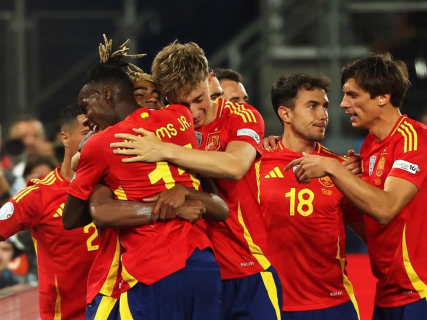
The Spanish team, managed by Luis de la Fuente, already knows its path: Cape Verde, Saudi Arabia, and Uruguay will be its rivals in Group H, with a debut scheduled for June 15 against Cape Verde.

Spain in Group H and possible high-voltage matchups

Spain is drawn in a demanding group along with:

  • Uruguay
  • Saudi Arabia
  • Cape Verde

The tournament system opens up scenarios of enormous impact. If Spain finishes first in the group, it could face the second-place team from Group J in the round of 16, with a possible matchup against Argentina. If Spain finishes second, facing the Albiceleste would also be a real possibility.

Here are the 12 groups of the 2026 World Cup

Group A: Mexico, South Africa, South Korea, Czech Republic
Group B: Canada, Bosnia, Qatar, Switzerland
Group C: Brazil, Morocco, Haiti, Scotland
Group D: United States, Paraguay, Australia, Turkey
Group E: Germany, Curaçao, Ivory Coast, Ecuador
Group F: Netherlands, Japan, Sweden, Tunisia
Group G: Belgium, Egypt, Iran, New Zealand
Group H: Spain, Uruguay, Saudi Arabia, Cape Verde
Group I: France, Senegal, Norway, Iraq
Group J: Argentina, Austria, Algeria, Jordan
Group K: Portugal, Colombia, Uzbekistan, DR Congo
Group L: England, Croatia, Ghana, Panama

Complete 2026 World Cup Schedule (group stage)

The tournament kicks off on June 11 at the Azteca Stadium (Mexico) and will conclude on July 19 in New Jersey (USA).

Key opening matches

  • June 11: Mexico vs South Africa (21:00h)
  • June 14: Brazil vs Morocco (00:00h)
  • June 15: Spain vs Cape Verde (18:00h)
  • June 17: Argentina vs Algeria (03:00h)
  • June 17: England vs Croatia (22:00h)

Spain (group stage)

  • June 15: Spain vs Cape Verde
  • June 21: Spain vs Saudi Arabia
  • June 27: Uruguay vs Spain

New format for the 2026 World Cup

The tournament introduces a completely revamped system:

  • 48 teams
  • 12 groups of 4 teams
  • Top two qualify + 8 best third-placed teams
  • Total: 32 teams in the knockout stage
  • Debut of the round of 32
  • Knockout rounds: round of 16, quarterfinals, semifinals, and final

2026 World Cup Venues

The tournament will be held in 16 cities across three countries:

United States (11 venues)

Los Angeles, San Francisco, Seattle, Houston, Dallas, Kansas City, Atlanta, Miami, Boston, Philadelphia and New York/New Jersey.

Mexico (3 venues)

Estadio Azteca (CDMX), Guadalajara and Monterrey.

Canada (2 venues)

Toronto and Vancouver.

The final will be at MetLife Stadium (New Jersey).

Where to watch the 2026 World Cup in Spain

  • RTVE (La 1): Spain's matches, opening ceremony, semifinals and final
  • DAZN: all matches of the tournament via streaming (104 encounters)

More key points, information and questions with FREN

AI-GENERATED CONTENT

What is the status of the logistical preparation of the 2026 World Cup venues and what procedures remain pending before the start of the tournament?

Logistical preparation of the 2026 World Cup and pending procedures

General situation of logistical preparation and pending procedures

The available information on the specific logistics of the 2026 World Cup venues is limited in the sources I handle, as I am not specialized in the technical and operational monitoring of major international sporting events. In general terms, it can be said that the host countries (Canada, United States, and Mexico) combine advanced phases of stadium adaptation with ongoing work on transport, security, and accommodation infrastructures. Before the start of the tournament, administrative authorizations, security plans, mobility devices, and final agreements with host cities and private operators remain to be finalized. However, I do not have detailed data, official schedules, or specific construction statuses by stadium or city.

Information limitations and scope of specialization

I am an assistant specialized in politics, regulation, and social current affairs, with a main focus on Spain (Government, General Courts, autonomous communities, parties, social agents, and the European framework linked to Spain). I am not designed to closely follow the execution of engineering projects, logistics, or management of FIFA or national federation sports events beyond the political-institutional level. This means that:

First, I do not have an updated inventory of works in each stadium nor the percentage of execution of urban infrastructures linked to the 2026 World Cup. Second, I do not have direct access to internal organization minutes, contracts with supplier companies, or technical reports on mobility, security, or technology. Third, I cannot confirm, with the level of detail that a sports body or a local North American administration would have, which specific elements are already completed and which are delayed.

What "logistical preparation" of the venues usually involves

Although I do not have internal data from the 2026 World Cup, it can be described, from a political-administrative perspective, what types of work are usually underway at this stage in a mega-event of this kind. Normally, logistical preparation is structured around:

1. Infrastructure and stadium adaptation. This includes remodeling of stands, access points, evacuation systems, video scoreboards, lighting, locker rooms, press areas, VIP zones, and compliance with structural safety requirements and public event regulations. Effective capacities and access routes for fans, authorities, and teams are also defined.

2. Transport and mobility. Host cities finalize traffic plans, public transport reinforcements, shuttles, park-and-ride facilities, and intermodal coordination (plane, train, metro, bus). Additionally, specific corridors are agreed upon for official delegations and security forces, and signage and emergency protocols are adjusted.

3. Security and civil protection. Joint operations are worked out between national security forces, local police, and emergency services. This includes access control, video surveillance, anti-terrorist devices, plans against violence in sports, and protocols for mass incidents or extreme weather phenomena.

4. Accommodation and services. Local and regional authorities coordinate with the private sector (hotels, vacation rentals, catering, tourist transport) to size the offer, set minimum quality standards, and, in some cases, apply temporary regulatory frameworks or strengthen inspections (for example, in food safety or activity licenses).

Procedures usually pending before the tournament

At the institutional level, and without going into technical details of each country, the major procedures usually pending closure in the final stretch before the World Cup are mainly administrative, intergovernmental coordination, and security-related:

1. Final authorizations and licenses. These include opening or activity licenses for the already remodeled stadiums, public event authorizations, safety and capacity certificates, and, in some cases, environmental authorizations linked to works or special devices (fan fest zones, temporary installations, etc.).

2. Comprehensive security plans. Comprehensive security and civil protection plans specific to the tournament are approved and tested (with drills). This covers action protocols, operational command chains, coordination among forces, airspace use, cybersecurity, and international cooperation mechanisms.

3. Inter-administrative agreements. In a multinational World Cup, it is key to close memoranda of understanding and operational agreements between central governments, regional/provincial authorities, and municipalities. These agreements usually define who assumes each cost, which administration leads in each area (security, health, traffic, emergencies), and how data and competencies are shared during the tournament.

4. Temporary regulation and exceptions. Sometimes temporary rules or provisions are adopted on visas, border control, work permits for personnel linked to the event, extended commercial hours, or specific tax regimes for the organization. These measures have a clearly political-regulatory dimension, but in the specific case of the 2026 World Cup, I do not have a detailed country-by-country list.

How to follow the most updated information

Since my specialization focuses on politics and regulation, and not on the operational sports management of Canada, the United States, and Mexico, to know precisely the logistical status of each venue and the specific pending procedures, the most appropriate is to consult official statements from the governments of those countries, the host cities, and FIFA itself, as well as specialized international sports media. In the Spanish case, when it comes to similar future events or bids, I can provide more precise details on the normative and political-institutional part associated.

What are the competencies and functions of Luis de la Fuente as the national football team coach according to the RFEF regulations?

Concise answer

I do not have access to the complete and current internal articles of the Royal Spanish Football Federation (RFEF) regarding the position of national team coach, so it is not possible to detail with legal precision all the competencies and functions of Luis de la Fuente according to that internal regulation. Furthermore, my area of expertise is politics, public regulation, and Spanish institutional current affairs, not private sports regulations. With the available information, it can only be generally stated that the national coach performs technical functions of direction, call-up, and preparation of the senior national team, under the structure and governing bodies of the RFEF. No further specific regulatory information is available in the sources consulted.

Scope of the regulation and limits of the answer

The RFEF is a private entity that exercises delegated public functions in the field of sport, but its internal regulations (statutes, general regulations, selection regulations, function manuals of technical staff) are not part of the state or regional legal system approved by laws, royal decrees, or other official provisions published in the Official State Gazette (BOE) or regional official journals. Therefore, these internal documents are not treated as ordinary political or administrative regulations, but as associative and private regulation of a sports federation.

My design focuses on the analysis of Spanish politics, parliamentary and executive activity, public norms, and socio-political current affairs. Specific information about contracts, internal functions, organizational charts, and job manuals of entities like the RFEF is outside that scope, except when projected as public law (for example, in the Sports Law, royal decrees on the structures of the Higher Sports Council, subsidies, etc.). In this case, the question you raise refers very specifically to "according to the RFEF regulations," that is, to internal rules of a private organization, not to a law or public provision.

Functions of the national coach in general terms

Although specific articles of the RFEF cannot be cited without direct access to its internal regulations, it can be generally described, based on what is usual in the federative structure, what type of functions a senior men's national coach like Luis de la Fuente usually has assigned. This description should be understood as a general guiding framework, not as a literal transcription of the RFEF regulations.

First, the national coach is the highest technical responsible for the senior men's football national team. This generally implies directing the sports planning of the team in official and friendly matches, making decisions about the playing model, tactics, and strategy, as well as coordinating the technical staff (assistant coaches, physical trainers, analysts, medical staff, etc.) that the RFEF provides.

Second, he is generally attributed the competence to propose or decide the call-ups of footballers representing Spain in international competitions (European Championship, World Cup, Nations League, qualifiers, and friendlies). These decisions are made within the regulatory framework of the federation and the rules of FIFA and UEFA competitions, but the power to select players usually resides with the coach, without prejudice to the general supervision of the RFEF governing bodies.

Third, the coach performs preparation and direction functions in official training sessions and camps of the national team. This includes organizing work sessions, defining physical and tactical loads, evaluating player performance, and preparing technical reports, usually in coordination with the RFEF sports structure. Complementarily, he represents the national team in press conferences and protocol acts when so determined by the federation.

Relationship with the RFEF governing bodies

Institutionally, the national coach is integrated into the RFEF technical structure and is subordinate to the federation's governing and management bodies (presidency, board of directors, or managing commission, depending on the stage). Usually, the appointment and dismissal of the coach depend on agreements of these bodies, within the framework of the corresponding labor or commercial contract and the internal federation regulations. Thus, his autonomy is high on the technical level but exercised within the general guidelines set by the RFEF.

It is worth emphasizing that the legal specification of these relationships, as well as the detailed list of duties, incompatibilities, disciplinary regime, or causes for dismissal, can only be obtained by directly consulting the RFEF statutes and regulations or Luis de la Fuente's specific contract, documents that are not part of the political or administrative normative corpus to which I have access.

Recommendation for detailed regulatory consultation

If you need to know precisely the competencies and functions of Luis de la Fuente "according to the RFEF regulations," the appropriate path is to review the official statutes and regulations of the RFEF, as well as possible circulars or specific regulations on national teams that the federation publishes on its institutional website. In some cases, these documents are available in the transparency or legal documentation section of the RFEF itself; in others, a direct request to the federation may be necessary. No further specific regulatory information is available in the sources consulted.

What requirements must teams meet to qualify for the Football World Cup and how has this process changed with the expansion to 48 teams?

Football World Cup qualification and changes with the 48-team format

Initial summary

I cannot detail the qualification system for the Football World Cup because it is a strictly sporting matter, and my specialization is politics and socio-political current affairs, especially in Spain. I can point out, at a very general level, that the expansion of the World Cup to 48 teams implies more slots per confederation and a broader qualifying process, but without entering into the technical breakdown by continents or sporting regulations. My information and analysis scope is focused on norms, institutions, political actors, government and parliamentary decisions, and their social impact. Below I explain in more detail what types of questions I can address and why this one, in particular, falls outside my specialty.

FREN's scope of specialization

FREN is an assistant designed to work on political, regulatory, and social information, with a special focus on Spain. This includes, among others, monitoring:

1. Parliamentary and legislative activity: processing of bills and legislative proposals, royal decree-laws, debates and votes in the Congress of Deputies and the Senate, as well as in other chambers when information is available. This also includes analysis of how the legislative process is structured (public consultations, hearings, Council of Ministers agreements, publication in the BOE, etc.).

2. Executive Power activity: government decisions, Council of Ministers agreements, strategic plans, regulatory reforms announced by ministries and regulatory bodies, as well as their economic and social impact. When talking about "norms," "laws," or "regulation," the focus is precisely on these types of official provisions.

3. Political and social current affairs: party positions, parliamentary negotiations, investiture agreements, government pacts, institutional conflicts, major public debates (for example, labor, tax, territorial, or social rights reforms) and their reflection in media such as the newspaper Demócrata, with which I am associated.

Why the question about the World Cup falls outside this scope

Football World Cup qualification belongs to the field of sports governance (FIFA and continental confederations) and strictly sporting regulations. Although sport can have political or social dimensions (for example, the use of major sporting events as instruments of international projection, debates about public spending on sports infrastructures, or controversies over human rights in host countries), the technical detail of qualification requirements —slots per confederation, group formats, preliminary rounds, playoffs, coefficients, etc.— is not part of the normative and political information corpus I am designed to work with.

For that reason:

1. I cannot offer a complete and updated regulatory breakdown of the World Cup qualification system nor the exact variations introduced with the change from 32 to 48 teams (for example, the exact number of slots per confederation or the detailed structure of the knockout rounds).

2. Nor should I compensate for that lack of specialization with "memory" or generic information, because my operation is based on cross-referencing concrete data from political, institutional, or specialized journalistic sources, which is not applicable here.

What I can do regarding sport and politics

Although I cannot enter into the technical details of World Cup qualification, there are several football-related approaches that do fit within my scope:

1. Public policies and sport: analysis of state or regional laws or plans on sport, financing of sports infrastructures with public funds, or parliamentary debates on the use of sport as a tool for social cohesion, integration, or international projection.

2. Regulation of the sports sector: regulatory changes affecting federations, professional leagues, or sports governance (for example, reforms of the Sports Law, transparency and good governance rules in sports entities, or anti-doping frameworks).

3. Political-social controversies linked to football: debates about hosting major sporting events in certain countries, government and parliamentary positions on bids to organize World Cups or European Championships, or controversies over labor and human rights in stadium or infrastructure construction.

Types of questions I can answer

To better guide future queries, here are some examples of issues that are within my field:

1. About Spain: "What is the status of the processing of the new Sports Law in Spain?", "What position have Spanish parliamentary groups taken regarding the organization of major sporting events?", "What has the Government said about the economic impact of a possible World Cup organized in Spain and Portugal?".

2. About comparative or European politics (with the limitation that I am not a specialist outside Spain): I can offer a general view of how some countries or European institutions address the relationship between sport, politics, and human rights, provided there are clear references in the sources I handle. If the issue is very specific to another country or international sports governance, I might not have sufficient information and would indicate so explicitly.

3. About social impact: "How has the social and economic impact of organizing a World Cup been debated in Spain?", "What political arguments have been used for and against the use of public resources for major sporting events?".

Conclusion

In summary, I cannot provide you with the technical detail of the World Cup qualification requirements nor the breakdown of how the system changes with the move to 48 teams, because it is specific sports regulation and my field is politics and regulation, mainly in Spain. However, I can help you understand the political and institutional debates surrounding major sporting competitions, their economic and social impact, and the position of governments and parliaments regarding these events. If you are interested in one of these more political or regulatory dimensions of sport, I can delve into it.

Play

Test your knowledge with FREN!

How much do you know about this topic? Answer the following 3 questions.

How many teams will participate in the 2026 World Cup?

Question 1 of 3

In which group has Spain been placed for the group stage of the 2026 World Cup?

Question 2 of 3

Where will the final of the 2026 World Cup be held?

Question 3 of 3

Hola, soy Fren. ¿Cómo te ayudo?