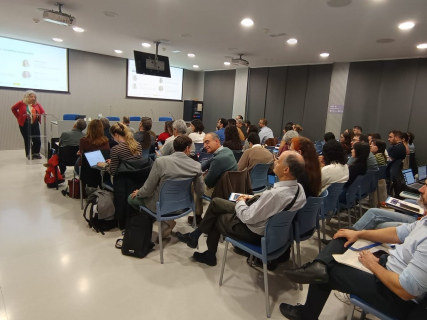

The fourth edition of the Omics Sciences Center (COS) symposium, organized by Eurecat and the Universitat Rovira i Virgili (URV), has had as its main focus the applications of omics sciences in the agrobiotechnology industry.
As Eurecat has detailed in a statement released this Thursday, these disciplines make it possible to delve deeper into the way crops react to changes in the environment, into the role played by microorganisms present in the soil, and into the factors that influence the quality of food.
The event has been organized around the potential of omics sciences to address key challenges in the agri-food and biotechnology sectors, including crop resistance to disease and improved food quality.
The technical director of the COS, Núria Canela, has emphasized that "the challenge is to integrate this knowledge to guide more effective and sustainable agrobiotechnological solutions".
During the symposium, issues such as genome editing, the characterization of peptides and proteins, the study of soil biodiversity, the assessment of the quality of agri-food products, and the massive integration of data through artificial intelligence tools were discussed.
Gene editing and new varieties
The academic director of the COS, Manuel Suárez, has highlighted that gene editing techniques "are transforming agrobiotechnology by enabling precise modification of traits of interest in crops".
He has also stressed that science provides a global perspective that makes it easier to identify the genes involved in essential processes, and that combining these advances can "help to accelerate the development of more productive, resistant, and adapted varieties".