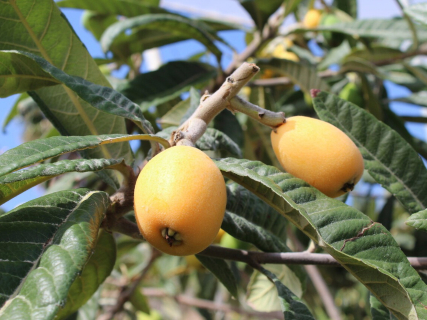

The main organizations and entities of table grapes and loquats from the Comunitat Valenciana, including La Unió Llauradora i Ramadera, Asaja Alicante, Cooperativas Agro-alimentarias, the Federation of Exporters (Fexphal), the Protected Designation of Origin (PDO) Uva de Mesa Embolsada del Vinalopó and the PDO Níspero de Callosa d'en Sarrià, have requested the Ministry of Agriculture to transfer to the central Government "a structural and permanent reduction of the net yield indices of the Personal Income Tax applicable to both crops within the module system".
The proposal, made in a joint letter addressed to the Minister of Agriculture, Miguel Barrachina, aims to set the net yield index at a stable 0.2 for table grapes and loquats, replacing the current coefficients of 0.32 and 0.37, respectively.
Likewise, the organizations request an even lower index, of 0.16, for Uva de Mesa Embolsada del Vinalopó, arguing that this crop bears higher production costs and greater handling requirements, as detailed by La Unió Llauradora i Ramadera in a statement.
The sector considers that the current Personal Income Tax modules "do not" reflect "the economic reality" of these productions, defined by "their high artisanal component, strong dependence on labor, and the constant increase in production costs".
Among the elements that have diminished profitability, they point to "the increase in labor costs after minimum wage hikes, the rising cost of inputs such as energy, fertilizers, plant protection products, and water," and "the demanding cultivation and handling tasks required by both productions."
In the specific case of table grapes, the entities recall that various analyses, including one from the Miguel Hernández University of Elche (UMH), conclude that "the current tax index does not align with the real profitability of the crop."
For this reason, the sector warns that maintaining the current module constitutes "a comparative grievance" and "jeopardizes the viability of numerous family farms."
Regarding loquats, concentrated mainly in the Marina Baixa region, this crop occupies more than a thousand hectares and represents "the livelihood of around 1,200 farmers" in municipalities such as Callosa d'en Sarrià, Altea, Bolulla, Polop, and La Nucía (Alicante).
The organizations emphasize that it is "a highly labor-intensive activity, with very high costs derived from tasks such as manual thinning, harvesting, and packing, borne directly by the producers".
They also point out that, while in citrus fruits the tax base is calculated on 26 percent of the value of the fruit on the tree, in loquats the farmer assumes "entirely" both manual harvesting and conditioning-packing, with an average cost exceeding "8,700 euros per hectare".
Faced with this scenario, the entities warn that "the continued loss of profitability" could lead to "the progressive abandonment of these crops, with serious economic, social, and territorial consequences for the producing areas".
Therefore, they insist on "the need to establish a stable fiscal framework adapted to the productive reality, which provides predictability and contributes to guaranteeing the future of the sector".