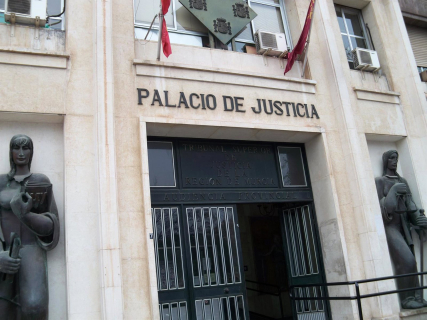

The Social Chamber of the Superior Court of Justice of the Region of Murcia (TSJMU) has ratified the nullity of the disciplinary dismissal of a commercial worker, understanding that the company failed to refute the indications that the real reason for the termination was the temporary incapacity due to anxiety that the employee had initiated the previous day.
The ruling rejects in its entirety the appeal filed by the company and confirms the judgment of the Social Court No. 2 of Murcia, which declared the dismissal null and void for being discriminatory and ordered the employee's reinstatement, the payment of back wages, compensation of 6,000 euros for moral damages, and the payment of outstanding salary amounts, as reported by the Superior Court of Justice of the Region of Murcia (TSJMU).
The resolution details that the worker had initiated a temporary incapacity due to a condition of anxiety and that, just one day later, he was dismissed through a letter in which the company attributed to him a voluntary and continuous decrease in performance, which it estimated at 30% compared to other salespeople in the same workplace.
The Chamber supports the criterion of the lower court judge, who concluded that the company did not effectively prove this alleged drop in performance nor did it provide objective data that would have allowed the worker to know and refute the comparison made. In this regard, the court emphasizes that "not only is it not stated in the dismissal letter what that decrease was beyond saying it was 30% in relation to other workers without conducting a comparative study," but it was also not proven that such a decrease in productivity had actually occurred.
Application of Law 15/2022 on equal treatment
When analyzing the appeal, the Chamber refers to the established doctrine in previous rulings on the application of Law 15/2022, comprehensive law for equal treatment and non-discrimination, along with the jurisprudence of the Supreme Court and the Court of Justice of the European Union on dismissals related to health status.
The ruling recalls that Article 2.2 of said regulation includes illness or health condition among the circumstances against which "no one may be discriminated against" and that Article 30 provides that, when the plaintiff provides founded indications of discrimination, the burden of proof falls on the defendant to prove "an objective and reasonable justification, sufficiently proven, of the measures adopted and their proportionality".
In the case judged, the Chamber understands that "our doctrine is entirely applicable to the case we are examining", since, although the company presented the dismissal as a disciplinary dismissal for low performance, none of it was "real". It explains that the dismissal letter does not specify what this decrease consisted of beyond stating that it reached 30% compared to other employees, without carrying out a comparative study that would allow the worker to know the performance of those who performed the same tasks, and recalls that the trial judge also declared that the existence of this decrease in performance was not proven.
Based on these premises, the Chamber concludes that "the dismissal was due to a discriminatory purpose due to the worker's health status which led to temporary incapacity", and therefore fully confirms the challenged resolution as it does not find the legal violations alleged by the company.
Likewise, the court rejects the procedural objections made by the company regarding the admission of the appeal and upholds the appealed judgment in all its terms, also imposing the costs of the appeal on the company, with an amount of 800 euros for the legal representation fees of the worker. Against this ruling, an appeal for unification of doctrine may be filed before the Social Chamber of the Supreme Court.