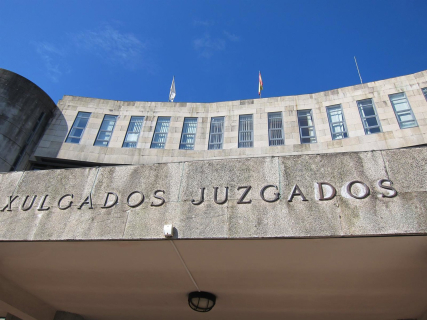

The Court of First Instance Plaza number 1 of Santiago has agreed to the prosecution of the former director of El Correo Gallego, José Manuel Rey Novoa, the former manager Ángel Remesar, their wives, and the head of Asemali Inversiones for an alleged crime of asset stripping valued at 2.7 million, which would have been orchestrated through a network of companies to evade the payment of wages to the staff. In addition, Rey Novoa and Remesar are also accused of a crime of misappropriation.
In a prosecution order dated May 20, 2026, which Europa Press has had access to, the investigating judge Ana López-Suevos declares the investigative proceedings concluded and grants a period of 10 days to the Public Prosecutor's Office and the private prosecution to present their accusation briefs and, where appropriate, request the opening of oral proceedings. An appeal may be filed against this resolution.
The judge details in 53 pages the "indications of criminality of considerable solidity" that she perceives, relying on an extensive report from the Central Unit for Economic and Fiscal Crime (UDEF), regarding a business network designed to "ensure that the money, which for various reasons should have been deposited in the accounts of the company Editorial Compostela --then the publisher of the newspaper El Correo Gallego--, circulated through the different bank accounts held by the other companies but also by the individuals denounced". In this way, "this way it was avoided that the accounts of Editorial Compostela had balances that could be subject to embargoes or measures aimed at guaranteeing the collection of credits by creditors".
According to the order, Rey Novoa and Remesar "could freely decide which payments they faced with this operation". The case is also directed against the companies Editorial Compostela, Think First, Código Televisión, Anova Multiconsulting, Asociación Agrupación Deportiva El Correo Gallego, and Asemali Inversiones.
Situation of bankruptcy and public loan of 2.5 million
The order describes a scenario of "bankruptcy" of El Correo Gallego, "accelerated by the situation derived from covid", with a delicate financial situation that was already recognized "in the minutes of the board of directors as early as 2018", "seeking short-term formulas to continue receiving income, especially from public bodies (Xunta's advertising campaigns, agreements, etc.)".
The instructor particularly emphasizes one aspect: "Interesting to observe how at times Rey Novoa even speaks of 'political will' to reduce the weight of 'the financial burden' or 'mobilize all his influence' with the objective of obtaining the public loan of 2,500,000 euros granted in 2018 by Xesgalicia/Igape in the financial restructuring he carried out with his creditors and which allowed him to continue his activity in a precarious manner". Abanca, the main creditor, "waived more than 5,500,000 euros".
Said loan was intended to cancel debts with the Tax Agency and Social Security, "thereby guaranteeing the income of various agreements such as with RTVG". All this while "the debt with the staff, amounting to 4,700,000 euros in October 2020, was increased".
The publishing company, Editorial Compostela, "managed to survive through loans (bank and private), which did not prevent it from receiving multiple seizures" and ended up in pre-insolvency in February 2022. "Not even after the financial restructuring were the multiple creditors attended to normally, nor was the Xesgalicia loan repaid," the resolution states.
In parallel, a commercial court in A Coruña declared the insolvency of Editorial Compostela culpable in 2024 and sentenced Rey Novoa to five years of disqualification from administering others' assets, upon appreciating "unreal accounts".
In November 2022, that same court authorized the sale of Editorial Compostela to Prensa Ibérica -- a communication group with no link to this case and owner of titles such as Faro de Vigo -- for 1.6 million.
"Improper" operations and cash pooling
The judicial account states that Rey Novoa attempted to divest himself of Editorial Compostela and Think First in the last months of 2022, "being unable to carry it out definitively".
The investigated party resorted to "operations that were at least improper, as on two occasions he sold the company and subsequently reacquired it" for symbolic amounts of one euro, operations carried out with "individuals with prior convictions for fraud or a company with no presumed economic capacity to assume the debts they carried".
Among other practices, the order mentions "the pledging of future collection rights, especially with CRTVG" or credit assignment contracts. "Given that Editorial Compostela had multiple seizures, it is understood that it was a way to settle debts with creditors and also to continue operating in commercial traffic without the limitations of the seizures."
The investigation traces dozens of bank accounts linked to the defendants. In the case of the former director and his wife, it is indicated that "the accounts of those investigated are confused with those of the companies." Furthermore, properties in Cornes, Santiago, were acquired using accounts to which Remesar's wife had access.
A key UDEF report concludes that this network "behaves as a group of companies with a single cash flow," "so that the income and expenses related to El Correo's activity are distributed among the different accounts of the five companies that make up the group," and that "movements also occur in personal accounts in which the investigated parties participate."
In practice, the companies form a "single reality," "with the formal separation being an artificial distinction, for the purpose of evading responsibilities," "both before public bodies and before the workers themselves." The objective would be to prevent "their accounts from having cash that can be seized by public creditor bodies," articulating "an artificial distinction of legal subjects" to evade payments, especially with Social Security.
Editorial Compostela acted as the operating company, owner of the brand and recipient of El Correo's advertising revenue, which is "hidden" to avoid facing obligations. The rest of the companies "never had registered workers."
In this framework, payments to the staff "were decided at all times by Rey Novoa and Remesar" and were made "irregularly," accumulating a "very high amount." Despite the lawsuits filed by employees, collection attempts failed because Editorial Compostela's balances "remained insufficient," which forced Fogasa to intervene due to insolvency.
All this while Rey Novoa and Remesar continued to receive "high salaries." The judge estimates the alleged fraudulent conveyance of assets at 2.7 million: one million owed to workers and 1.7 million pending with Fogasa.
Warehouse for a Netflix series and disappeared artworks
The car also picks up the alleged use of the administrator of Asemali Inversiones as a "front man" for Rey Novoa through the rental of a warehouse in an industrial estate for the filming of a Netflix series, so that these income would not reach the creditors.
Likewise, the magistrate draws attention to the disappearance of several works of art that were part of the collection located in the El Correo warehouse, including pieces by Antón Lamazares.