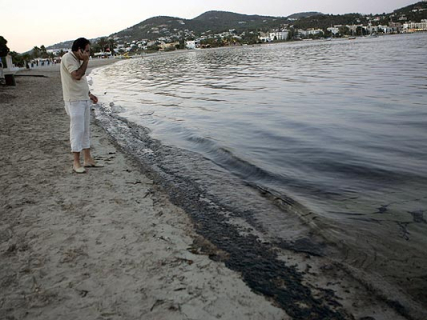
The sinking of the Don Pedro in Ibiza: the precedent of a spill that affected five kilometers of coastline

The Iscomar merchant ship wrecked in July 2007 with 200 tons of fuel on board. Cleanup operations lasted more than a month and mobilized nine vessels

Add DEMÓCRATA to Google

Ask FREN

Published

Last updated

2 minutes

Most read

Hasta el día de las elecciones (29 de noviembre) se muestran los resultados de las elecciones generales anteriores, las del 23 de julio de 2023.

Resultados de las elecciones generales del 29N en directo

Elecciones generales del 23 de julio de 2023 · Congreso de los DiputadosSenado

Escrutado: 100,00 %Votantes: 24.952.447Participación: 66,59 %

Votos

PartidoEscañosVotosPorcentaje
PP1378.160.83733,06 %
PSOE1217.821.71831,68 %
Vox333.057.00012,38 %
Sumar313.044.99612,33 %
ERC7466.0201,89 %
Junts7395.4291,60 %
EH Bildu6335.1291,36 %
EAJ-PNV5277.2891,12 %
BNG1153.9950,62 %
CCa1116.3630,47 %
UPN152.1880,21 %
PACMA0169.2370,69 %
CUP-PR099.6440,40 %
FO046.2740,19 %
NC-bc045.5950,18 %
PDeCAT-E-CiU032.0160,13 %
RECORTES CERO023.4210,09 %
PUM+J023.2900,09 %
U.P.L.023.2010,09 %
EXISTE020.4400,08 %
PCTE013.3820,05 %
GBAI099380,04 %
SY096970,04 %
Adelante091910,04 %
JM+082930,03 %
ESCAÑOS EN BLANCO079860,03 %
XAV073620,03 %
BQEX058070,02 %
CJ056200,02 %
FE de las JONS046830,02 %
PAR041730,02 %
PCTC038750,02 %
ESPAÑA VACIADA031580,01 %
PH029020,01 %
ASTURIAS EXISTE EV023140,01 %
XH019310,01 %
VP019170,01 %
Zsi018430,01 %
VB017740,01 %
POR MI REGIÓN016980,01 %
AHORA CANARIAS-PCPC016740,01 %
PARTIDO AUTÓNOMOS014460,01 %
EVB014420,01 %
CpM012980,01 %
JxG012180,00 %
EV-PCAS-TC011840,00 %
PREPAL09640,00 %
Somos Cc09630,00 %
ALM08740,00 %
PCTG07020,00 %
F.I.A.05060,00 %
3e04840,00 %
Ud.Ca04630,00 %
ESCONS EN BLANC04620,00 %
GITV03660,00 %
PUEDE02690,00 %
EVC02650,00 %
LB02630,00 %
PCTE/ELAK02590,00 %
UNIDOS SI02530,00 %
+RDS+01650,00 %
CCD01530,00 %
FUERZA CÍVICA01150,00 %

Porcentajes sobre votos válidos. Resultados definitivos del 23J de 2023.

Escaños (350)

Mayoría: 176
PP: 137 escaños en 2023PSOE: 121 escaños en 2023Vox: 33 escaños en 2023Sumar: 31 escaños en 2023ERC: 7 escaños en 2023Junts: 7 escaños en 2023EH Bildu: 6 escaños en 2023EAJ-PNV: 5 escaños en 2023BNG: 1 escaño en 2023CCa: 1 escaño en 2023UPN: 1 escaño en 2023137121333120232023
  • PP 137
  • PSOE 121
  • Vox 33
  • Sumar 31
  • ERC 7
  • Junts 7
  • EH Bildu 6
  • EAJ-PNV 5
  • BNG 1
  • CCa 1
  • UPN 1

Pactómetro

Pulsa los partidos para sumar sus escaños.

Los escaños más ajustados

Quién tiene el último escaño, quién le sigue y los votos que le faltan
  1. GironaJxCAT - JUNTSyPP285 votos

    El último escaño de Girona (el 6.º) es para JxCAT - JUNTS. Le sigue el PP, que necesitaría 285 votos más para quitárselo. Ver Girona ›

  2. CantabriaVOXyPP403 votos

    El último escaño de Cantabria (el 5.º) es para VOX. Le sigue el PP, que necesitaría 403 votos más para quitárselo. Ver Cantabria ›

  3. TarragonaJxCAT - JUNTSyPSC1247 votos

    El último escaño de Tarragona (el 6.º) es para JxCAT - JUNTS. Le sigue el PSC, que necesitaría 1247 votos más para quitárselo. Ver Tarragona ›

  4. AlbacetePSOEyVOX1412 votos

    El último escaño de Albacete (el 4.º) es para el PSOE. Le sigue VOX, que necesitaría 1412 votos más para quitárselo. Ver Albacete ›

  5. SalamancaPPyPSOE1495 votos

    El último escaño de Salamanca (el 4.º) es para el PP. Le sigue el PSOE, que necesitaría 1495 votos más para quitárselo. Ver Salamanca ›

Provincias con al menos el 30 % escrutado donde el último escaño cambiaría de manos con menos votos. Pulsa una para ver el detalle.

Senado

100,00 % escrutado
PartidoSenadores
PP120
PSOEPSOE: 73 senadoresSe presenta con estos nombres:
  • PSOE48
  • PSC12
  • PSdeG-PSOE4
  • PSE-EE (PSOE)4
  • PSN-PSOE3
  • PSIB-PSOE1
  • PSOE-SUMAR-EUIB-ARA EIVISSA1
73
EH Bildu4
EAJ-PNV4
ERCERC: 3 senadoresSe presenta con estos nombres:
  • ERC-ESQUERRES PER LA INDEPENDÈNCIA2
  • ERC1
3
Junts1
UPN1
A.H.I.1
ASG1

Los partidos que se presentan con varios nombres van juntos: pasa por encima para ver el detalle. Baleares y Canarias eligen sus senadores por islas.

Senadores (208)

Elegidos en las urnas
PP: 120 senadores en 2023PSOE: 73 senadores en 2023 (PSOE: 48; PSC: 12; PSdeG-PSOE: 4; PSE-EE (PSOE): 4; PSN-PSOE: 3; PSIB-PSOE: 1; PSOE-SUMAR-EUIB-ARA EIVISSA: 1)EH Bildu: 4 senadores en 2023EAJ-PNV: 4 senadores en 2023ERC: 3 senadores en 2023 (ERC-ESQUERRES PER LA INDEPENDÈNCIA: 2; ERC: 1)Junts: 1 senador en 2023UPN: 1 senador en 2023A.H.I.: 1 senador en 2023ASG: 1 senador en 20231207320232023
  • PP 120
  • PSOE 73
  • EH Bildu 4
  • EAJ-PNV 4
  • ERC 3
  • Junts 1
  • UPN 1
  • A.H.I. 1
  • ASG 1

Los senadores designados por los parlamentos autonómicos no se eligen en las urnas.

Mapa

Ganador por provincia

    CanariasCeutaMelillaAraba/Álava: PSE-EE (PSOE) 27,7 %Albacete: PP 39,9 %Alicante/Alacant: PP 36,7 %Almería: PP 40,9 %Ávila: PP 43,3 %Badajoz: PSOE 39,2 %Illes Balears: PP 35,6 %Barcelona: PSC 35,7 %Burgos: PP 40,6 %Cáceres: PSOE 38,9 %Cádiz: PP 34,8 %Castellón/Castelló: PP 35,2 %Ciudad Real: PP 40,5 %Córdoba: PP 37,9 %A Coruña: PP 43,1 %Cuenca: PP 39,8 %Girona: PSC 28,9 %Granada: PP 37,0 %Guadalajara: PP 36,3 %Gipuzkoa: EH Bildu 31,2 %Huelva: PP 36,4 %Huesca: PP 38,2 %Jaén: PP 37,3 %León: PP 36,9 %Lleida: PSC 29,5 %La Rioja: PP 45,6 %Lugo: PP 50,2 %Madrid: PP 40,6 %Málaga: PP 38,3 %Murcia: PP 41,2 %Navarra: PSN-PSOE 27,4 %Ourense: PP 50,0 %Asturias: PP 35,7 %Palencia: PP 42,0 %Las Palmas: PSOE 33,2 %Pontevedra: PP 39,7 %Salamanca: PP 46,9 %Santa Cruz de Tenerife: PP 35,4 %Cantabria: PP 42,1 %Segovia: PP 45,0 %Sevilla: PSOE 36,6 %Soria: PP 37,2 %Tarragona: PSC 32,9 %Teruel: PP 35,0 %Toledo: PP 37,8 %Valencia/València: PP 33,6 %Valladolid: PP 40,8 %Bizkaia: EAJ-PNV 26,9 %Zamora: PP 44,7 %Zaragoza: PP 36,0 %Ceuta: PP 38,8 %Melilla: PP 49,2 %

    Pulsa una provincia para ver sus resultados y elegir municipio.

    Mapa

    Partido con más senadores por provincia

    CanariasCeutaMelillaAraba/Álava: PSOE, 3 de 4 senadoresAlbacete: PP, 3 de 4 senadoresAlicante/Alacant: PP, 3 de 4 senadoresAlmería: PP, 3 de 4 senadoresÁvila: PP, 3 de 4 senadoresBadajoz: PSOE, 2 de 4 senadoresIlles Balears: PP, 3 de 6 senadoresBarcelona: PSOE, 3 de 4 senadoresBurgos: PP, 3 de 4 senadoresCáceres: PP, 2 de 4 senadoresCádiz: PP, 3 de 4 senadoresCastellón/Castelló: PP, 3 de 4 senadoresCiudad Real: PP, 3 de 4 senadoresCórdoba: PP, 3 de 4 senadoresA Coruña: PP, 3 de 4 senadoresCuenca: PP, 3 de 4 senadoresGirona: PSOE, 3 de 4 senadoresGranada: PP, 3 de 4 senadoresGuadalajara: PP, 3 de 4 senadoresGipuzkoa: EH BILDU-INDEPENDENTZIA EZKERRETIK, 3 de 4 senadoresHuelva: PP, 2 de 4 senadoresHuesca: PP, 3 de 4 senadoresJaén: PP, 3 de 4 senadoresLeón: PP, 3 de 4 senadoresLleida: PSOE, 3 de 4 senadoresLa Rioja: PP, 3 de 4 senadoresLugo: PP, 3 de 4 senadoresMadrid: PP, 3 de 4 senadoresMálaga: PP, 3 de 4 senadoresMurcia: PP, 3 de 4 senadoresNavarra: PSOE, 3 de 4 senadoresOurense: PP, 3 de 4 senadoresAsturias: PP, 3 de 4 senadoresPalencia: PP, 3 de 4 senadoresLas Palmas: PSOE, 4 de 5 senadoresPontevedra: PP, 3 de 4 senadoresSalamanca: PP, 3 de 4 senadoresSanta Cruz de Tenerife: PSOE, 3 de 6 senadoresCantabria: PP, 3 de 4 senadoresSegovia: PP, 3 de 4 senadoresSevilla: PSOE, 3 de 4 senadoresSoria: PP, 3 de 4 senadoresTarragona: PSOE, 3 de 4 senadoresTeruel: PP, 3 de 4 senadoresToledo: PP, 3 de 4 senadoresValencia/València: PP, 2 de 4 senadoresValladolid: PP, 3 de 4 senadoresBizkaia: EAJ-PNV, 3 de 4 senadoresZamora: PP, 3 de 4 senadoresZaragoza: PP, 3 de 4 senadoresCeuta: PP, 2 de 2 senadoresMelilla: PP, 2 de 2 senadores

    Pulsa una provincia para ver sus senadores y candidatos.

    Resultados definitivos de las elecciones generales del 23 de julio de 2023 (Ministerio del Interior). Mapas: Instituto Geográfico Nacional (es-atlas, CC BY 4.0). Demócrata.

    hundimiento don pedro ibiza
    hundimiento don pedro ibiza

    The shipwreck of a fuel-carrying vessel about 40 kilometers from Ibiza keeps the authorities on alert, who, for the moment, ensure that there is no record of any spill having taken place. What happened, saving distances, brings to mind the sinking of the Don Pedro, also in Ibiza, on July 11, 2007, which caused one of the most notable episodes of maritime pollution recorded on the island. The merchant ship of the Iscomar company went down when it was leaving the port and the hydrocarbon spill reached around five kilometers of coastline.

    The accident occurred in the early hours of the morning, after the ship collided with the Dau Grand islet, located at approximately one mile from the port of Ibiza. There were 20 people on board, who were rescued by the Salvamento Marítimo services. The sinking occurred at 4:05 a.m. and the rescue concluded about 20 minutes later.

    The merchant vessel, 142 meters in length, was transporting 150 tons of fuel oil and another 50 tons of diesel. The pollution forced several of the island’s beaches to be closed totally or partially, including Talamanca, Figueretes and d'en Bossa.

    Nine vessels participated in the cleanup operations

    The response of the administrations began during the first hours after the shipwreck. In less than five hours, the National Contingency Plan for Accidental Marine Pollution was activated and a governing body was formed with representatives from different public administrations.

    The intervention vessel Clara Campoamor (which is also intervening on this occasion) positioned itself over the wreck less than three hours after the accident and began to suction fuel. The Miguel de Cervantes also participated, along with two Salvamar vessels, aerial means, and nine light vessels. The operation deployed more than 9,000 meters of absorbent booms along the coastline and reached a figure of an average of 300 people working in Ibiza, according to the Government report presented on July 20, 2007.

    The Executive then stated that the beaches had returned to normal and that the preventive device would continue while the fuel was being extracted from the ship. It also reported that different exits from the vessel had been sealed through which leaks had occurred.

    More than 211,000 kilos of material collected in Ibiza

    The environmental status report on the Balearic Islands corresponding to 2007 includes the dimension of the cleaning operations. The work began in the morning of July 11 and continued until the 26th. Four pelican-type vessels and five viorote-type vessels took part, accumulating 1,512 hours of work. One airplane carried out another 56 hours of flight.

    The device collected 409.5 cubic meters of material, equivalent to 211,597 kilos. This amount included solids, fuels, and absorbent barriers, so it should not be interpreted as the volume of fuel spilled into the sea.

    The regional report also attributes to the accident the extraordinary increase in the waste collected in Ibiza during 2007. In the annual breakdown, the island recorded 141,365 kilos of waste collected in the coastal cleaning operations, compared with 54,484 kilos in Sant Josep and 30,885 in Sant Antoni.

    On August 27, the work and the routes of the vessels were normalized. The Don Pedro remained sunk and the actions focused on controlling any possible leaks and removing the fuel that still remained in the ship.

    More key points, information and questions with FREN

    AI-GENERATED CONTENT

    What is the legal procedure to activate the National Contingency Plan for Accidental Marine Pollution in Spain?

    In Spain, the state response is activated by decision of the maritime authority when necessary to prevent or mitigate damage, with mobilization of the corresponding resources. There is an important clarification: the former National Contingency Plan for Accidental Marine Pollution was replaced by the National Maritime Plan, approved by Order FOM/1793/2014.

    1. Applicable legal framework

    The procedure is framed within Royal Decree 1695/2012, which approves the National Response System for marine pollution, and in Order FOM/1793/2014, which approves the National Maritime Plan. The transitional provision of the royal decree maintained the old plan only until the new one came into force.

    The system covers accidental or deliberate pollution, regardless of its origin or nature, that affects or may affect waters under Spanish sovereignty, sovereign rights or jurisdiction, or Spanish coasts. It is not limited to hydrocarbons.

    2. Risk identification and initial response

    The first decision consists of assessing the incident, its foreseeable extent, the vulnerability of the environment, and the available resources. It is not necessary to wait for the pollutant to reach the coast: the threat of impact allows preventive measures to be adopted.

    If the event occurs in a port, terminal, or maritime facility, the responsible authority or company activates its internal maritime plan. Its activation in the emergency phase implies declaring the alert phase of the National Maritime Plan and the corresponding territorial plan. Alert does not equate to full activation of the state response.

    3. Determination of the situation

    Article 7 of the system grades the response. Relevant criteria include:

    • Situation 1: may require activating territorial or local plans and, when appropriate, the National Maritime Plan; one of the cases is the real or potential impact on several neighboring municipalities.
    • Situation 2: the previous resources are insufficient or the affected or threatened area is especially vulnerable. The direction of the territorial plan may request state maritime support and activation of the National Maritime Plan.
    • Situation 3: large-scale or hazardous pollution with possible impact on several autonomous communities, cross-border dimension, or declaration of national interest due to danger to people and property. The state maritime and coastal plans are activated, in addition to the corresponding territorial ones.

    Therefore, activation does not depend exclusively on a determined amount of spill, but also on risk and response capacity.

    4. Activation agreement and communications

    Article 8 establishes that the National Maritime Plan "shall be activated by the maritime authority when necessary for the prevention or mitigation of damage." This decision entails the mobilization of its intervention resources.

    The activation must be immediately communicated to the National Security Department, Civil Protection and Emergencies, the state department competent in environment, and the Government Delegation. The latter informs the potentially affected territorial administrations. This operational decision should not be confused with the regulatory approval of the plan.

    5. Maritime and coastal coordination

    When the National Maritime Plan and internal plans coincide, coordination corresponds to the direction of the former. If a territorial plan is also active in situations 1 or 2, a joint body with state and regional representation is established.

    Beach and shoreline protection is articulated through territorial plans and the State Shoreline Protection Plan. In situation 3, a unified command and general coordination scheme applies, without each administration having to abandon its own functions.

    What are the competencies of the vessel Clara Campoamor in maritime salvage operations according to Spanish legislation?

    The Clara Campoamor can perform search and rescue of persons, emergency towing, assistance to vessels, firefighting, and anti-pollution operations. Legally, it does not have its own administrative competencies: it is an operational asset of the Maritime Safety and Rescue Society, SASEMAR, which executes the public services assigned to this entity within the corresponding emergency device.

    Legal basis of its functions

    The main reference is the Revised Text of the State Ports and Merchant Marine Law, approved by Legislative Royal Decree 2/2011. Its article 268 includes among SASEMAR's services "saving human life at sea," prevention and fight against pollution, monitoring and assistance to maritime traffic, navigation safety, and towing and assistance to vessels.

    Therefore, a distinction must be made between the legal attribution to SASEMAR and the tasks this vessel can perform according to its equipment. The official documentation of the Clara Campoamor presents it as a versatile unit prepared to intervene in complex emergencies.

    What it can do during an emergency

    • Search and rescue persons: participate in locating shipwrecked individuals, recovering survivors, and supporting their evacuation, together with other vessels and aerial means.
    • Tow and assist vessels: provide emergency towing to disabled or unmanned vessels and assistance to reduce risks of sinking, grounding, or collision. This mission should not be confused with ordinary port towing.
    • Fight fires: use its firefighting means in support of distressed vessels and specialized teams involved.
    • Prevent and combat spills: deploy barriers, recover hydrocarbons using collection equipment, and store removed waste. It can act both to limit a spill and to reduce its consequences.
    • Provide technical and logistical support: transport or deploy specialized equipment, support divers, and collaborate in handling floating elements when part of the accident response.

    Who directs and decides

    The Clara Campoamor acts integrated within the Maritime Rescue organization and under the coordination of the mobilized device. It does not replace the maritime authority: the law assigns the maritime captain functions related to safety, salvage, and pollution control, as well as powers over maneuvers, anchoring, and towing availability.

    Likewise, the legal text identifies the Director General of the Merchant Marine as the competent authority to make decisions about vessels needing assistance, including their reception in a place of refuge. The Clara Campoamor can physically carry out an assistance or towing operation, but that capacity does not by itself grant administrative decision-making over the destination of the assisted vessel.

    In pollution within the service area of ports, the law recognizes competencies to port authorities and requires collaboration with the maritime administration. Therefore, the intervention of the Clara Campoamor does not automatically displace other competent bodies.

    Scope and legal consequences

    The framework is completed with the Search and Rescue Convention, which contemplates coordination between States and rescue services. International action must respect applicable agreements and conditions; it does not imply unlimited freedom to intervene in foreign waters.

    Finally, article 268 allows SASEMAR to claim certain expenses for services ordered by the maritime administration and for anti-pollution actions. In summary, the Clara Campoamor rescues, assists, and protects the marine environment; authority decisions and possible claims correspond to legally empowered bodies and entities.

    What requirements must public administrations meet to declare the normalization of beaches after a hydrocarbon spill?

    To declare the normalization of a beach after a hydrocarbon spill, administrations must technically justify that the emergency response can end and, if reopened for bathing, that sanitary conditions allow it. There is no single state procedure called "normalization declaration": the end of the emergency, reopening to the public, and environmental recovery must be distinguished, which do not necessarily coincide.

    1. Apply the corresponding plan and respect competencies

    The general framework is Royal Decree 1695/2012, which regulates the National Response System for marine pollution. Its article 5 requires that plans determine the "circumstances under which the end of the contingency will be declared, when the pollution episode that caused it can be considered finished."

    Therefore, it must be identified which plans are activated — maritime, coastal, regional, or local — and their closure conditions fulfilled. A municipal announcement of reopening does not replace the deactivation of other plans nor decisions corresponding to other authorities.

    2. Decide through the competent authority and with technical support

    Order FOM/1793/2014, which approves the National Maritime Plan, establishes express rules:

    • If only that plan is activated, or also an internal maritime plan coordinated with it, the emergency director decrees its end, based on reports from the technical advisory council and after hearing the management council.
    • If a coastal subsystem plan is also activated, the coordinating body of both plans decrees the end of the emergency. Ending operations at sea alone does not equate to normalizing the coast.

    3. Prove pollution control

    The evaluation must consider the spilled product, its hazard, the affected extent, possible damage to people and the environment, and cleaning results. The system assigns response teams the recovery of the pollutant, cleaning, proper waste management, and biodiversity protection.

    It is not enough that the sand looks clean. Inspections and checks must be adjusted to the episode: presence of residues, possible buried contamination, and evolution of stains. As a practical example, the Valencian Government announced in July 2024 that it would perform subsurface sampling and continue analyses, maintaining the bathing ban until water quality is verified.

    4. Justify reopening for bathing separately

    Reopening requires sanitary support, in addition to the operational cleaning balance. Depending on the contaminant and exposure routes, analyses of water, sand, or sediments and a risk assessment for users may be necessary.

    The cited general rules do not set a universal number of samples, an identical waiting period, or a single hydrocarbon concentration for any beach. These criteria should not be presented as uniform state requirements: they must be specified according to the applicable plan and sanitary evaluation of the episode.

    In València, on July 19, 2024, the City Council announced the reopening of three beaches after removing the spill and receiving water quality results.

    5. Communicate the scope and maintain necessary actions

    The decision must explain which areas and uses are normalized and which restrictions remain. The National Maritime Plan allows maintaining support teams after declaring the end of the emergency. Consequently, reopening does not mean proving complete ecological recovery nor does it prevent continuing necessary monitoring and decontamination.

    Play

    Test your knowledge with FREN!

    How much do you know about this topic? Answer the following 3 questions.

    What length of coastline was affected by the Don Pedro spill in 2007?

    Question 1 of 3

    How many tons of fuel was the Don Pedro carrying when it sank?

    Question 2 of 3

    How many kilos of material were collected in the cleanup operations after the Don Pedro sank?

    Question 3 of 3