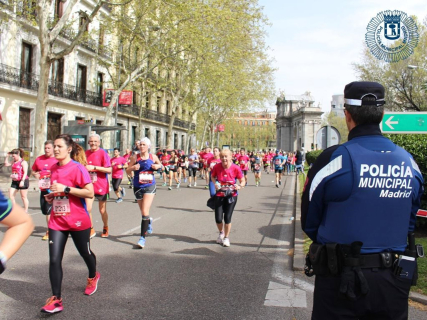

The boom of the 21 kilometers also arrives accompanied by viral stories, such as the classification error in a half marathon in Mallorca or the runner of the "broom car" in Granada, two episodes that have once again placed this distance at the center of the sports and social conversation.
The half marathon lives its great moment in Spain
The half marathon has ceased to be an intermediate distance to become one of the great phenomena of popular running. The 21.097 kilometers have found their place among those who seek something more demanding than a 10K, but do not yet want - or need - to face the 42 kilometers of a full marathon.
The trend is being seen in several cities at once. Madrid is restructuring its big race for 2027, Córdoba is selling out bibs at a record pace, Vitoria is opening registrations with a limited quota, and several viral stories have brought half marathons to the center of social media. It's not just sport: it's urban planning, tourism, health, community, and popular culture.
The most symbolic data comes from Madrid. The organization of the Zurich Rock ‘n’ Roll Running Series Madrid has announced that from 2027 it will eliminate the 10-kilometer race and will only maintain two distances: half marathon and marathon. The 10K race disappears after 16 years as part of the event.
Madrid eliminates the 10K and bets on the half marathon
The decision by Madrid marks a turning point. Starting with the 2027 edition, the major Madrid event will focus only on the half marathon and the marathon. The organization has explained that the change responds to several factors, including the impossibility of offering musical entertainment in the first section of the 10K due to the city's acoustic regulations and the growing demand for long distances.
The Madrid race also comes from an edition with enormous participation. The Zurich Rock ‘n’ Roll Running Series Madrid brought together 47,000 runners from 113 countries, with 10K, half marathon, and marathon races, on a day that became one of the great celebrations of popular athletics in the capital.
The movement has a sporting and also commercial reading. The half marathon allows attracting popular runners with ambition, but without the level of preparation that a full marathon demands. For cities, moreover, it is a very profitable distance in terms of participation, image, sports tourism, and urban occupation.
Córdoba sells 4,000 bibs in just a few hours
The phenomenon is not limited to Madrid. The Córdoba Half Marathon 2026 has confirmed the pull of the distance with a massive response in the opening of registrations.
In just a few hours since the activation of the official platform, the race had already reached 4,000 bibs acquired.
The figure reflects the extent to which half marathons have become city events. They are not just races for experienced athletes: they are social events that mobilize local runners, clubs, visitors, families, and fans who prepare for months for a date marked in red.
From the Municipal Institute of Sports of Córdoba it has been underlined that the number of bibs is conditioned by criteria of safety, capacity, logistics, healthcare and quality of the runner's experience. That is to say, the success of the test is not measured only by how many people want to run, but by how many can do so with guarantees.
Vitoria opens registrations with 4,500 limited places
Vitoria-Gasteiz also joins the hot half marathon calendar. The 48th edition of the Vitoria-Gasteiz Half Marathon will be held on December 20, 2026, and has already opened registrations with a maximum of 4,500 bibs.
The registration fee will increase as the date approaches: 21 euros until May 31, 26 euros until October 15, 35 euros until November 30, and 50 euros until December 19. The organization also offers a commemorative t-shirt for an additional 12 euros for those who register before November 1.
The race will start at 10:30 from Portal de Lasarte, next to Mendizorrotza, and finish in Plaza de Amadeo García Salazar. The route will be 21.097 kilometers on asphalt and participants will have a maximum of 2 hours and 30 minutes to complete it.
From Mallorca to Granada: the half marathon also goes viral
The rise of the half marathon is also being played out on social media. In Mallorca, a runner reported that a classification error left her off the podium in the Cala Ratjada half marathon despite having won in her sub23 category, as reported by Diario de Mallorca. The story went viral due to the contrast between the joy of having won and the surprise of not receiving the trophy at the time.
In Granada, another story has generated conversation: that of María, the amateur runner who was recorded walking next to the broom car during the Granada Half Marathon. The protagonist herself explained afterwards that she arrived at the race with shin splints, which she suffered during the course and that she still managed to finish the race.
These stories work because they connect with the emotional core of popular running. The half marathon is not just a personal best, pace per kilometer, or classification. It is also frustration, pride, injury, overcoming, humor, self-esteem, and the desire to cross a finish line even if the body says stop.
Why the half marathon is so addictive
The half marathon has a clear virtue: it seems possible, but it commands respect. It is long enough to require real training and accessible enough not to be reserved only for very experienced runners.
For many runners, it is the perfect distance. It forces you to take care of preparation, nutrition, rest, and race strategy, but it does not demand the physical, mental, and logistical wear and tear of a full marathon. That is why it has become a kind of emotional frontier: those who finish a half marathon feel that they have crossed an important line.
It also fits very well with the current culture of popular sport. It allows sharing workouts on social media, creating multi-month goals, traveling to another city to run, and experiencing the race as a personal experience. The bib is no longer just a number: it is an excuse to belong to something.
A key distance for cities
Half marathons are increasingly relevant for cities because they combine massive participation, economic impact, and visibility. Hotels, restaurants, transportation, shops, and sponsors benefit from events that attract runners and their companions for an entire weekend.
Furthermore, the 21-kilometer distance allows for the design of attractive urban routes without the extreme complexity of a full marathon. For city councils and organizers, it is a format with growth potential, but also with clear demands: security, traffic closures, medical services, aid stations, volunteers, and timing control.
The Madrid case shows where the sector can go: less dispersion of formats and more concentration on the distances that are growing the most. The Córdoba case confirms the demand. The Vitoria case shows the importance of the quota and planning. And the viral videos from Mallorca and Granada remind us that popular running is also told in the first person.
The half marathon is no longer a secondary event
For years, the half marathon was seen as a preliminary step to the marathon. Now it is beginning to function as a destination in itself. Many runners do not run it to prepare for something else, but because that is precisely their race.
The elimination of the 10K in Madrid, the pace of registrations in Córdoba, the limited quota in Vitoria, and the viral conversation on social media paint the same scenario: the half marathon is experiencing a moment of maximum prominence.
Spain runs, but it no longer runs just to go further. It runs to find a distance that hurts just enough, excites a lot, and allows a story to be told upon crossing the finish line.