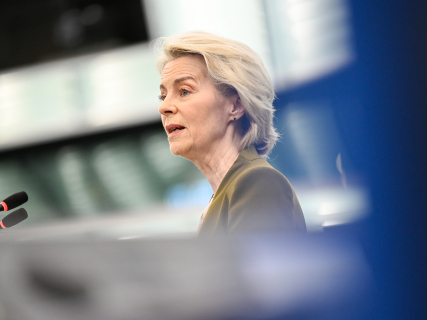

The Schuman roundabout, epicentre of European institutions, gathers daily officials, policymakers, diplomats, businessmen and lobbyists. If Paris is the city of love, Brussels is the city of public affairs. In Madrid they are increasingly aware of this. Therefore, the main Spanish firms send their divers daily to the Community capital to try to influence those legislative files that will end up affecting the day-to-day of their companies.
Brussels, the real playing field
In a general calculation, the total investment of the twenty largest Spanish companies in Brussels exceeds 12.4 million euros annually. A business group that employs more than 85 professionals dedicated exclusively to the representation of their interests before the community institutions.
The energy sector, with Iberdrola, Repsol and Naturgy, as well as the technological sector, with Telefónica, Amadeus and Indra, concentrate 65% of the total spending. Sources consulted by Demócrata attribute this fact to the high regulatory burden in Brussels related to the European Green Deal and the Digital Agenda. In recent years, BBVA and Santander have also increased their presence to influence European taxonomy —what is considered green investment— or other regulations such as the one related to the digital euro.
Featured story
European companies are driving a hydrogen backbone network to connect industrial supply and demand
6 minutes
Telefónica has an estimated expenditure of close to three million euros annually, followed by Iberdrola's two million and with Amadeus IT completing the podium with one million. Behind them, BBVA, Indra, and Repsol tie at around 900,000 euros, according to estimates from the European Commission's transparency register.
The first ten positions in the ranking are closed by Banco Santander, Naturgy, CaixaBank and Endesa, which dedicate around half a million euros of their budget to public affairs. The rest of the ranking is made up of:
11.Acciona — 350,000
12.Navantia — 300,000
13.Ferrovial — 250,000
14.Enagás — 250,000
15.Gestamp — 200,000
16.Redeia (REE) — 200,000
17.Grifols — 150,000
18.IAG (Iberia) — 150,000
19.Cellnex — 150.000
20.Tecnove — 100.000
When analyzing the list of the "Top 20" companies that dedicate the most budget to public affairs in the European capital, another characteristic is detected: the high concentration of the Spanish lobby. The first five companies on the list represent almost half of the total spending.
Featured story
Catalan companies demand Brussels maintain nuclear power "to guarantee electricity supply"
2 minutes
In a critical moment for the European legislature, with “mega-files” in process, in the trilogue or implementation phase, which directly affect these companies, this takes on special relevance. The capacity for influence is not distributed homogeneously: it is concentrated in a few actors with financial muscle and a stable presence in Brussels.
Telecoms: mergers and rules of the digital game
In the telecommunications sector, where Telefónica and Cellnex reign, attention is focused on two main dossiers. On one hand, the European Commission presented its proposal for the new Digital Networks Act in January, which is currently under debate in both the European Parliament and the Council.
What is being discussed is the simplification of rules for cross-border mergers. This would allow Telefónica to buy other operators more easily, as well as establish a mechanism for large technology companies to contribute to the cost of networks.
At the same time, the trialogue on the Omnibus Digital Artificial Intelligence Regulation remains open, with a view to harmonizing and simplifying the application of the regulation that will come into force next summer. What companies want is for the transparency requirements not to compromise their trade secrets.
Sources from the Cypriot Presidency of the Council of the Union explain that their attitude during these negotiations is being “constructive, presenting concrete ideas with the aim of reaching a mutually satisfactory agreement”. “We maintain our commitment to conclude negotiations on this matter as a priority during our term, as well as to achieve the general objective of simplification,” states a member of the negotiating team.
Defense: the new European gold
Another of the business families that concentrates a good part of public advocacy activity is that of the defense sector, with protagonists such as Indra or Navantia.
In March, the Commission adopted the European Defence Industry Programme, which is endowed with a budget of more than one billion euros. It is currently in the implementation phase of the first work plans for the next two years.
Here, companies compete for the so-called “Projects of Common Interest” to ensure that Spanish technology becomes the standard in new European defense systems, especially in areas such as drones and cyber defense. It is not just about contracts: it is about setting technological standards that will shape the market for decades.
Banking: the battle for the data and the digital euro
BBVA, Santander and CaixaBank have their eyes set on the negotiations regarding the Financial Data Access framework. The banking sector is fighting for the principle of “same risk, same regulation”, which translates to if they have to share their data with fintech companies, these must also comply with the same levels of security and transparency.
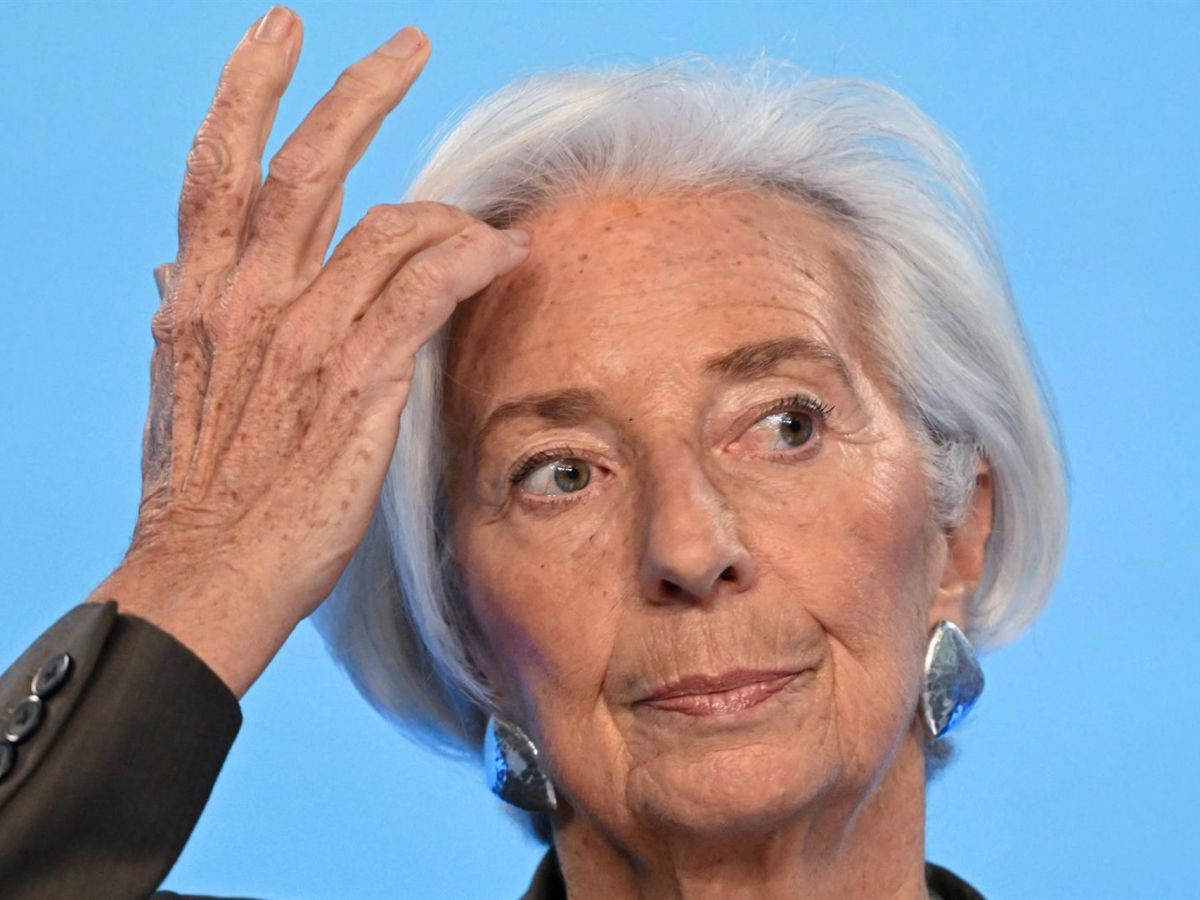
On the other hand, the digital euro is awaiting technical preparation after achieving political backing. Banks are pushing, however, to limit the amount of digital euros a citizen can hold, thus avoiding a flight of deposits from commercial banks to the European Central Bank.
The discussion is not minor: the balance between financial innovation, banking system stability, and European monetary sovereignty is at stake.
Energy: taxation, hydrogen, and the green pulse
The energy sector, with Repsol, Iberdrola and Naturgy at the forefront, is awaiting the final approval of the revision of the Energy Taxation Directive.
Some companies are seeking that synthetic fuels have tax exemptions similar to renewable electricity, preventing carbon-neutral combustion technology from being penalized. It is a technical battle, but with enormous industrial implications.
Furthermore, in the European Hydrogen Bank, Iberdrola and Cepsa are very active in Brussels so that the auction criteria favor large-scale production in southern Europe. The idea is clear and repeated in the community corridors: Spain as an “energy hub” for the continent.
The art of influencing: papers, amendments, and strategy
The constant traffic of papers, files, and amendments reveals a maxim in the European capital: those who are not in Brussels, do not play. Spanish companies seem to understand that the big games in the legislation game happen in the stadiums of European institutions. Negotiating in Brussels does not only mean working for today's business, but, practically, for the legislative packages that will be processed in Spain in the next decade. Because every directive, every regulation, and every delegated act that is negotiated in the Schuman roundabout ends up having a concrete translation in the BOE. And by then, the rules are already written.
The growing Spanish presence in Brussels reflects a change in mentality. For years, many companies viewed the EU capital as a distant, almost bureaucratic stage. Today, on the other hand, they consider it a real power center, where a large part of their future is decided. The result is a professionalization of the Spanish lobby, with increasingly technical, specialized teams connected with European institutional dynamics. It is no longer just about public relations: it is about regulatory engineering.
Brussels has consolidated itself as the place where Europe's economic script is written. And Spanish companies, aware of this, have decided not to limit themselves to reading it. They want, and increasingly so, to participate in its drafting.