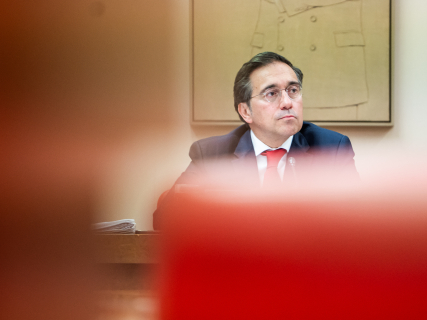
Europe as a stage, Spain as silence

The former advisor at the Representation of Spain to the EU, Carlos M. Ortiz Bru, analyzes the Government's international information policy in Demócrata: "when journalists joke about how difficult it is to get answers, when they compare national styles with a certain irony, when sarcastic commentary replaces serious analysis... it is usually because something is not working as it should."

7 minutes

EuropaPress 7424804 ministro asuntos exteriores union europea cooperacion jose manuel albares

EuropaPress 7424804 ministro asuntos exteriores union europea cooperacion jose manuel albares

Add DEMÓCRATA to Google

Published

Last updated

7 minutes

Most read

Fren arrives at Demócrata: Vinces' specialized AI assistant to understand politics, laws, and current public affairs

Fren2
Vinces' specialized AI integrates into Demócrata to simplify political and legislative complexity, offering context and interactive formats

In the corridors of Brussels -that hybrid ecosystem between technocracy, expensive coffee and measured-smile diplomacy- journalists talk. They always talk. And when they lower their voices in huddles, far from microphones and cameras, the tone is usually more revealing than any official press conference.

It is not necessary to be a journalist to perceive the buzz. It is enough to listen. Correspondents, both Spanish and foreign, agree on an impression that is no longer expressed with surprise, but with a mixture of resignation and sarcasm: with the Spanish Government, getting informed has become an exercise in archaeology. One has to excavate, interpret fragments, reconstruct contexts… and even so, the result usually resembles a hypothesis more than an explanation.

Some summarize it with irony: “when Spain speaks in Brussels, it does so better in English than in Spanish… and better for abroad than for home”. Others, more direct, describe it as a perfectly calibrated strategy: maximum international exposure, minimum domestic accountability. In any case, the conclusion is shared: the relationship with the press is not going through its best moment.

And that is especially noticeable where it should be most taken care of: in Europe.

Outside the M30

There are governments that appear, explain, and respond. And then there is the Spanish Government when it crosses the Pyrenees: it talks a lot, but not necessarily to whom it should.

In Brussels - that place where, in theory, an increasing part of national policy is decided - information flows with a peculiar inverse logic. The more important the meeting, the fewer explanations arrive home. The more relevant the decision, the more sophisticated the silence.

The result is a model that could be defined as soft information closure: asking is not prohibited, it simply becomes increasingly difficult to do so under useful conditions. There is no explicit censorship; there is something more effective: control of access, timing, and context. It is a kind of information diet: food is not eliminated, but the portion is reduced so much that one ends up malnourished without realizing it.
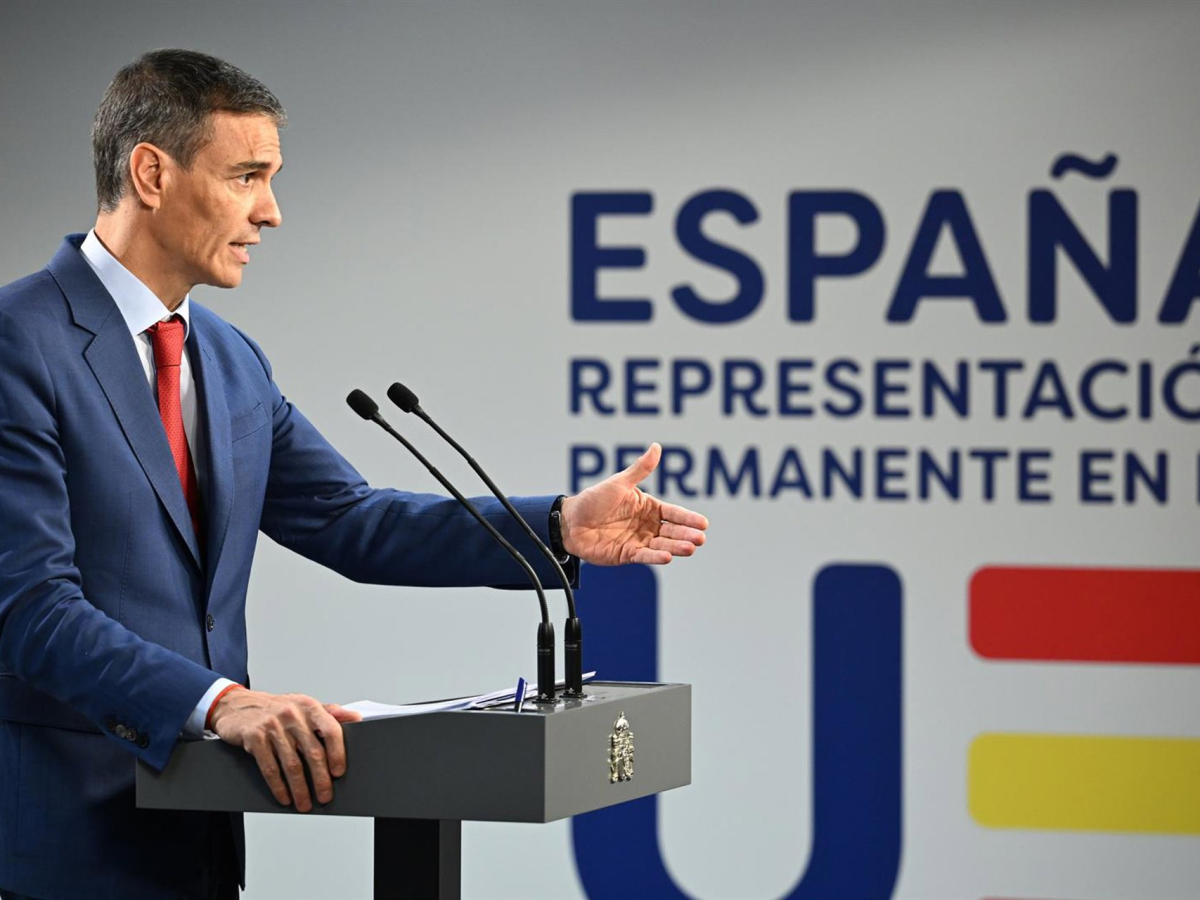
The President of the Government, Pedro Sánchez, during a press conference after the European Council meeting in Brussels, on October 23, 2025, in Brussels (Belgium). Pool Moncloa/Borja Puig de la Bellacasa and Pool EU
The President of the Government, Pedro Sánchez, during a press conference after the European Council meeting in Brussels, on October 23, 2025, in Brussels (Belgium). Pool Moncloa/Borja Puig de la Bellacasa and Pool EU -

While other European governments detail positions, anticipate debates, and report to their parliaments, the Spanish Executive seems to have opted for a different strategy: communicating outwards and rationing inwards. Letters to international newspapers, carefully targeted opinion pieces for foreign public opinion, presence in global forums… all of this contrasts with an increasingly distant – if not directly harsh – relationship with the national press and with internal control mechanisms.

More Europe?

The paradox is evident: there has never been so much Europeanist rhetoric and, at the same time, so little political pedagogy about Europe within Spain. Brussels is constantly invoked, but Brussels is explained just enough. As if the European Union were a useful backdrop, but not a space that requires transparency.

The summits of Heads of State and Government are the perfect example of this choreography. In theory, these are key moments: economic decisions, strategic agreements, negotiations that directly affect millions of citizens. In practice, the scene increasingly resembles a theatrical performance of limited duration and a closed script.
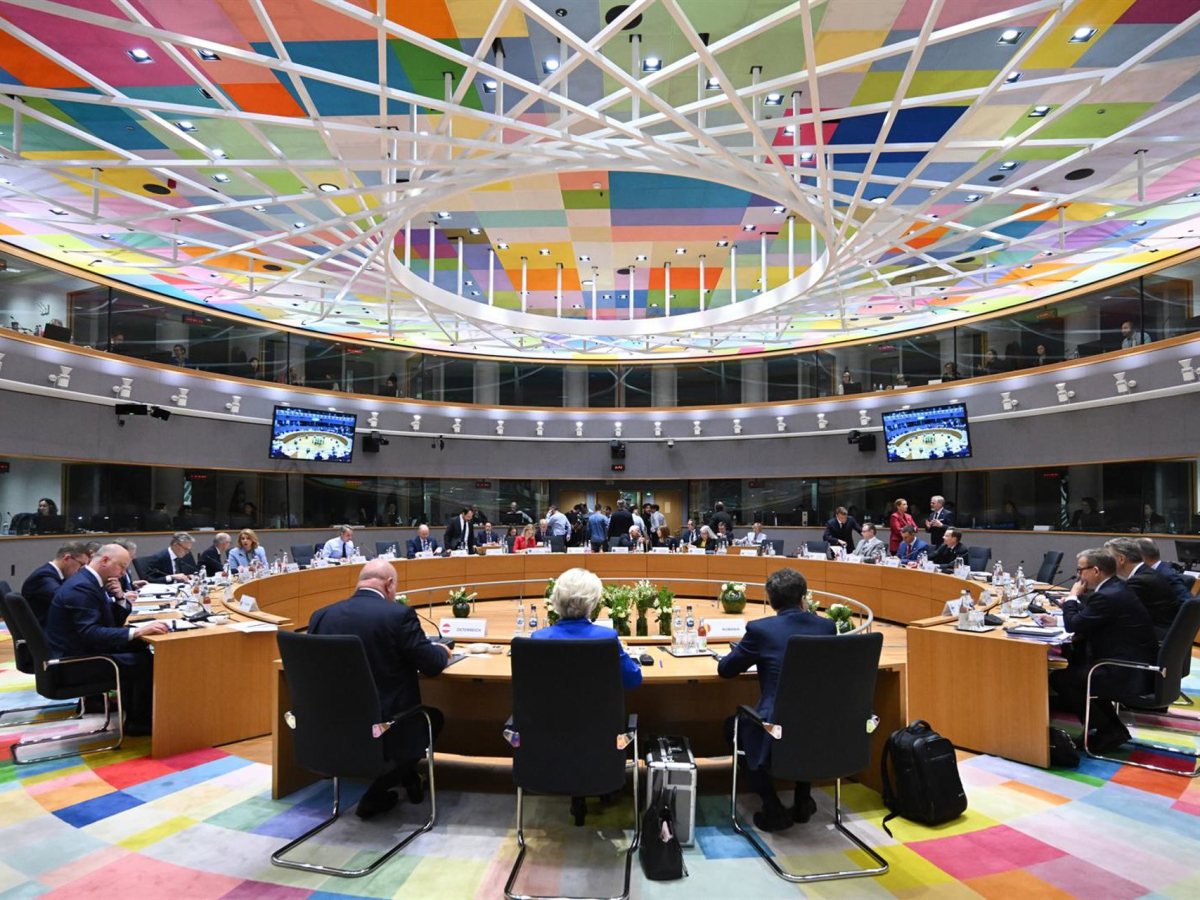
European Council meeting in Brussels at the ordinary October summit. FREDERIC SIERAKOWSKI // EUROPEAN COUNCIL
European Council meeting in Brussels at the ordinary October summit. FREDERIC SIERAKOWSKI // EUROPEAN COUNCIL -

The president appears - especially when the wind is in his favor and he can present himself as the leader of a European decision -, wraps himself in the agreement, nationalizes it and exhibits it as his own. But when that prominence is diluted - increasingly often -, when his room for maneuver in Brussels narrows due to a unilateral, scarcely communicative style based on faits accomplis intended more for internal electoral consumption than for consensus with his European partners, then his presence becomes more elusive. He appears - when he does -, makes a statement, summarizes and leaves. The questions - when there are any - sometimes seem like an ornamental element, a protocol concession rather than a real exercise of control. It is the political equivalent of those restaurants where the waiter recommends the menu of the day… but does not allow changes or questions about the ingredients.
Europe, in this sense, has become a perfect scenario: far enough away to dilute national media pressure, complex enough to justify opacity. An ideal combination for practicing what could be called selective transparency: what is convenient is shown, what is uncomfortable is omitted, and everything is wrapped in technical language that deactivates the interest of the average citizen.

In that context, the relationship with journalists not only cools down: it degrades. It is no longer solely about lack of information, but about attitude. The snubs, the evasions and, on occasion, the bad manners replace the normal interlocution in a mature democracy.

Albares appears 

The case of the Minister of Foreign Affairs, José Manuel Albares, deserves its own chapter, almost like an involuntary masterclass on how to strain -to the limit- the relationship with the press without completely breaking it. His encounters with journalists have left scenes that, in other countries, would provoke more than institutional discomfort: they would raise eyebrows, headlines and, probably, some parliamentary explanation or other, while here they have been normalizing as one gets used to a constant background noise.

Evasive answers, barely disguised impatience, and a peculiar tendency to treat an uncomfortable question as if it were an impertinence or a breach of protocol define a style in which it is not so much what is said, but that refined art of saying nothing while appearing to do the opposite. And, as a less visible but more eloquent complement, come the calls, the discreet touches, the always opportune "suggestions" to certain media outlets to modulate the dissemination of information or soften uncomfortable approaches: nothing explicit, nothing easily demonstrable, but clear enough for the recipient. Thus, the uncomfortable question is no longer just evaded in public, but an attempt is made to neutralize it even before it exists, in a version of diplomacy where managing foreign policy seems to increasingly include managing who tells it and how.
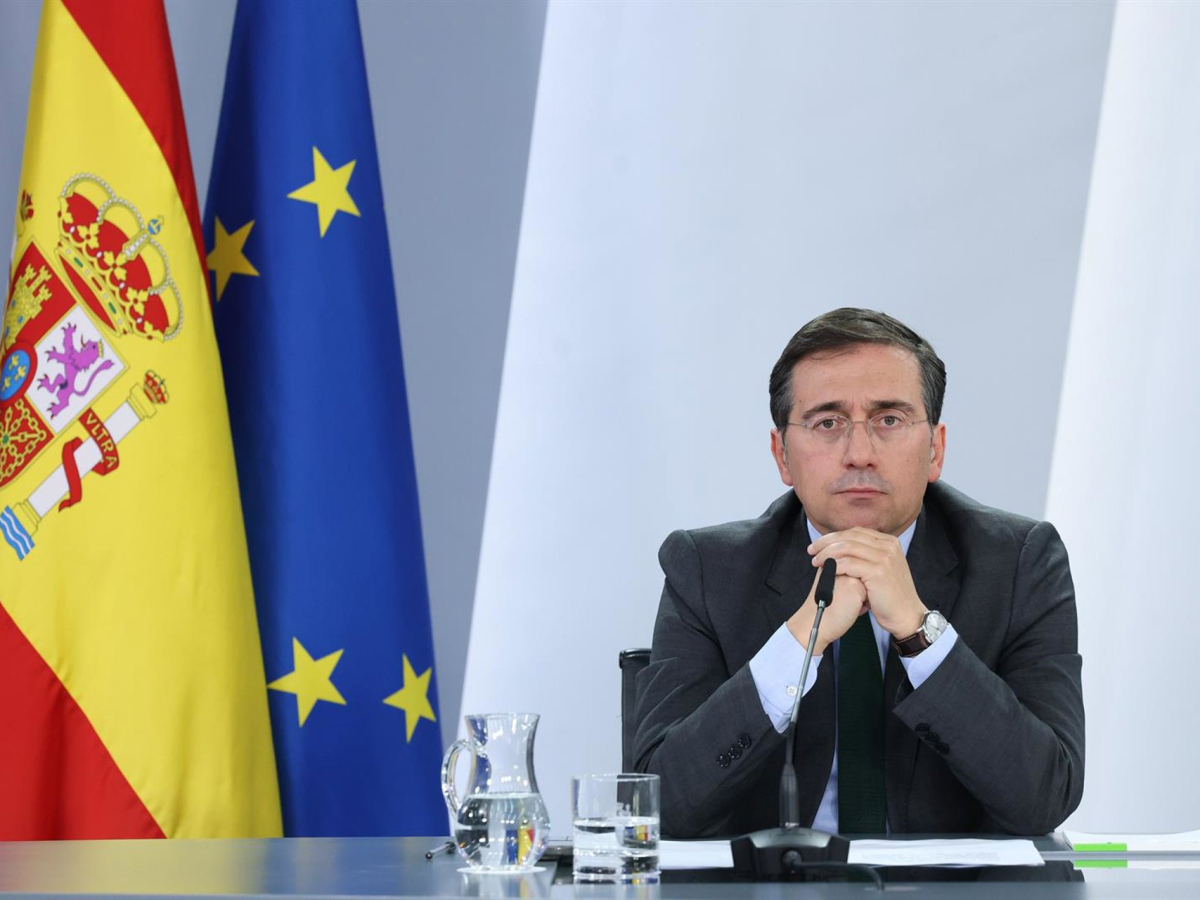
The Minister of Foreign Affairs, European Union and Cooperation, José Manuel Albares, offers a press conference after the first Council of Ministers of the year, on January 7, 2026, in Madrid Marta Fernández - Europa Press
The Minister of Foreign Affairs, European Union and Cooperation, José Manuel Albares, offers a press conference after the first Council of Ministers of the year, on January 7, 2026, in Madrid Marta Fernández - Europa Press -

In the corridors of Brussels, these types of attitudes do not go unnoticed. On the contrary: they are commented on, they are compared and, on occasion, they become the object of that acidic humor so characteristic of the guild. Because if European journalism has anything, it is memory… and a certain inclination to detect patterns.

And the pattern, in this case, starts to be clear: fewer questions, fewer answers, and more controlled narrative.
787adf8f 441d 49e5 9db5 8708220f41e7

Featured story

Europe

Brussels: anatomy of an indispensable work

10 minutes

Fighting against disinformation?

All of this coexists, moreover, with an official discourse focused on the fight against disinformation. A laudable cause, no doubt. But also dangerously elastic. Because when power arrogates to itself the ability to define what is valid information and what is not, the line between combating hoaxes and controlling the narrative begins to dangerously blur.

The temptation is evident: if the problem is disinformation, the solution seems to be to centralize information. And if it is centralized, it is inevitably filtered. And if it is filtered, someone decides. And when someone decides what is told and what is not, we are no longer talking only about communication, but about power.

The most interesting -and worrying- thing is that this model does not need big headlines or obvious scandals. There are no media closures, there are no explicit prohibitions, there are no dramatic images. There is something much more subtle: a progressive erosion of control mechanisms.
It's like those water leaks that aren't detected until the ceiling starts to give way. Everything seems in order, until it stops being so.

Spain, it is worth remembering, is not Hungary or Poland. We are not facing a model of open confrontation with the press. But we are also not in the club of countries where transparency is almost boring in its routine. We move, rather, in an intermediate zone, a kind of democratic twilight where the forms are maintained, but the substance begins to dilute.

And that is where the problem becomes more difficult to point out… and easier to ignore.

Because the Government speaks. It speaks a lot. It speaks in international forums, in selected interviews, in carefully chosen platforms. But speaking is not the same as being accountable. Communicating is not the same as explaining. And, above all, issuing messages is not the same as accepting questions.

Beyond sarcasm 

In the end, the question is not whether there is information. There is. The question is who controls the flow, at what moment, and with what margin for reply. And on that terrain, the balance begins to tilt dangerously towards a model in which the journalist ceases to be an uncomfortable but necessary interlocutor… to become a dispensable element.

Perhaps that is why, in the circles of Brussels, irony has become the best thermometer. When journalists joke about how difficult it is to get answers, when they compare national styles with a certain reserve, when sarcastic commentary replaces serious analysis… it is usually because something is not working as it should.

And the worrying thing is not that jokes are made. The worrying thing is that it is no longer surprising. Because in a democracy, transparency should not be an optional virtue or a communication strategy. It should simply be the norm. And when it ceases to be, silence - however sophisticated it may be - begins to make too much noise.

More key points, information and questions with FREN

AI-GENERATED CONTENT

¿Cuáles son los trámites parlamentarios necesarios para que el Gobierno español rinda cuentas sobre su política exterior ante el Congreso?

Trámites parlamentarios para que el Gobierno rinda cuentas sobre su política exterior ante el Congreso

El Gobierno español debe rendir cuentas sobre su política exterior ante el Congreso de los Diputados a través de varios mecanismos parlamentarios, como preguntas, interpelaciones, comparecencias y proposiciones no de ley. Estas iniciativas pueden ser solicitadas tanto por diputados individuales como por grupos parlamentarios y se tramitan en el Pleno o en comisiones, especialmente en la Comisión de Asuntos Exteriores. La Mesa y el Presidente del Congreso califican y ordenan la tramitación de estas iniciativas, garantizando así el control democrático y la transparencia en la acción exterior del Ejecutivo.

Principales mecanismos de control parlamentario

El Congreso dispone de varias herramientas para exigir explicaciones al Gobierno sobre su política exterior:

  • Preguntas: Pueden ser orales (en Pleno o comisión) o escritas, y permiten a los diputados solicitar información concreta al Gobierno.
  • Interpelaciones: Son preguntas formales que dan lugar a un debate más amplio sobre la actuación del Gobierno en política exterior.
  • Comparecencias: Permiten que un miembro del Gobierno acuda al Congreso para informar y responder preguntas sobre asuntos exteriores.
  • Proposiciones No de Ley (PNL): Iniciativas que instan al Gobierno a adoptar medidas o fijar posiciones sobre temas de política exterior, aunque no tienen carácter vinculante.
  • Debates de política general: El Pleno puede convocar debates específicos sobre la política exterior, donde el Gobierno expone su estrategia y responde a los diputados.
Quién puede solicitar el control y cómo se tramita

Tanto los diputados individualmente como los grupos parlamentarios pueden presentar estas iniciativas. Las comisiones parlamentarias, especialmente la de Asuntos Exteriores, también pueden solicitar comparecencias. La Mesa del Congreso y su Presidente califican las iniciativas y deciden su inclusión en el orden del día.

Desarrollo de los debates y fases del trámite
  1. Presentación: El diputado o grupo presenta la iniciativa (pregunta, interpelación, PNL o solicitud de comparecencia).
  2. Calificación: La Mesa y el Presidente del Congreso revisan y admiten la iniciativa.
  3. Convocatoria: Se convoca la sesión correspondiente en Pleno o comisión.
  4. Debate y respuesta: El Gobierno responde y se abre turno de réplica o debate, según el tipo de iniciativa.
  5. Conclusión: Puede acordarse un seguimiento o nuevas iniciativas para profundizar en el control.
Resumen

El Congreso de los Diputados dispone de un amplio abanico de mecanismos para controlar la política exterior del Gobierno, asegurando la transparencia y la rendición de cuentas mediante preguntas, interpelaciones, comparecencias y proposiciones no de ley, gestionadas por la Mesa y el Presidente del Congreso y debatidas en Pleno o comisiones especializadas.

¿Cuáles son las competencias del ministro de Asuntos Exteriores, Unión Europea y Cooperación según la legislación española?

Competencias del ministro de Asuntos Exteriores, Unión Europea y Cooperación según la legislación española

El ministro de Asuntos Exteriores, Unión Europea y Cooperación tiene como principales competencias la dirección y ejecución de la política exterior del Estado, la representación de España ante organismos internacionales y la coordinación de la acción exterior en ámbitos como la Unión Europea y la cooperación internacional. Estas funciones están reguladas principalmente por la Ley 50/1997, de 27 de noviembre, del Gobierno, y por los reales decretos de estructura orgánica del Ministerio, como el Real Decreto 249/2024. Además, la Ley 2/2014, de la Acción y del Servicio Exterior del Estado y la Ley 40/2015 complementan este marco normativo.

1. Funciones generales como miembro del Gobierno

Según la Ley 50/1997, el ministro:

  • Participa en la dirección política general del país y en la formulación y ejecución de políticas públicas.
  • Dirige y coordina su ministerio, ejerciendo la potestad reglamentaria en materias propias del Departamento.
  • Representa al Gobierno en su ámbito competencial y participa en órganos colegiados como el Consejo de Ministros.
  • Propone, negocia y firma provisionalmente tratados internacionales, y los remite a las Cortes Generales.
Estas competencias se ejercen bajo las directrices del Presidente del Gobierno y en coordinación con otros ministerios (art. 12 Ley 50/1997).

2. Funciones específicas en política exterior, Unión Europea y cooperación

De acuerdo con el Real Decreto 249/2024 (estructura orgánica del Ministerio) y la Ley 2/2014:

  • Política exterior: Planifica, dirige, ejecuta y evalúa la política exterior del Estado, tanto bilateral como multilateral, y coordina la actuación de otros departamentos en el exterior.
  • Unión Europea: Coordina y supervisa la participación de España en la Política Exterior y de Seguridad Común (PESC) y en la Política Común de Seguridad y Defensa (PCSD) de la UE, así como la gestión de asuntos europeos en coordinación con la Secretaría de Estado para la Unión Europea.
  • Cooperación internacional: Dirige la política de cooperación para el desarrollo sostenible, impulsa la Agenda 2030 y los Objetivos de Desarrollo Sostenible (ODS), y coordina la acción humanitaria y la cooperación técnica, cultural y científica.
  • Gestión de misiones diplomáticas y consulares: Supervisa embajadas, consulados y la Escuela Diplomática.
  • Promoción de la imagen de España: Impulsa la acción informativa y la proyección exterior del país.
  • Celebración de contratos y convenios: Puede celebrar contratos y convenios en el ámbito de sus competencias (referencia BOE).

3. Normativa principal que define estas competencias
  • Ley 50/1997, de 27 de noviembre, del Gobierno: Funciones generales de los ministros y organización del Gobierno (texto BOE).
  • Ley 2/2014, de 25 de marzo, de la Acción y del Servicio Exterior del Estado: Principios y objetivos de la acción exterior española.
  • Real Decreto 249/2024, de 12 de marzo: Estructura orgánica básica del Ministerio y atribución de competencias específicas.
  • Ley 40/2015, de 1 de octubre, sobre Régimen jurídico del sector público: Capacidad para celebrar contratos y convenios.
  • Constitución Española (arts. 97, 94-96): Dirección de la política exterior por el Gobierno y régimen de tratados internacionales.

En conclusión, el ministro de Asuntos Exteriores, Unión Europea y Cooperación es el máximo responsable de la política exterior española, la acción ante la Unión Europea y la cooperación internacional, actuando bajo la dirección del Presidente del Gobierno y conforme a la normativa vigente. Sus competencias abarcan desde la representación internacional hasta la gestión de la cooperación y la coordinación interministerial en asuntos exteriores.

¿Cuál ha sido la trayectoria profesional y política de José Manuel Albares antes de ocupar el cargo de ministro?

Trayectoria profesional y política de José Manuel Albares antes de ser ministro

No se dispone de información detallada en las fuentes consultadas sobre la trayectoria profesional y política de José Manuel Albares antes de su nombramiento como ministro de Asuntos Exteriores, Unión Europea y Cooperación. No se han encontrado datos sobre su formación académica, carrera diplomática, cargos en organismos internacionales ni responsabilidades políticas previas.

Si necesitas información más específica o deseas ampliar el alcance de la consulta, puedes reformular tu pregunta para intentar obtener otros datos relacionados.

¿Cuáles han sido las principales iniciativas de José Manuel Albares como ministro de Asuntos Exteriores? ¿Qué otros ministros han ocupado la cartera de Asuntos Exteriores en los últimos diez años? ¿Cuál es el proceso de nombramiento de un ministro en España?

Play

Test your knowledge with FREN!

How much do you know about this topic? Answer the following 3 questions.

¿Qué modelo de comunicación se atribuye al Gobierno español en Bruselas según los periodistas?

Question 1 of 3

¿Qué actitud se señala en el ministro José Manuel Albares durante sus encuentros con la prensa?

Question 2 of 3

¿Qué paradoja se menciona respecto a la comunicación sobre Europa en España?

Question 3 of 3

Hola, soy Fren. ¿Cómo te ayudo?