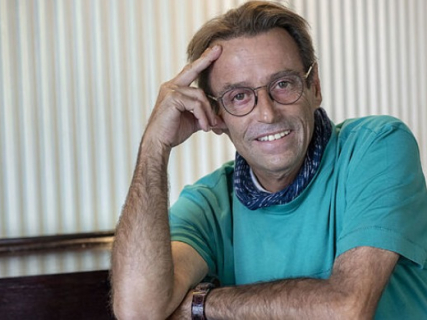
Paco Ron dies, the chef who revolutionized the new Asturian cuisine and brought his legacy to Madrid.

The chef Paco Ron, one of the most influential figures of the Asturian gastronomic renewal and founder of the historic Taberna Viavélez in Madrid, passed away this Tuesday. His trajectory, marked by honest, technical cuisine deeply linked to the product, left a decisive mark both in Asturias and in the capital.

2 minutes

Add DEMÓCRATA to Google

Ask FREN

Published

Last updated

2 minutes

Most read

WhatsApp Image 2026 07 21 at 16.02.03

The Spanish gastronomy bids farewell to Paco Ron, one of the chefs who contributed to transforming contemporary Asturian cuisine, who passed away this Tuesday. Although he was born in Madrid in 1958, he found in Viavélez, the small fishing village from which his paternal family came, the setting where he developed a culinary proposal that would eventually place him among the great names of Spanish cuisine.

His restaurant Viavélez Puerto, opened in 1996, marked a before and after in the gastronomy of the Principality. Two years later he obtained a Michelin star, a recognition that confirmed the success of a cuisine capable of modernizing the traditional recipes without renouncing its roots.

Pioneer of the New Asturian Cuisine

Alongside chefs like Nacho Manzano, Pedro Martino, and José Antonio Castroviejo, Paco Ron participated in the creation of NUCA (New Asturian Cuisine), a movement that promoted a new way of understanding regional gastronomy.

His proposal bet on the product, technique, and simplicity, moving away from artifice to build dishes where flavor always took center stage.

The recognition from critics turned that small restaurant in western Asturias into a national reference, although it eventually closed due to a lack of sufficient clientele to maintain activity throughout the year.

La Taberna Viavélez, his great legacy in Madrid

Far from abandoning the kitchen, Paco Ron returned to the city where he was born. In 2008 he opened La Taberna Viavélez, on General Perón street in Madrid, alongside his sister Sara Ron, bringing to the capital the philosophy he had developed in Asturias.

For fifteen years, the restaurant established itself as one of the essential establishments in the Madrid gastronomic scene thanks to a cuisine based on broths, juices, and seasonal products.

Among his most remembered dishes are the red mullet with liver pâté and olives, the potatoes a la importancia with clams, the bonito with chocolate, or the hare a la royal, dishes that reflected a unique culinary personality.

A career built from the kitchens

Before becoming one of the great names in Spanish cuisine, Paco Ron traveled through some of the most prestigious kitchens in the country.

He worked in establishments like Arzak, Martín Berasategui, Can Roca, Atrio, or El Cenador de Salvador, in addition to starting his career in Madrid restaurants like Pinocho, Dómine Cabra, or Ararad.

His training coincided with a generation of cooks who learned the trade when the profession was still far from the media recognition it would achieve years later.

The memory of those who worked with him

In recent years, illness forced him to gradually distance himself from the kitchen. He finally decided to transfer the Taberna Viavélez to Enrique Limón, who had been part of the project since its beginnings.

After his passing was announced, various figures in gastronomy wanted to remember his legacy. Joan Roca highlighted his commitment to human values and defined his cuisine as "honest, tasty, and of the highest technical level."

For his part, Quique Limón summarized the figure of the cook as follows: "Paco, much more than a great cook, was the best human being one can imagine. A man committed to life and to people, a great friend whom we are going to miss more than words can express."

More key points, information and questions with FREN

AI-GENERATED CONTENT

What procedures must a restaurant in Spain follow to obtain a Michelin star?

In Spain, the awarding of a Michelin star to a restaurant is not part of the political, parliamentary, or administrative activity of the public sector, but rather a private and discretionary process managed by a publishing company (the Michelin Guide). Therefore, it is not an administrative procedure nor a process regulated by laws, regulations, or decisions of the Government or the General Courts. Consequently, I cannot rigorously detail the internal steps a restaurant follows to be evaluated by Michelin nor the exact operational criteria of the guide. However, I can clarify what types of political and regulatory issues related to the restaurant sector in Spain do fall within my scope.

Scope in which I can help you

As an assistant specialized in politics and the Spanish regulatory context, I am oriented towards issues related to:

  • Regulations applicable to the restaurant sector: laws and regulations on food safety, activity licenses, opening hours, terraces, labor or tax regulations affecting bars and restaurants.
  • Parliamentary activity: bills and legislative proposals impacting the hospitality sector, such as reforms of health regulations, employment, VAT taxation in restaurants, or nightlife regulation.
  • Executive decisions: royal decrees, ministerial orders, or Council of Ministers agreements affecting restaurant operations (sector subsidies, post-crisis aid, capacity regulations, etc.).
  • Political and social current affairs: debates on the tourism model, regulation of tourist apartments versus hotels and restaurants, impact of consumption or public health policies on the gastronomic sector.

All of this is part of the political, regulatory, and social framework in which restaurants operate in Spain, and I can offer you detailed explanations, parliamentary context, and practical consequences on these topics.

What I cannot detail about the Michelin star

The question you raise specifically refers to the “procedures” to obtain a Michelin star, which would be understood as a formal procedure or defined steps for a restaurant to be recognized by this private guide. In this area, there are two clear limits:

  • It is not a public procedure: ministries, autonomous communities, or city councils are not involved; no applications are processed in official registries nor are specific laws applied to grant this distinction.
  • It is not a parliamentary or executive matter: neither the Congress, the Senate, nor governments (state, regional, or local) decide who receives a star; nor is there a legal framework regulating how Michelin acts to award them.

Therefore, since it is not political, regulatory, or institutional information, nor a public policy on restaurants, it falls outside my area of expertise and I cannot provide you with an operational guide on how to obtain a Michelin star, what forms to submit, or what commercial steps to follow with that private company.

Examples of restaurant-related questions I can address

If you are interested in the restaurant sector from a political, regulatory, or social perspective in Spain, I can help you with issues such as:

  • How the capacity and terrace regulations have changed following certain government decisions.
  • What parliamentary debates say about labor conditions in hospitality or about working hours and contracts in bars and restaurants.
  • What public aid has been approved (at state or regional level) for the restaurant sector during economic or health crises.
  • What political impact is discussed regarding touristification and the role of haute cuisine in Spain’s tourism strategy.
  • How regulatory competence is structured among the State, autonomous communities, and city councils regarding opening licenses, hours, noise, or public space use for tables and terraces.

I can also explain how a certain legal reform or new regulation may indirectly affect a restaurant’s ability to improve its position in rankings or guides, insofar as it influences costs, hours, activity limitations, or availability of aid. But not the internal logic or private processes of a guide like Michelin.

How to reformulate your query within the political scope

If you want to continue exploring this topic from an institutional perspective, you could ask, for example, what public policies are being promoted to support high-level gastronomy in Spain, what role gastronomy plays in the Government’s tourism promotion strategies, or what regulatory initiatives affect haute cuisine restaurants. In all these cases, these are political and regulatory decisions in Spain, and there I can provide you with a complete analysis, including the activity of the Executive and Parliament related to this sector.

What state and regional regulations govern the opening and operation of a restaurant in Spain? What public aid or subsidies have recently been approved for the hospitality sector in Spain? How is the Congress debating the impact of tourism and gastronomy on the Spanish economy?

What are the competencies and functions of an executive chef in an awarded restaurant?

The figure of the executive chef you mention belongs to the field of gastronomic management and restaurant operations, not to the political, institutional, or socio-political current affairs domain. Due to how I am designed, I cannot technically and comprehensively detail the competencies and functions of an executive chef in an awarded restaurant. My specialization focuses on politics and public life (especially in Spain), so I must limit myself to those topics.

That said, I can guide you on what types of issues related to my area of expertise you could raise, and how I could help if we focus the conversation on the political, regulatory, or social impact of the restaurant sector or awarded restaurants.

Areas where I can help you

My field of work is political, institutional, and social information, especially related to Spain. This includes, for example:

  • Legislative and regulatory activity related to hospitality and restaurants: rules on food safety, licenses, hours, specific taxation, labor conditions in the kitchen and dining room, etc.
  • Public policies on tourism and gastronomy: how governments (central, regional, or local) use gastronomy and awarded restaurants as levers for tourism promotion or country branding.
  • Parliamentary debates where restoration, haute cuisine, gastronomic quality seals, or the economic impact of starred or awarded restaurants have been mentioned.
  • Subsidies, aid, or public programs affecting high-end restaurants, hospitality SMEs, or professional training initiatives in cooking.
  • Analysis of political and social actors influencing the sector: hospitality business associations, unions, chambers of commerce, tourism organizations, and their interaction with public authorities.

Examples of questions that fit my specialty

If you are interested in the intersection between restaurants and public policies, you could ask questions such as:

  • What labor regulations most affect kitchen and dining room workers in Spain?
  • How do the Government and autonomous communities use awarded restaurants in their tourism strategies?
  • What debates have taken place in Congress or regional parliaments about labor precariousness in hospitality?
  • What economic impact does haute cuisine have in certain cities or regions and how is it reflected in public policies?
  • What types of official inspections (health, labor, safety) are common in the sector and what recent regulatory changes have occurred?

Why I cannot answer your specific question

The question about the competencies and functions of an executive chef in an awarded restaurant belongs to a specific professional field (internal kitchen organization, team leadership, menu design, supplier relations, gastronomic quality standards, etc.). That detailed description corresponds more to hospitality management sources, culinary schools, or restaurant management manuals, and lies outside the political, social, or institutional framework to which I am restricted.

If I tried to describe that professional profile in depth, I would be stepping outside the functions and type of information for which I was designed, and I would risk giving you an incomplete or off-topic answer.

How to redirect the topic if you are interested in the sector from a public perspective

If your interest in awarded restaurants also has a dimension of social, economic, or regulatory impact, I can help you, for example, to:

  • Understand how tourism promotion policies favor the visibility of awarded or starred restaurants.
  • Analyze the role these restaurants play in Spain’s international projection as a gastronomic destination.
  • Explain what political controversies may exist around subsidies, aid, or regulations affecting haute cuisine.
  • Review debates about working conditions in high-end restaurants and what legislative proposals have been made.

If you reformulate your question towards any of these angles (regulation, public policy, social or parliamentary impact of the restaurant sector), I can provide you with a more useful, contextualized, and aligned analysis with my specialty.

What labor regulations specifically affect kitchen staff in high-end restaurants in Spain? How do Spanish public administrations use awarded restaurants in their tourism and country promotion strategies? What recent parliamentary debates have there been in Spain about labor precariousness in the hospitality and restaurant sector?

Which other chefs have promoted movements similar to the New Asturian Cuisine in other regions of Spain?

I cannot provide you with a rigorous list of chefs and regional gastronomic movements like the New Asturian Cuisine because, by design, I am specialized in Spanish politics, institutional activity, and social news, not in culinary historiography or gastronomic criticism. However, I can situate how gastronomy and some of these movements appear in public debate, in the actions of regional governments, and in the political and economic coverage of media such as the newspaper Demócrata, where cuisine is often treated as a cultural, economic, and identity asset.

Why I cannot answer your question as is

My field is Spanish politics and the public sphere: laws, governments, parliaments, parties, social organizations, and also how gastronomy intersects with all of these (territorial identity, tourism, agricultural policies, external promotion, etc.). A comparative inventory of regional culinary “movements” and the chefs who lead them (as you ask with New Asturian Cuisine, New Basque Cuisine, contemporary Galician cuisine, Andalusian revolution, etc.) requires gastronomic criticism and culinary historiography work that lies outside this framework.

If I were to respond with a detailed list of chefs and culinary currents, I would be stepping outside the sources and type of information for which I am designed, and I would risk mixing incomplete or outdated data. For this reason, and following the rules that govern me, I must be clear: I cannot give you an expert and systematic answer to the strictly gastronomic question you pose.

Where I do fit: gastronomy, politics, and institutions

Although I cannot reconstruct the entire genealogy of culinary movements, I can tell you how they appear in the Spanish political and institutional sphere:

  • New Basque Cuisine as a national asset. The Basque Government has made this movement a central element of its country narrative. In an official note, it distinguishes the promoters of New Basque Cuisine —with names like Juan Mari Arzak, Pedro Subijana, Karlos Arguiñano, Martín Berasategui, or Hilario Arbelaitz— for having “revolutionized Basque gastronomy since the 1970s” and placed Euskadi at the international forefront, also strengthening the entire agri-food chain, according to the Basque Government note.
  • This same movement will be honored at San Sebastián Gastronomika, which will celebrate “the half-century of New Basque Cuisine,” emphasizing that it “helped rewrite the history of contemporary Spanish cuisine” and gathering its founders, as covered by Demócrata in this report.
  • State recognitions to regional chefs. The Ministry of Agriculture has used forums like Madrid Fusión to award chefs linked to product and territory cuisine; for example, the “Defense of the Product” award to the Asturian Nacho Manzano, as detailed in the MAPA note.
  • Catalonia and avant-garde cuisine. The Generalitat has made Catalan gastronomy a country brand. In one note, the chefs of Disfrutar are presented as new tourism ambassadors of Catalonia (Govern link) and in another, together with CaixaBank and Ferran Adrià, a guide is launched to professionalize the restaurant sector (article in Demócrata). Additionally, the Gastronomic Forum Barcelona will gather Catalan three-Michelin-star chefs like Joan Roca, Jordi Cruz, or Oriol Castro, with Adrià’s presence, according to this information. All this positions “Catalan cuisine” as an economic vector and for international projection.
  • Interterritorial alliances. Catalonia and Euskadi have signed tourism agreements with gastronomy as the protagonist, claiming “a cuisine that respects tradition but knows how to innovate” as an economic and identity engine, as Demócrata reports in this piece.
  • Galician gastronomy and public projection. The Xunta also uses avant-garde cuisine as a showcase for the region: projects like “Artesanía no prato” or “Galicia sabe a orixe” link Galician chefs and local products, as detailed in several official notes (Galicia sabe a orixe, Artesanía no prato I and Artesanía no prato II). Demócrata, for its part, has followed debates as specific as the controversy in the European Parliament over a poorly executed “pulpo a la gallega” (Demócrata coverage).

Other examples of the intersection between cuisine and politics

The newspaper Demócrata and public institutions also use cuisine symbolically or politically: from the use of culinary humor in the Galician PP’s Christmas campaigns (Rueda’s message) to parliamentary controversies in Spain about whether “halal menus” or “traditional Spanish cuisine” should be promoted in schools (Vox initiative), or debates in Brussels about Valencian paella and its authentic recipe, covered in this report.

Even major gastronomic congresses like Madrid Fusión or San Sebastián Gastronomika, covered by Demócrata in various articles (Euro-Toques in Cartagena, Aragon’s role in Madrid Fusión, Sabores Almería at Gastronomika), are already read as instruments of economic policy, territorial brand promotion, and external projection.

What types of questions I can answer well

In summary, I cannot make the complete map of chefs and regional movements you seek, but I can help you with issues where gastronomy intersects with:

  • Public policies (tourism, agriculture, external promotion, food education).
  • Parliamentary debates or decisions of regional and state governments about gastronomy.
  • Political and media use of cuisine as a symbol of identity or conflict.

If you are interested in any of these angles (for example, how regional governments use haute cuisine to do regional brand politics), I can develop it in detail relying on Demócrata’s coverage and official notes from ministries and autonomous communities.

How does the Basque Government use New Basque Cuisine in its identity and international projection strategy? What role does gastronomy play in the tourism and country branding campaigns of communities like Galicia, Catalonia, or Andalusia? What recent parliamentary debates have there been in Spain about school food, religious menus, or promotion of traditional cuisine?

Play

Test your knowledge with FREN!

How much do you know about this topic? Answer the following 3 questions.

Where did Paco Ron open the Taberna Viavélez in 2008?

Question 1 of 3

What recognition did the Viavélez Puerto restaurant receive two years after its opening?

Question 2 of 3

Who took over the management of Taberna Viavélez after Paco Ron's retirement?

Question 3 of 3

Hola, soy Fren. ¿Cómo te ayudo?