
The stones that are placed under the railway tracks, known as ballast, must meet technical requirements before being used in a railway infrastructure. Its function is to distribute loads, facilitate drainage, and help maintain the stability of sleepers and rails. For this reason, Adif establishes controls over its composition, resistance, and behavior in the face of wear.
The quality of this material has once again come to the forefront after a former quarry worker reported to the judge investigating the rail accident in Adamuz that part of the ballast used in the works on the Madrid-Seville line could fail to meet the specifications required. The magistrate has received the testimony, although she has postponed the decision on his statement until new expert results are available.
What is ballast and why is it used on the tracks
Ballast is made up of crushed stones with specific characteristics that spread over the railway platform and around the sleepers.
The angular shape of the fragments helps them interlock and helps keep the track in position. At the same time, the spaces left between the stones allow water to be evacuated and the loads transmitted by trains to be distributed.
When the material degrades, settlement problems, the accumulation of fine particles, and a loss of drainage capacity can appear.
What regulations must railway ballast comply with
The quality of the material used in the Spanish rail network is regulated, among other references, by the Adif Technical Specification ET 03.360.004.0 and the UNE-EN 13450 standard.
These documents establish characteristics and control procedures intended to verify that the stones have the properties necessary for their use in railway infrastructures.
The requirements include aspects related to the nature of the rock, its particle size distribution, the percentage of unsuitable particles, and its resistance to certain mechanical stresses.
How the resistance of the stones is checked
One of the relevant controls is the wear test known as Los Ángeles, which makes it possible to evaluate the resistance of aggregates to fragmentation.
The material is subjected to a standardized procedure and then it is analyzed how much it has degraded. The result is compared with the values allowed for the corresponding type of ballast.
Controls can also be carried out on the homogeneity of the material. Adif’s technical specification includes additional tests when soft or altered particles are observed in relevant proportions.
How it is verified which quarry the ballast comes from
The origin of the stones can be investigated through supply documentation and analysis of their mineralogical and petrographic characteristics.
Production and delivery documentation makes it possible to reconstruct which batches were supplied, while technical analyses can help to compare the properties of different samples.
In the case of Adamuz, the former worker has provided the court with information to identify the origin of the material that he considers defective and the points where it might have been installed.
What the judge investigates about the ballast of Adamuz
The witness states that certain stones from the quarry where he worked showed excessive wear and a tendency to fragment under railway loads.
According to his account, those defects could affect the firmness of the track bed. However, it has not yet been judicially established that the ballast used in Adamuz was defective or that it caused the derailment.
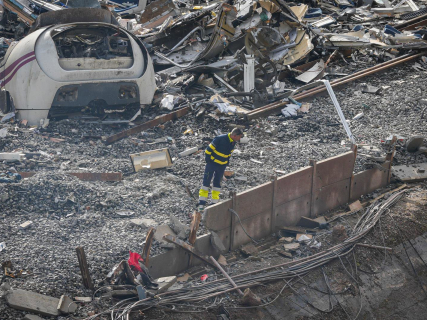
The investigation of the accident, which left 46 dead on January 18, continues examining the conditions of the infrastructure and the circumstances of the rail break.
Judge Cristina Pastor has decided to wait for the results of the expert tests before ruling on new actions related to the testimony of the former worker.