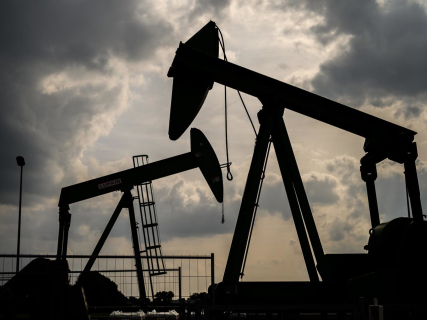

The Brent crude, a reference for Europe, recorded this Friday a correction close to 5% and was around 95.5 dollars per barrel, just a day after surpassing the threshold of 100 dollars, despite the continuation of offensives in the Middle East after the thirteenth consecutive night of bombings by the United States on Iran.
At the same time, the barrel of West Texas Intermediate (WTI), a reference in the U.S. market, fell 4.2% during the session, to 88 dollars, after having touched 92.5 dollars per unit the previous day.
The United States launched a new series of attacks against "military targets" in Iranian territory early this morning, an operation in which at least four people have lost their lives and another seven have been injured, within the escalation of hostilities that both countries have maintained for thirteen consecutive days.
Before the start of this new round of bombings, the Iranian Ministry of Health had reported that the offensives of the last few weeks against the country have so far caused 55 deaths and 629 injuries.
In response, Iranian authorities have claimed responsibility for attacks against U.S. military facilities in Jordan, Bahrain, and Kuwait. Likewise, the Iranian Revolutionary Guard has confirmed the bombing of a data center of the American company Amazon in Bahrain, which it claims to have "destroyed."
At the beginning of this week, Houthi rebels from Yemen announced the implementation of a naval blockade against Saudi Arabia, which was accompanied by the attack on two Saudi-flagged ships for violating that blockade, intensifying regional tension and raising market concerns about a possible halt to maritime traffic in another key point for oil transport, the Bab el-Mandeb Strait.
Warren Patterson and Ewa Manthey, analysts at ING, believe that the rise in oil prices could continue despite the respite this Friday, and point out that the determining factor will be the price level that the Trump Administration deems acceptable to return to the negotiating table.
"If we are guided by Trump's previous spikes during the early stages of the war, it is likely that the pressure to reduce tension will significantly increase if, and when, Brent approaches 120 dollars per barrel," they have highlighted.
In the opposite sense, experts do not believe that the main problem for Iran is the current price of crude oil, as it could even try to push it even higher, but "how long it will be able to withstand the collapse of its oil revenues amid the U.S. blockade."
In parallel, the European Central Bank (ECB) has opened this week the turn of monetary policy decisions opting to keep interest rates unchanged after the increase applied in the previous meeting. Next week, the central banks of the United States (Fed), England, and Japan will speak, closely monitoring the evolution of energy costs and the associated inflationary pressures.