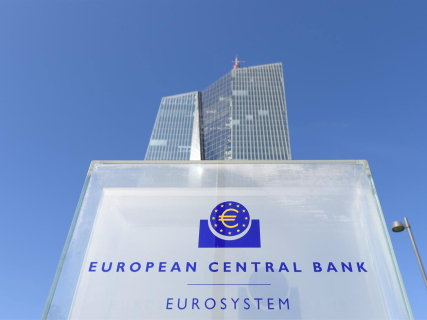










The European Central Bank (ECB) has decided to postpone, for now, any resolution on a possible increase in the non-remunerated minimum reserve ratio that banks in the euro area must hold, understanding that there is not yet sufficient internal support to carry forward this initiative.
At the meeting held this Wednesday in Frankfurt, the officials in charge of monetary policy for the euro area limited themselves to exchanging general views on this matter. However, according to sources from the ECB’s Governing Council cited by the German newspaper "Handelsblatt", no decision on this is expected, at least, until after the December meeting at which interest rates are reviewed, and even the debate could extend into the spring of next year.
At present, financial institutions in the euro area must immobilize 1% of their deposits at the Eurosystem’s central banks without receiving interest. In recent months, however, the possibility of raising this ratio to 2% has been discussed, which would mean doubling it. It should be recalled that the ECB’s Governing Council cut the remuneration of these minimum reserves to 0% in September 2023.
Even so, the banking sector holds at the ECB a volume far higher than that 1% due to excess liquidity, which has been boosted by each official rate increase and, according to the estimates of the aforementioned newspaper, already stands at around 2 trillion euros. On that additional amount, the ECB and the national central banks do pay interest to the institutions, which is contributing to the institution accumulating losses for years.
In this context, an increase in non-remunerated minimum reserves would allow the ECB to cut some of those red figures, although at the cost of a significant effect on the results of commercial banks, which would stop receiving a considerable sum.
The debate also divides the ECB itself. Pierre Wunsch, governor of the Belgian central bank, flatly rejects the proposal, which he considers equivalent to a tax, while the head of the Lithuanian central bank, Gediminas Simkus, showed on Tuesday that he is in favor of raising the reserve ratio.
On the other hand, Isabel Schnabel, a member of the Executive Committee who will leave her position in January, also opposes an increase in minimum reserves, according to "Handelsblatt".