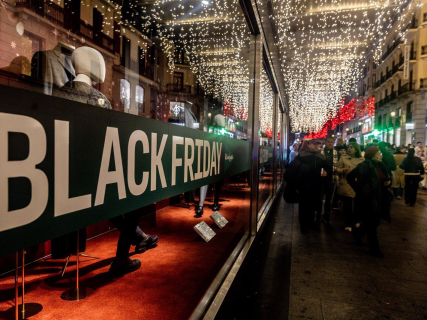

'Black Friday' continues to gain relevance for companies, although the pace of growth is no longer the same for consumers. According to the report "The new wave of Black Friday", prepared by NTT DATA on the evolution of this commercial campaign, the estimated average spending for the weekend of deals stands at 175 euros, below the 182 euros recorded in the previous year.
This behavior extends the slowdown already seen in 2025, a year in which real consumption fell by 0.8% compared with the previous year. In an environment of lower purchasing power, an increase in logistics costs, and growing pressure on margins, companies are turning to artificial intelligence (AI) to define which promotions to launch, how to allocate the marketing budget, and how to adjust inventory with greater accuracy, with the aim of safeguarding the profitability of one of the key campaigns on the commercial calendar.
The analysis points to a structural change in competitive dynamics. What used to be concentrated in just a few days has been transformed into a wave of consumption that begins in early October and lasts until the first week of December.
Despite the complex environment and the moderation of spending, Spain is strengthening as one of the European markets where this phenomenon reaches the highest intensity. In the latest edition of 'Black Friday', the number of transactions was 4.47 times higher than that of an ordinary Friday, the second-largest increase among the countries studied, only surpassed by Denmark.
The Spanish market also stands out in Europe for the strong adoption of platforms such as AliExpress and Shein among 'online' shoppers, an indicator of the weight this campaign has acquired in national consumer habits.
According to the report, 40% of companies manage to increase their revenue by between 16% and 30% during these dates, although only 27% manage to improve their profitability levels.
In this context, the supply chain becomes a decisive factor for the economic outcome of the season. For the 2026 campaign, more than 127 million shipments are expected between 'Black Friday' and Christmas in Spain, 2.4% more than the previous year, with daily peaks that will exceed 5.5 million deliveries.
The average cost of the last mile is already at €7.64 per package, while the handling of returns is consolidated as one of the main levers for safeguarding profitability. Companies that have professionalized their reverse logistics have managed to cut their return costs by 17.9%, with estimated savings of more than 150 million euros.
The study also finds a shift in the behavior of the Spanish buyer. Rather than reacting impulsively, consumers spend more time comparing prices, studying alternatives, and checking whether a promotion is genuinely advantageous.
During this day of discounts, AI already has a notable presence. 55% of consumers expect to use AI tools during 'Black Friday' and 'Cyber Monday' in 2026, compared with 33% a year earlier. Among the main uses are searching for discounts, comparing products, and identifying the best available price.