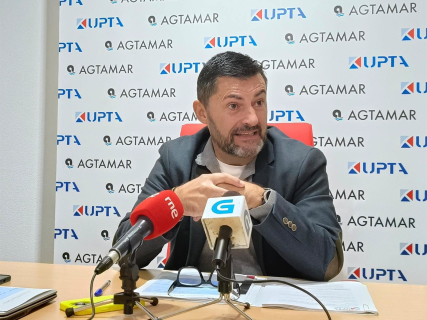










The Union of Professionals and Self-Employed Workers (UPTA) has welcomed with satisfaction the package of tax measures approved this Tuesday by the Council of Ministers for self-employed workers. Among the most relevant decisions is a reduction in the IRPF with an estimated impact by the Treasury of 465 million euros, as well as the simplification of VAT obligations for those self-employed workers with annual invoicing of less than 85,000 euros.
However, the president of UPTA Spain, Eduardo Abad, has criticized the Executive for the moment chosen to move forward with these initiatives, occurring “at the last Council of Ministers before the elections and at the last minute.”
“It’s late, at the last Council of Ministers before the elections and at the last minute, but the important thing is that we have achieved the main objective: to reduce the IRPF for self-employed workers. That is what we have been asking the Government for again and again. We also demanded that the management of taxes be simplified for the vast majority of small businesses, and moving from four VAT returns to one is a concrete step forward,” Abad said in a statement.
With regard to the IRPF for 2026, the percentage applicable to provisions and expenses of difficult justification in simplified direct estimation increases from 5% to 10%, while the annual limit rises from 2,000 to 3,000 euros. According to the Treasury’s calculations, this change will affect 1.6 million self-employed workers.
For taxpayers who pay through modules, the general reduction in net income is also raised from 5% to 10% in 2026. This means that, for prior income of 20,000 euros, the base subject to IRPF will be reduced by an additional 1,000 euros, resulting in savings of 240 euros with a marginal rate of 24%.
As for VAT, the new system designed for those who do not exceed 85,000 euros in annual invoicing establishes a single return per year and three advance payments that will be calculated by the Tax Agency. UPTA interprets this change as an operational step forward for self-employed workers who must reconcile the day-to-day management of their business with compliance with their tax obligations.
"Today a demand that we have been defending for some time has been addressed. Self-employed workers need taxation tailored to what they really earn and an administration that makes things easier for them. Today's measures move forward in those two directions," the president of UPTA concluded.