Europe meets to talk about macroeconomic imbalances, which is how "China" is now said in Brussels

While António Costa designs a labyrinth of diplomatic euphemisms to avoid direct conflict, Úrsula von der Leyen finalizes a battery of commercial defense measures against a technological and manufacturing deployment that already threatens the strategic autonomy and the most sensitive sectors of the Union.

6 minutes

ILUSTRACIONES (1200 x 675 px) (1200 x 675 px) (1)

ILUSTRACIONES (1200 x 675 px) (1200 x 675 px) (1)

Add DEMÓCRATA to Google

Published

6 minutes

Fren arrives at Demócrata: Vinces' specialized AI assistant to understand politics, laws, and current public affairs

Fren2
Vinces' specialized AI integrates into Demócrata to simplify political and legislative complexity, offering context and interactive formats

Most read

The elephant is in the room. Rather, the dragon. No one in Brussels wants to mention it explicitly. Everyone is aware that this is an issue that seems already unavoidable. Terms and euphemisms are sought to gloss over it. From "dependencies" to "economic imbalances," a whole jargon has been composed to refer, in reality, to the Asian giant. The menu for this Thursday's upcoming summit of the Twenty-Seven consists of a double serving of Peking duck and liters of hot pot.

In a letter sent to the heads of State and Government prior to the meeting, the President of the European Council, António Costa, conveyed to his counterparts his intention to focus the meeting "on global macroeconomic imbalances and their implications for Europe's competitiveness and prosperity." The Portuguese wants to "achieve a common understanding" among Europeans on the challenges they face and guide the work of the European Commission in this regard. "Europe must do its economic work, but at the same time fair competition at a global level requires a level playing field," the leader maintains without explicitly mentioning China.
Related

Europa

European digital sovereignty and the risk of confusing security with geopolitics

"It's not a debate about 'let's do this to China.' It's not a debate about China. It's a debate about global macroeconomic imbalances, so we will have to take everything into account, including the US component," clarifies a diplomatic source from Costa's cabinet. However, these same voices acknowledge that "there is a growing perception that the trade imbalances that all Member States currently have with China are unsustainable."

In the session, Member States will share with the European Commission their assessment of the situation with the intention of developing the basic elements for unity and discussing "what tools we have at our disposal to address these challenges," whether existing ones or new formulas that may be developed in the future. The capitals arrive at the session with the expectation that the President of the European Commission, Ursula von der Leyen, will present proposals on external competitiveness. "The important thing is to listen to Brussels," explain sources close to the Prime Minister, Pedro Sánchez.

Brussels' trade arsenal

Far from the usual caution of European institutions, national delegations are openly discussing the Community offensive against imbalances with the Asian giant. Officials finalizing the preparations for the meeting confirm that the European Commission is preparing a battery of trade measures that will be brought for discussion among leaders this week. Community sources admit privately that the results of the latest summits between the European Union and China are far from satisfactory and warn that there are still significant outstanding tasks in terms of trade diversification and reduction of strategic vulnerabilities.

The commissioners recently held an orientation debate in which they analyzed the diversification instruments available to Brussels, the use of safeguard measures such as tariffs and quotas, as well as specific actions aimed at combating market distortions caused by Chinese state-subsidized companies. "The Commission's overall approach remains risk reduction, not decoupling", is the mantra that Von der Leyen has repeated since then in practically all her public interventions on the matter.
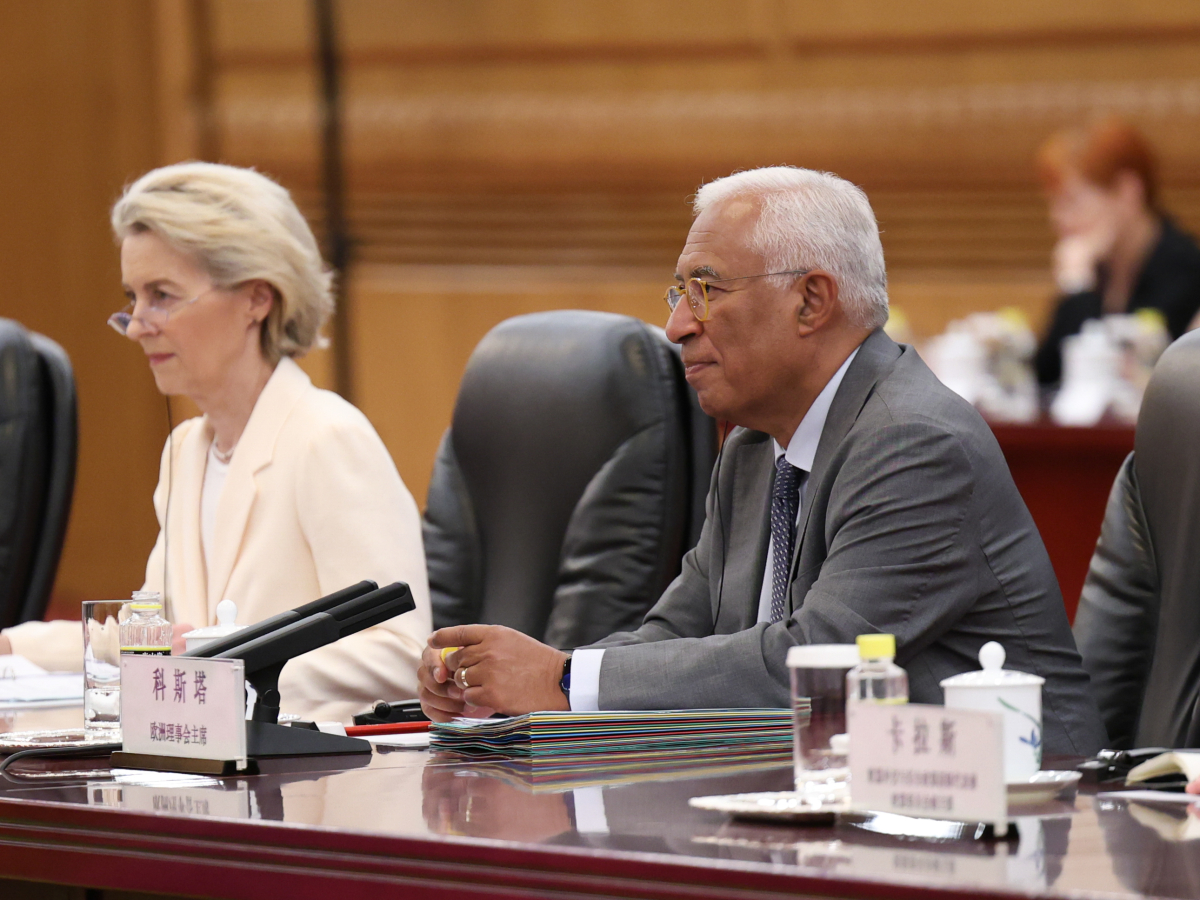
President Costa and President Von der Leyen meet Premier of China
President Costa and President Von der Leyen meet Premier of China -

From that meeting held in May, Brussels emerged with a clear conclusion: "as economic and security interests become increasingly intertwined, both dimensions will require a more robust and coherent response".

In this regard, the European Commissioner for Trade, Maroš Šefčovič, recently announced before the European Parliament that the bloc "should continue its work to increase the effectiveness of its trade defense policy", in addition to reinforcing its economic diversification strategy by leveraging the network of trade agreements signed by the Union. The underlying reflection no longer revolves solely around trade. There is growing concern in Community offices that economic dependence could become a strategic vulnerability. The debate, which just a few years ago was limited to industrial or manufacturing issues, has now extended to sensitive areas such as critical raw materials, telecommunications, artificial intelligence, semiconductors, or digital infrastructure.

Sánchez advocates for a pragmatic path

It will be precisely at this point where Sánchez will try to mark his own profile. In La Moncloa, they claim that, compared to positions considered more hawkish within the Union, Spain is committed to a more pragmatic approach.

In the opinion of the Spanish Executive, in a commercial context marked by tensions between Europe and the United States, simultaneously opening a new economic front with Beijing could be counterproductive to European interests. The socialist leader will defend during the debate the need to avoid an unnecessary escalation of tension. The government recalls that China maintains an enormous capacity for response and could adopt especially harsh retaliatory measures for certain strategic European sectors.

Therefore, sources close to the presidential environment consider that a "serious and structured" negotiation with Beijing could offer better results in a scenario where, for the first time, all countries in the bloc are already registering trade deficits with the Asian giant. "This is not sustainable," admit various community sources consulted.
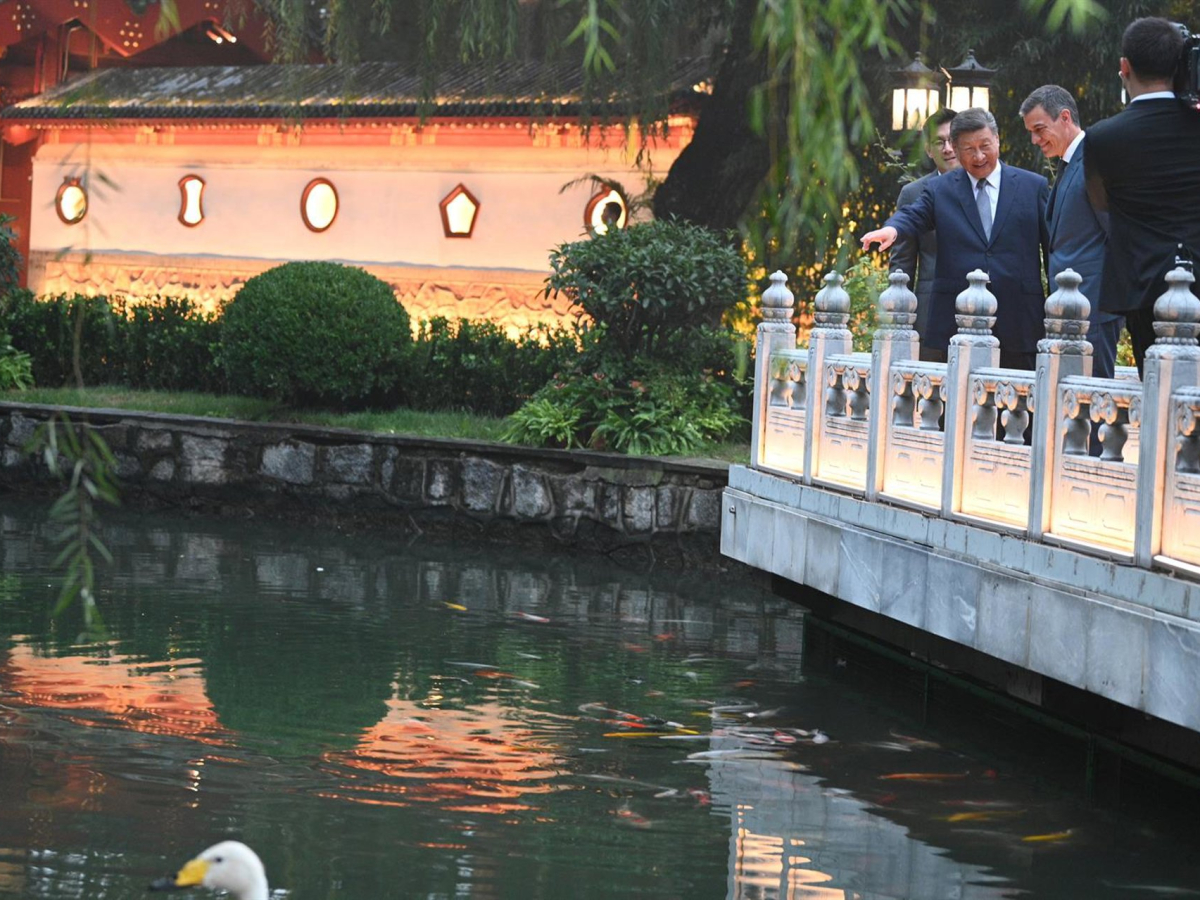
The President of the People's Republic of China, Xi Jinping (l) and the President of the Government, Pedro Sánchez, during the latter's visit to the country in 2024. Pool Moncloa / Borja Puig
The President of the People's Republic of China, Xi Jinping (l) and the President of the Government, Pedro Sánchez, during the latter's visit to the country in 2024. Pool Moncloa / Borja Puig -

For both Spain and the European Council's diplomatic teams, one of the fundamental keys will be to achieve broad political convergence when defining the European response. "There is growing convergence on the challenge we face. Whatever the major economic partner we are talking about, unity is essential. It has been in the past and will be in the future," summarizes a senior European official.

Impressions among the negotiators who will participate in the summit suggest that the debate on these macroeconomic imbalances "has matured a lot" in recent months. Therefore, Costa will convey to the leaders the idea that fair competition on a global scale requires a level playing field for all economic actors. "And some of these imbalances are clearly not sustainable," conclude European sources from the Schuman roundabout.

European Budget and Strategic Autonomy

It is expected that during the day the Twenty-Seven will also address other top-priority issues, among them the future community budget for the period 2028-2034, the well-known Multiannual Financial Framework. After having validated the legal architecture of the new budgetary model —including the system based on unique national plans—, the objective now is to move towards an agreement on the concrete figures before the end of the year.

The Cypriot presidency has proposed a cut close to 2% compared to the initial proposal of the European Commission, a possibility that countries like Spain flatly reject. The negotiation is particularly complex because it requires unanimity among the Member States.
In principle, no formal written conclusions are expected on the Asian debate. The different delegations recognize that the expectation is for the Commission to present political guidelines and possible tools to develop in the medium and long term. These would include safeguard measures, reinforced commercial surveillance systems, investment control mechanisms, and more structural proposals, some of which have long been advocated by France.

The truth is that, over the last semester, the Community Executive has accelerated the presentation of initiatives aimed at reducing European strategic dependencies on third countries. These include the second European Chips Act, the reform of the European satellite framework, and the restrictions applied to certain technological devices linked to energy projects financed with community funds and manufactured mainly by the Huawei technology group.
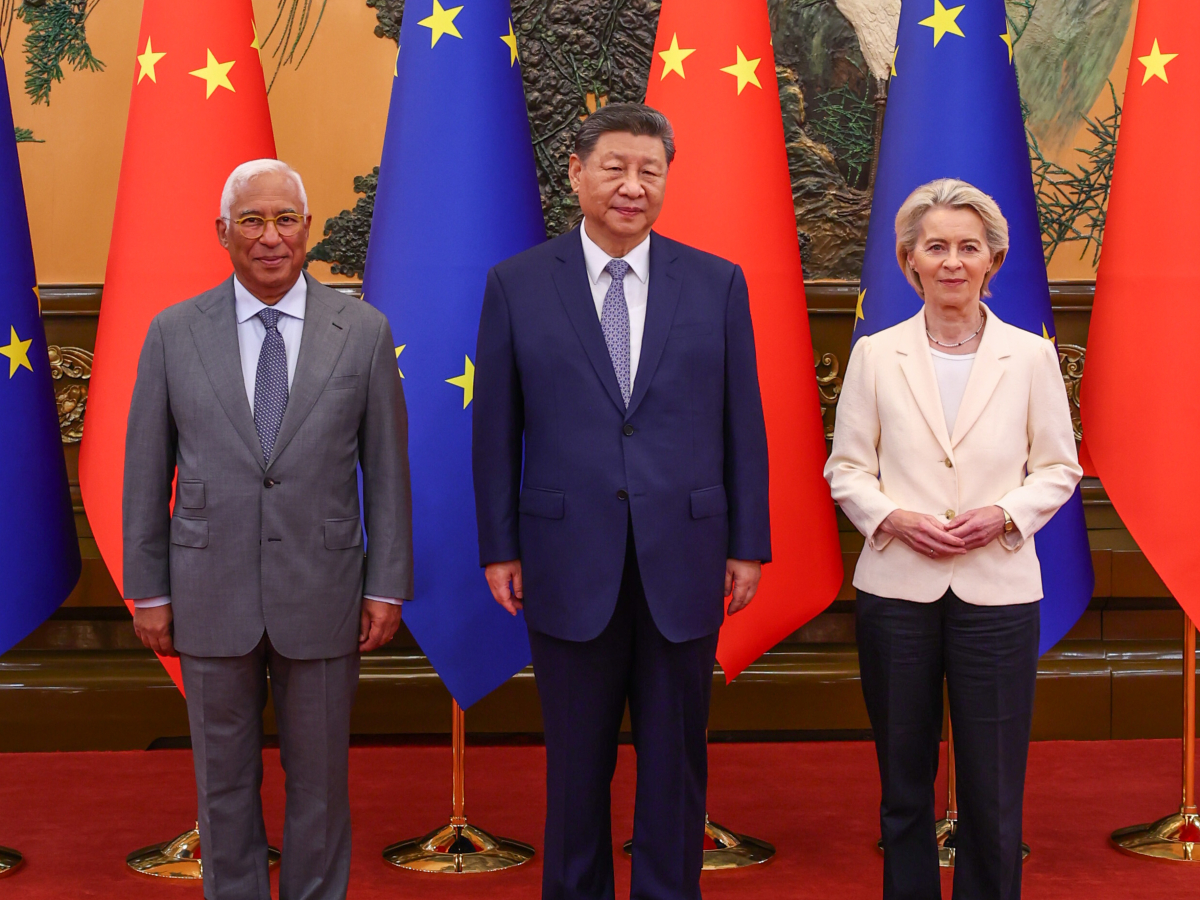
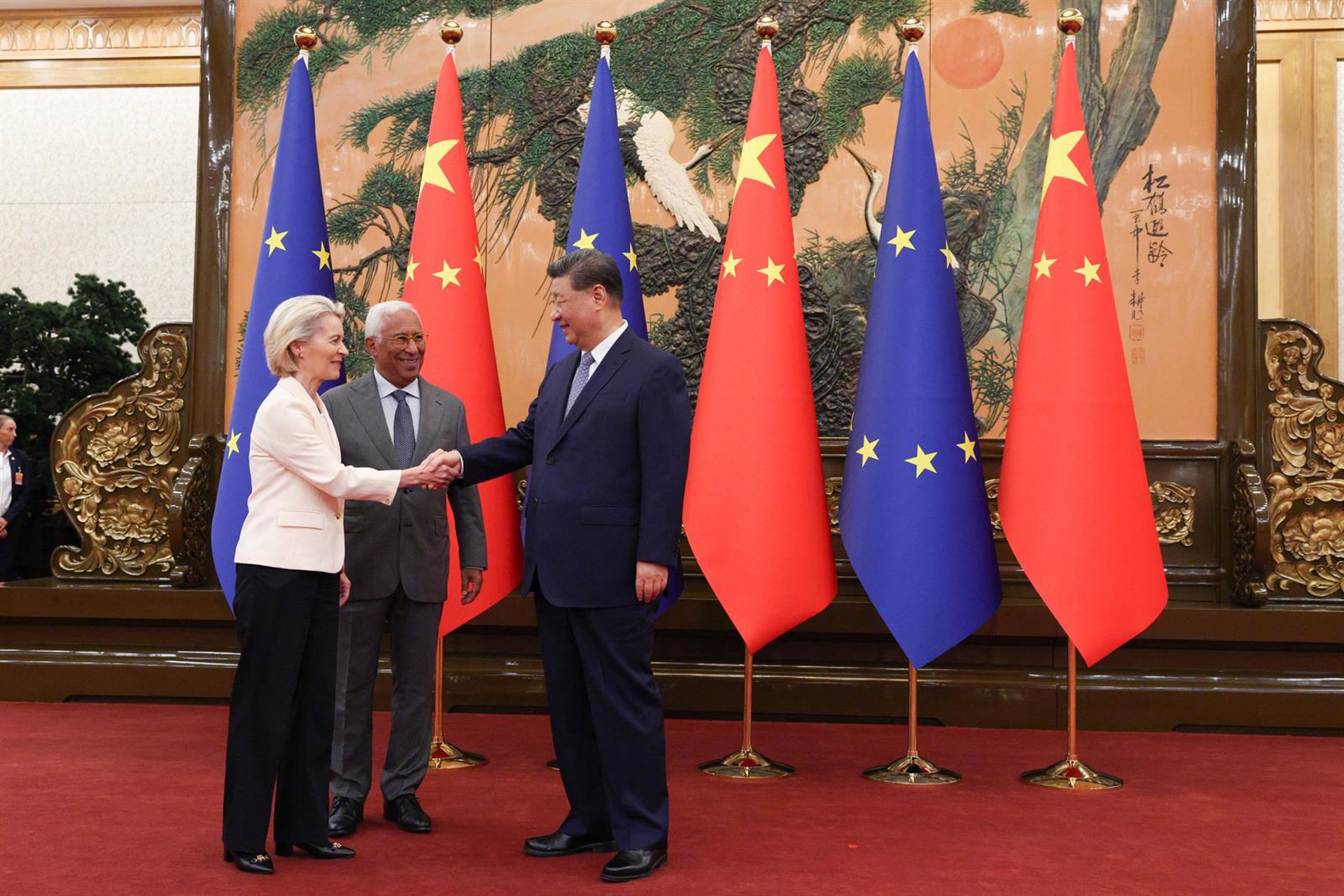
António Costa, Xi Jinping, and Ursula von der Leyen, from left to right
António Costa, Xi Jinping, and Ursula von der Leyen, from left to right -

The logic underlying all these initiatives is increasingly evident. Brussels considers that the future prosperity of the continent will largely depend on its ability to reduce external vulnerabilities, strengthen critical supply chains, and recover part of the industrial capacity lost during recent decades. Europeans seem determined to tear down their own invisible wall, the one that for years has limited the continent's economic takeoff. And to do so, more and more community leaders believe that one of the keys lies in finally addressing one of the most delicate structural dependencies of the European economy.

Because although no one wants to name it openly in official documents, although the conclusions are filled with diplomatic formulas and technical concepts, the great strategic debate that hovers over this summit has a proper name. And in Brussels, everyone knows that behind every reference to "global macroeconomic imbalances", every appeal to "level playing field", and every discussion about strategic autonomy, lies the same question: how to coexist with a China that is increasingly essential for the European economy and, at the same time, increasingly difficult to ignore as a geopolitical and commercial challenge.

More key points, information and questions with FREN

AI-GENERATED CONTENT

What is the status of the European Commission's proposals on trade defense against third countries such as China?

General situation of the EU's trade defense proposals against China

Based on the available information, it can be stated that the European Union is already applying concrete trade defense measures against China (especially anti-subsidy and anti-dumping in various sectors), while other more structural instruments, such as the anti-coercion instrument or certain modernization reforms, are in less clear political or regulatory phases. In particular, there are investigations and anti-dumping/anti-subsidy duties in force approved by the Commission, while regarding tariffs on Chinese electric vehicles, the available information does not allow to precisely determine whether they are in the proposal phase, political agreement, or final adoption. The anti-coercion instrument and the modernization of trade defense instruments appear in political debate and longer-term regulatory frameworks, but with the consulted results, the exact status of each file cannot be documented. The same applies to the reform of investment screening: there is an already operational framework and a debate about strengthening it, but no specific proposal with a verifiable processing phase as of June 18, 2026, is identified.

1. Anti-subsidy and anti-dumping measures against China

According to the information consulted, the EU actively uses the classic trade defense instruments (anti-dumping and anti-subsidy) against imports from China. According to the general description of these instruments, measures are adopted after a formal investigation and, if harm to the European industry is confirmed, they become definitive duties usually for periods of five years, renewable if conditions persist (trade defense instruments document). Business organizations such as CEOE also report the imposition of new anti-dumping measures on Chinese products, indicating that many of these initiatives are no longer in the simple proposal phase but in full application through Commission implementing regulations (CEOE note on anti-dumping on Chinese products). However, no exhaustive list by file or the date of the latest decisions for each sector is available in the sources consulted.

2. Tariffs and files on Chinese electric vehicles

Electric vehicles from China have become one of the main focuses of European trade policy, but the accessible sources in this search do not include the specific file (procedure number in the Official Journal of the EU) nor the applicable final legal act. The trade defense measures search engine of the Spanish Ministry of Economy, Trade and Business lists the instruments in force but without specifying the exact phase of the electric vehicle case within the results consulted (trade defense measures search engine). From this information, it can only be indicated that the procedural mechanism would be the usual one: Commission investigation, possible provisional duties and, if applicable, definitive duties adopted by the Commission or the Council. It cannot be confirmed, with the available data, whether the EU is currently exactly in the proposal phase, provisional application, or final adoption regarding these tariffs on Chinese electric vehicles.

3. Anti-Coercion Instrument (ACI)

The anti-coercion instrument is a legislative framework designed to respond to economic pressures from third countries; its nature requires the approval of an EU regulation and, subsequently, implementing decisions to activate specific measures. However, in the results handled, only the generic reference appears that this type of instrument requires a legislative act and possible case-by-case use, but not the exact normative reference nor its detailed status in the ordinary procedure (analysis on strengthening instruments against China). Therefore, based on this, it cannot be rigorously indicated whether the ACI is in the proposal phase, already in force as a regulation, or even if it has been activated against a specific country. It can only be stated that it is part of the political package to strengthen trade defense against China and other third countries.

4. Modernization of trade defense instruments

The modernization of trade defense instruments is mentioned in the European debate as the need to strengthen tariffs, quotas, and other mechanisms against unfair practices, with specific references to China's role. However, in the identified materials, only the political position to strengthen these instruments and the general analysis of how they work (deadlines, types of duties, etc.) are recorded, but no specific legislative proposal identifiable (with COM number, phase in the European Parliament or Council) nor its detailed procedural status is found (explanation of trade defense instruments, article on strengthening instruments). The conclusion is that, based on these sources, only a modernization agenda can be spoken of, without clear evidence of the normative stage of each piece.

5. Control of foreign investments from China

The EU already has a framework for controlling foreign direct investments in strategic sectors, articulated through a coordination regulation among Member States, in force for years. The reference document from the Official Journal of the EU included in the results, related to another matter, does not provide details on a specific reform of investment screening (OJ reference). From the overall information, it can only be derived that the basic framework is fully applied and that politically, there is discussion about strengthening it against investments from countries like China, but without identifying a specific proposal in a processing phase that allows to determine if it is in proposal, political agreement, or final adoption.

6. Limits of the available information

The sources consulted allow outlining the general framework and confirming that the EU already applies a wide range of trade defense measures against China, but they do not provide, file by file, the updated status of each European Commission proposal as of June 18, 2026. In particular, for electric vehicles, the anti-coercion instrument, the global modernization of instruments, and the reform of investment screening, no further verifiable procedural information is available in the results found. If specific file numbers are provided (for example, COM reference or regulation number), the status of each initiative can be much more precisely determined.

What are the main powers and attributions of the President of the European Council and the President of the European Commission?

Powers of the President of the European Council and the President of the European Commission

Initial summary

The President of the European Council and the President of the European Commission hold two central positions in the institutional architecture of the European Union, but with very different functions. The President of the European Council acts mainly as a political leader and coordinator among heads of State and Government, setting the EU's strategic agenda. The President of the Commission, on the other hand, leads the EU's “Government”: proposes laws, executes the budget, and represents the Union in many international negotiations. In the Spanish context, these two figures are key because they channel Spain's position in Brussels and the impact of European decisions on national politics, although my main specialization is Spanish politics and not European.

President of the European Council: political and coordination role

The President of the European Council is elected by the heads of State or Government (the European Council itself) for a two-and-a-half-year term, renewable once. He does not govern the Union nor direct legislation, but his role is mainly political, of impetus and coordination among national leaders. He is, in practice, the “chairman” of European summits.

His central competence is to direct and animate the work of the European Council. This includes preparing, together with the rotating presidency of the Council of the EU and the Commission, the agenda of the summits; seeking compromises among very diverse state positions; and, once reached, reflecting them in the conclusions of the European Council, which set the general political orientation of the Union (for example, on migration, energy, or reform of fiscal rules). The president's capacity for synthesis and mediation is decisive, especially when there are strong differences between countries, as seen in recent debates on stability pacts, support for Ukraine, or migration policy.

He is also responsible for representing the Union at the highest political level on the international stage, “without prejudice” to the competences of the Commission and the High Representative. In practice, this means that the President of the European Council participates in summits with other blocs (G7, G20, EU–Latin America summits, EU–Africa, etc.) and conveys the position agreed by the heads of State and Government. When Spain holds the rotating presidency of the Council of the EU or defends specific interests, coordination with the President of the European Council is an important element for Spain's position to have weight.

Additionally, the president ensures the continuity of the European Council's action between meetings, maintains bilateral contacts with national leaders to gauge support for certain agreements, and can play a relevant role in crisis management (for example, financial, health, or security crises) by convening extraordinary summits and channeling common responses.

President of the European Commission: executive and legislative function

The President of the European Commission, for her part, heads the institution that acts as the executive power and legislative engine of the EU. She is proposed by the European Council (taking into account the results of the European elections) and elected by the European Parliament. She leads a college of commissioners with sectoral portfolios (competition, economy, agriculture, environment, etc.), which function as a European cabinet.

Her best-known competence is the almost exclusive monopoly of legislative initiative at the EU level: the Commission, under her leadership, proposes regulations, directives, and decisions that are then negotiated and approved by the European Parliament and the Council. This covers everything from digital and energy regulation to tax or environmental standards, which must then be applied in Spain and other Member States. The president sets the annual legislative priorities and the political program for the entire legislature (for example, Green Deal, digital agenda, economic governance reforms, etc.).

Additionally, the Commission is the guardian of the Treaties. Under her direction, it ensures that Member States – including Spain – correctly apply EU law. If a State fails to comply, the Commission can initiate infringement procedures that can ultimately reach the Court of Justice of the European Union. This supervisory power has become especially sensitive in discussions on the rule of law, state aid, or transposition of directives in areas such as energy or labor.

The president also manages and executes the EU budget, overseeing key programs such as cohesion funds, the CAP, or recovery plans (in Spain's case, the Recovery, Transformation and Resilience Plan). Here the Commission negotiates with each national government the reforms and milestones that condition disbursements, which has a direct effect on the Spanish legislative agenda and its economic priorities.

On the external dimension, the president represents the Union in certain international negotiations, especially in areas of community competence (trade, competition, digital regulation, climate), working in coordination with the High Representative and the President of the European Council. In trade agreements or sectoral summits, the interlocution with governments such as Spain's often passes through the Commission, which negotiates on behalf of the Member States.

Finally, internally, the president has the power to organize the work of the college of commissioners, assign or reassign portfolios, set political lines, and request commissioners' resignations. This gives her a strong position to guide the Union's overall strategy, with direct impact on the priorities that then reach the governmental and parliamentary agendas of the States, including Spain.

What legal requirements are necessary for the unanimous approval of the Multiannual Financial Framework in the European Union?

Legal requirements for the unanimous approval of the EU Multiannual Financial Framework (MFF)

Concise answer

The European Union's Multiannual Financial Framework (MFF) is adopted as a Council regulation based on Article 312 of the Treaty on the Functioning of the EU (TFEU) and generally requires the unanimity of all Member States in the Council. Additionally, the prior consent of the European Parliament is required, which cannot amend the text but can approve or reject it. The MFF must respect the limits and principles of budgetary discipline set out in the Treaties, as well as coherence with the EU's priorities (cohesion policy, CAP, green transition, etc.). Only in case of disagreement or deadlock can, under certain conditions, qualified majority voting formulas be used, but this possibility is very limited and requires prior authorization.

Main legal basis: Article 312 TFEU

The core of the legal requirements lies in Article 312 TFEU, which establishes:

First, that the MFF is adopted by a Council regulation. It is not a directive nor an isolated decision, but a regulation with general binding force that sets for several years (usually seven) the maximum spending ceilings and the structure of the EU's budget headings. This regulation cannot be modified by the ordinary annual budgetary procedure.

Second, that the Council must act unanimously, unless the European Council itself, by unanimous decision, authorizes the Council to adopt the MFF by qualified majority (the so-called passerelle clause). Until that passerelle is activated, the rule is unanimity of all Member States represented in the Council.

Unanimity in the Council: scope and conditions

Unanimity means that no Member State can vote against the MFF regulation. Legally:

– All Council members authorized to participate (all EU States) must vote affirmatively.
Abstention does not formally block unanimity, but in the MFF's political practice, very broad support is sought to ensure financial stability and predictability.
– If a single State votes against, the regulation cannot be adopted and the previous MFF remains in force, automatically extended based on the same Article 312 TFEU, limiting the EU's ability to adapt its spending priorities.

This unanimity requirement reinforces the budgetary sovereignty of Member States over the Union's overall spending ceilings, while strongly conditioning negotiations, which usually conclude at the European Council level (heads of State or Government) before formal adoption in the Council.

Role of the European Parliament: consent

Article 312 TFEU also requires the consent of the European Parliament. This means:

– The Parliament cannot rewrite the MFF regulation text but can approve or reject it as a whole.
– Without that consent, the Council cannot adopt the regulation, even if there is unanimity among Member States.
– The internal procedure in Parliament requires a majority of its members (not just those present) to grant consent.

This requirement introduces a democratic counterbalance to intergovernmental negotiation, forcing that the States' agreement is politically defensible before the direct representation of European citizens.

Minimum content and material limits of the MFF

Besides procedural requirements, the MFF must comply with content conditions derived from the Treaties:

– Establish the maximum ceilings for commitment and payment appropriations by spending headings and by year.
– Respect the budgetary balance principle and the ceilings of own resources set in the Own Resources Decision, which also requires unanimity and national ratification.
– Be coherent with the Union's objectives (Art. 3 TEU and sectoral provisions: economic, social and territorial cohesion, agriculture, external action, climate transition, etc.).
– Include, if applicable, flexibility instruments (margins and reserves) within the limits authorized by the regulation itself and EU financial legislation.

Any substantial modification of the MFF during its validity generally follows the same rules: Council regulation, unanimity (unless passerelle), and Parliament consent.

Consequences of lack of unanimity

If unanimity is not reached to approve a new MFF before the current one expires, Article 312 TFEU provides for an automatic extension of the ceilings of the last year of the previous framework until a new one is adopted. Legally:

– The EU can continue financing its policies but without adapting its spending structure to new priorities.
– New lines or significant increases requiring a higher ceiling are blocked.
– The negotiating power of reluctant States increases, which can maintain the status quo in exchange for concessions.

Therefore, although unanimity is a strict legal requirement, in practice it is usually accompanied by broad compromise packages to secure the adhesion of all governments and Parliament's consent.

Play

Test your knowledge with FREN!

How much do you know about this topic? Answer the following 3 questions.

What is the main topic to be debated at the upcoming summit of the Twenty-Seven in Brussels?

Question 1 of 3

What stance does the Spanish Government take regarding the trade challenge with China?

Question 2 of 3

What requirement is necessary to approve the next Multiannual Financial Framework of the EU?

Question 3 of 3

Hola, soy Fren. ¿Cómo te ayudo?