


European leaders are already meeting in Brussels for a summit that will be marked by discussions on the "economic imbalances" facing the continent, a diplomatic expression that, in practice, refers to the growing challenge that China represents for the European economy, as well as issues related to support for Ukraine and the first negotiations on the figures that will make up the community budget for the next seven years. A meeting in which the President of the Government, Pedro Sánchez, seeks to carve out his own profile in favor of positions he defines as "pragmatic" in an increasingly fragmented international context.
Upon arriving at the meeting, the head of the Executive defended that, in the face of a global scenario characterized by geopolitical uncertainty and growing rivalry between economic blocs, Europeans "need balanced relationships and to build bridges with both major economies like China and traditional allies like the United States". "We need friends", Sánchez joked in a brief statement to the press before the meetings began.
Featured story
Europe meets to talk about macroeconomic imbalances, which is how "China" is now said in Brussels
6 minutes
Sources from La Moncloa indicate that, during the working dinner with his counterparts, the Spanish President will defend the need to deepen diplomatic ties with the Asian power given the risk that a trade war could entail, in which, in the Government's opinion, "Europe would have everything to lose".
However, the Executive also acknowledges that the current situation has become increasingly complex from an economic point of view. In this regard, sources close to Sánchez admit that "for the first time all European countries are suffering a trade deficit", a circumstance that fuels the debate on the need to review the economic relationship with Beijing.
A divided Europe on how to address the relationship with Beijing
The Spanish position contrasts with that of other European partners who advocate for a tougher line against the Asian giant. The Spanish delegation maintains that direct negotiation with China could offer more effective results than a trade escalation based on tariffs and defensive measures.
Less forceful than Sánchez was the Prime Minister of the Netherlands, Rob Jetten, who also on his arrival at the European Council building was cautious about the possibility of reaching a common position among the Twenty-Seven. "I'm not sure we can reach an agreement, but it's very good to have a very open conversation," explained the liberal leader, reflecting the existing differences between European capitals.
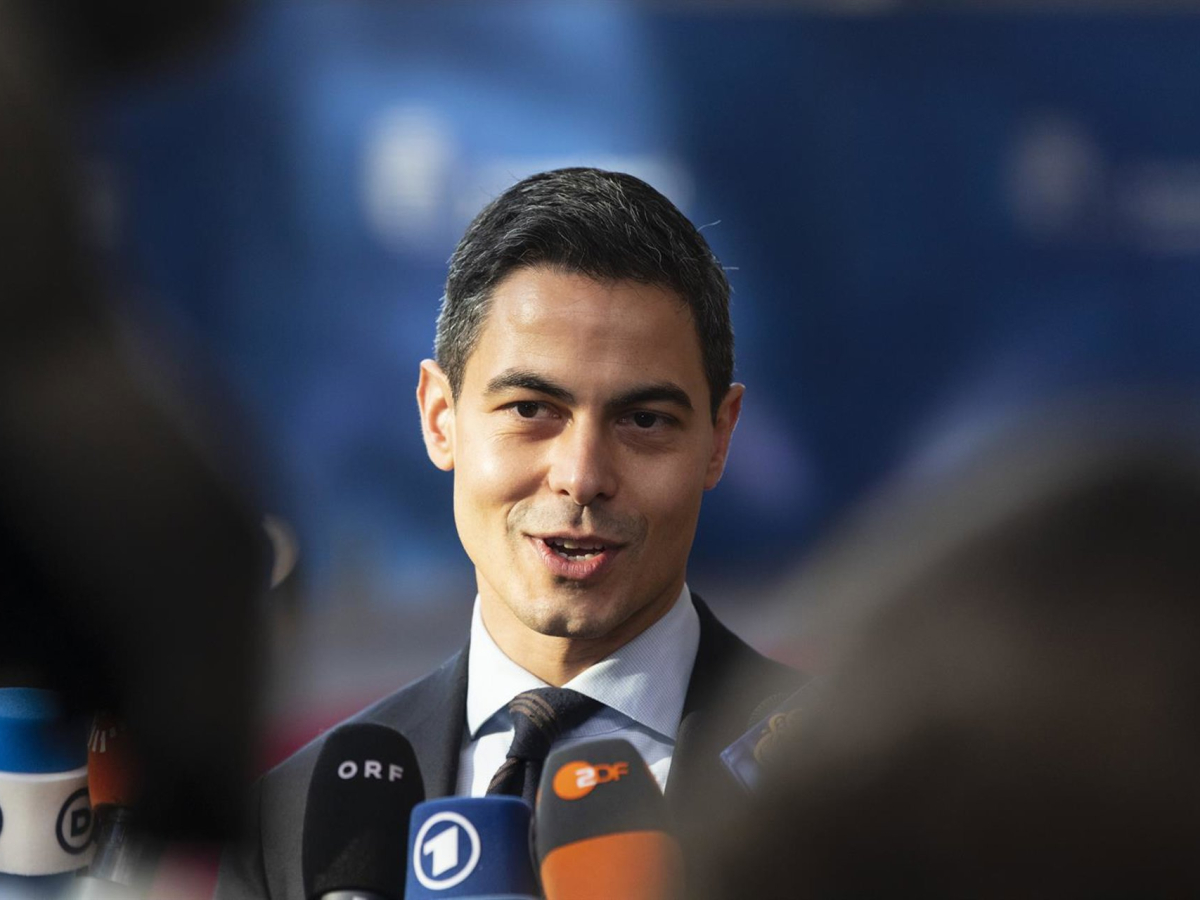
One of the most critical voices during this day has been that of the Austrian Chancellor, Christian Stocker, who has again defined China as "a systemic rival" and has urged member states to move towards a common strategy to address Beijing's growing economic and technological weight. One of the continent's main social democratic leaders also expressed herself in particularly harsh terms. Danish Prime Minister, Mette Frederiksen, has defended the need to adopt a firmer stance on China's economic transformation and the competitive pressure it exerts on strategic European sectors. "We must dare to fight back, and that also applies to China," she said, hinting at a more protectionist vision than that advocated by Madrid.
Luxembourg is in a more intermediate position. Its Prime Minister, Luc Frieden, has acknowledged that China poses a major challenge for European industry, although he has insisted on the need to preserve communication channels and avoid an economic rupture that could be detrimental to both parties. "I am very much in favor, both with China and with other trading partners, that we engage in a dialogue with them and tell them that, of course, we are interested in trade relations, but that these must be fair," he explained.

The statements of the various leaders highlight a reality that looms over this summit: the difficulty of building a unified position on China at a time when European economies maintain different levels of commercial dependence on the Asian giant and where the strategic priorities of the Member States do not always coincide. The truth is that the capitals arrive at the session with the expectation that the President of the European Commission, Ursula von der Leyen, will present new proposals aimed at strengthening the Union's external competitiveness and responding to the progressive deterioration of the European industrial position against global competitors.
"The important thing is to listen to Brussels", they repeat from the Spanish president's circle. In this regard, the European Commissioner for Trade, Maroš Šefčovič, recently announced before the European Parliament that the Union "should continue its work to increase the effectiveness of its trade defense policy", while reinforcing its economic diversification strategy by leveraging the extensive network of trade agreements signed by the Community bloc.
The war of numbers
Beyond China, another major issue that will monopolize the discussions will be the future multiannual budget of the European Union. Leaders are expected to dedicate part of Friday's session to addressing preliminary negotiations on the financial perspectives for the period after 2028, after the Cypriot presidency of the Council presented a first draft with concrete figures.
In that document, Cyprus proposed a cut of close to 3% compared to the initial plan of approximately two trillion euros defended by the European Commission. A proposal that generates significant reservations in Madrid. "We express our skepticism because the differences are still substantial and we believe there is a lot of work to be done", Sánchez stated when asked about the objective of the President of the European Council, António Costa, to reach an agreement before the end of the year.
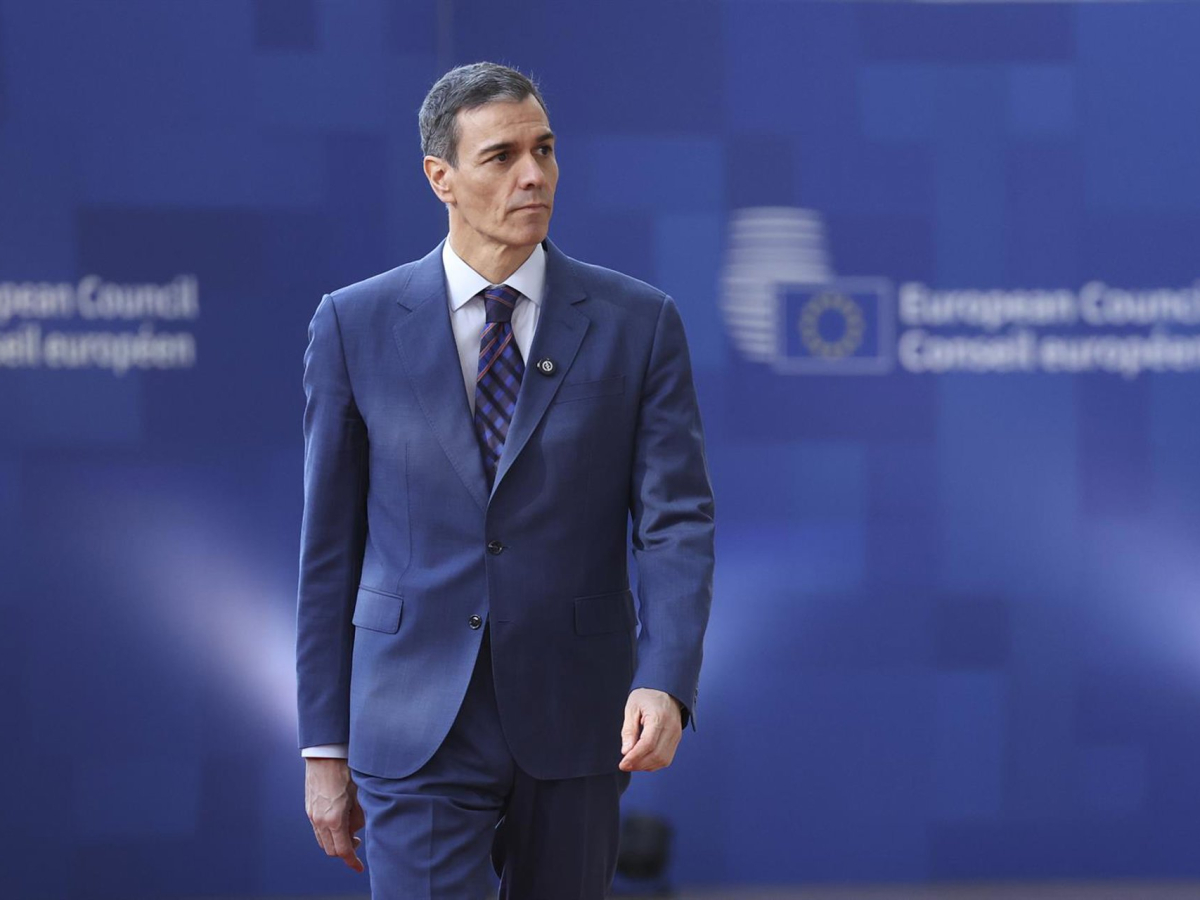
From La Moncloa they consider that the approach presented by the rotating presidency is even "more insufficient than the initial proposal of the European Commission". "We do not agree with it at all", stated the President of the Government.
Defense yes, but without sacrificing cohesion and agriculture
The Spanish position involves preserving two of the great traditional pillars of the community budget: the Common Agricultural Policy and cohesion funds. Sánchez has insisted that, in addition to maintaining these items, their economic allocation must be preserved "in real terms", preventing inflation or the reallocation of resources from reducing their effective capacity.
The Government detects that in the conversations between European partners there is a "clear commitment to defense and security policies", especially after the Russian invasion of Ukraine and the deterioration of the international geopolitical context. Madrid assures that it has no objections to reinforcing this type of investment. However, it demands that this increase in military spending does not come at the expense of other policies that it considers essential for the international projection of the Union. In this regard, Sánchez has focused on areas such as development cooperation, humanitarian aid, or the response to global challenges linked to the so-called Global South.
"Europe can make a difference", the president defended, alluding to the need for the Union to maintain an external dimension that goes beyond security and defense.
Likewise, he stressed the importance of offering responses to humanitarian crises and global challenges in regions where European influence increasingly competes with actors such as China, Russia, or the Gulf powers. "There is a Global South that is waiting for a different response from Europe", he warns.
The existing divergences on budgetary priorities, coupled with differences in trade and geopolitical matters, anticipate complex negotiations in the coming months. For now, consensus remains distant. "We are very far from an agreement regarding the community budget proposal", Sánchez concluded, reflecting the climate of caution with which European leaders face a negotiation that will define a large part of the Union's political and economic priorities for the next decade.