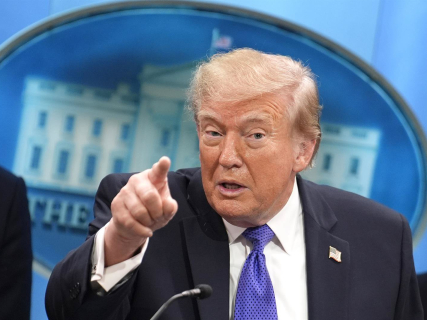
Trump celebrates Sánchez’s defeat in Spanish elections: “He did a terrible job”

The President of the United States has reacted to the result of the general elections of 29N with a comment about the head of the Spanish Executive. "Did he lose? Oh, that's something good. He did a terrible job. He deserves to lose," he has said after taking an interest in the outcome of the election.

fotonoticia 20261122210020 1920

fotonoticia 20261122210020 1920

Add DEMÓCRATA to Google

Ask FREN

Published

Last updated

2 minutes

Most read

Resultados de las elecciones generales del 29N en directo

Elecciones generales del 29 de noviembre de 2026 · Congreso de los DiputadosSenado

Escrutado: 98,61 %Votantes: 28.209.805Participación: 79,55 % (+12,96 pts vs 2023)

Datos de las 23:45 · Avances de participación: 14:00: 45,73 % (40,48 % en 2023) · 18:00: 68,15 % (53,12 % en 2023)

Votos

PartidoEscañosVotosPorcentaje
PP135 −29.200.54932,96 %
PP: 135 escaños. Se presenta con estos nombres:
  • PARTIDO POPULAR (PP)125 escaños
  • PARTIT POPULAR / PARTIDO POPULAR (PP)8 escaños
  • UNIÓN DEL PUEBLO NAVARRO EN COALICIÓN CON EL PARTIDO POPULAR (UPN-PP)2 escaños
PSOE115 −68.058.16528,87 %
PSOE: 115 escaños. Se presenta con estos nombres:
  • PARTIDO SOCIALISTA OBRERO ESPAÑOL (PSOE)80 escaños
  • PARTIT DELS SOCIALISTES DE CATALUNYA (PSC-PSOE)15 escaños
  • PARTIDO DOS SOCIALISTAS DE GALICIA-PSOE (PSdeG-PSOE)7 escaños
  • PARTIDO SOCIALISTA DE EUSKADI-EUSKADIKO EZKERRA (PSOE)7 escaños
  • PARTIDO SOCIALISTA DE LAS ISLAS BALEARES (PSIB-PSOE)2 escaños
  • PARTIDO SOCIALISTA DE NAVARRA-PSOE (PSN-PSOE)2 escaños
  • PARTIDO SOCIALISTA DE HUELVA (PSOE)2 escaños
Vox52 +194.488.12116,08 %
Frente Amplio13 −181.883.7766,75 %
Frente Amplio: 13 escaños. Se presenta con estos nombres:
  • FRENTE AMPLIO (FA)5 escaños
  • COMPROMÍS: FRONT VALENCIÀ (COMPROMIS-EUPV-PODEM-ERPV)3 escaños
  • COMUNS-FRONT AMPLI3 escaños
  • FRENTE AMPLIO ANDALUZ (FA)0 escaños
  • CHUNTA ARAGONESISTA-FRENTE AMPLIO ARAGÓN (CHA-IU-MS-FRENTE AMPLIO)1 escaño
  • ARAMÉS-FRONT AMPLI (ARAMÉS-EU-MS)1 escaño
  • FRENTE AMPLIU POR ASTURIES (FA)0 escaños
  • UNIDAD DEL PUEBLO CANARIO UPC (NC-BC, PODEMOS, IU, SUMAR)0 escaños
  • FRENTE AMPLIO-FRONTE ZABALA0 escaños
  • FRENTE AMPLIO-FRONTE AMPLA0 escaños
  • FRENTE AMPLIO - FRONTE AMPLA0 escaños
ERC11 +4841.6893,02 %
EH Bildu7 +1513.4581,84 %
Junts5 −2426.0061,53 %
Adelante4 +4532.6511,91 %
BNG3 +2283.2401,01 %
EAJ-PNV3 −2256.8610,92 %
CCa2 +1115.8080,41 %
CCa: 2 escaños. Se presenta con estos nombres:
  • MUNICIPALISTAS PRIMERO CANARIAS-COALICIÓN CANARIA (1.ºCAN-CCa)1 escaño
  • COALICIÓN CANARIA-MUNICIPALISTAS PRIMERO CANARIAS (CCa-1ºCAN)1 escaño
SALF0454.3061,63 %
SALF: 0 escaños. Se presenta con estos nombres:
  • SE ACABÓ LA FIESTA (SALF)0 escaños
  • SE ACABO LA FIESTA (SALF)0 escaños
Podemos091.0040,33 %
FO0 =88.5900,32 %
PACMA0 =82.3830,30 %
PACMA: 0 escaños. Se presenta con estos nombres:
  • PARTIDO ANIMALISTA CON EL MEDIO AMBIENTE (PACMA)0 escaños
  • PARTIT ANIMALISTA AMB EL MEDI AMBIENT (PACMA)0 escaños
ALHORA053.7750,19 %
D21052.6270,19 %
PCTE0 =31.4000,11 %
PCTE: 0 escaños. Se presenta con estos nombres:
  • PARTIDO COMUNISTA DE LOS TRABAJADORES DE ESPAÑA (PCTE)0 escaños
  • PARTIT COMUNISTA DELS TREBALLADORS DE CATALUNYA (PCTE)0 escaños
  • PARTIDO COMUNISTA DOS TRABALLADORES DA GALIZA (PCTE)0 escaños
  • PARTIDO COMUNISTA DE LOS TRABAJADORES DE EUSKADI/EUSKADIKO LANGILEEN ALDERDI KOMUNISTA (PCTE)0 escaños
  • EUSKADIKO LANGILEEN ALDERDI KOMUNISTA/PARTIDO COMUNISTA DE LOS TRABAJADORES DE EUSKADI (PCTE)0 escaños
MUNDO+JUSTO021.1970,08 %
MUNDO+JUSTO: 0 escaños. Se presenta con estos nombres:
  • POR UN MUNDO MAS JUSTO (MUNDO+JUSTO)0 escaños
  • POR UN MUNDO MÁS JUSTO (MUNDO+JUSTO)0 escaños
  • POR UN MUNDO MAIS XUSTO (MUNDO+JUSTO)0 escaños
ESCAÑOS EN BLANCO0 =14.0900,05 %
ESCAÑOS EN BLANCO: 0 escaños. Se presenta con estos nombres:
  • ESCAÑOS EN BLANCO PARA DEJAR ESCAÑOS VACÍOS (ESCAÑOS EN BLANCO)0 escaños
  • ESCANOS EN BRANCO PARA DEIXAR ESCANOS BALEIROS (ESCAÑOS EN BLANCO)0 escaños
  • ESCAÑOS EN BLANCO PARA DEJAR ESCAÑOS VACIOS (ESCAÑOS EN BLANCO)0 escaños
FE de las JONS0 =77870,03 %
FE de las JONS: 0 escaños. Se presenta con estos nombres:
  • FALANGE ESPAÑOLA DE LAS J.O.N.S. (FE de las JONS)0 escaños
  • FALANGE ESPAÑOLA DE LAS JONS (FE de las JONS)0 escaños
TERUEL EXISTE068650,02 %
IE066150,02 %
D.R.G064560,02 %
GBAI0 =60640,02 %
NEX046250,02 %
SY0 =42060,02 %
PREPAL0 =30610,01 %
VLC029250,01 %
PARTIDO AUTÓNOMOS0 =25810,01 %
PH0 =22670,01 %
AGENDA VALENCIANA022000,01 %
LIB018040,01 %
3e0 =16270,01 %
29014710,01 %
FIA011980,00 %
PCPC08780,00 %
P. ALANTRE07160,00 %
RRB06290,00 %
PANCAL-URCI04950,00 %
EGUZKILORE04100,00 %
PUEDE0 =3330,00 %
CNV02520,00 %
PFAC01500,00 %
P.D.S.J.E.01410,00 %

Los partidos que se presentan con varios nombres van juntos: pasa por encima del ? para ver el detalle. Porcentajes sobre votos válidos. Junto a los escaños, la diferencia con el 23J (en los votos, cuando termina el escrutinio).

Escaños (350)

Mayoría: 176
PP: 137 escaños en 2023PSOE: 121 escaños en 2023Vox: 33 escaños en 2023Sumar: 31 escaños en 2023ERC: 7 escaños en 2023EH Bildu: 6 escaños en 2023Junts: 7 escaños en 2023BNG: 1 escaño en 2023EAJ-PNV: 5 escaños en 2023CCa: 1 escaño en 20231371213331PP: 135 escaños en 2026 (PARTIDO POPULAR: 125; PARTIT POPULAR / PARTIDO POPULAR: 8; UNIÓN DEL PUEBLO NAVARRO EN COALICIÓN CON EL PARTIDO POPULAR: 2)PSOE: 115 escaños en 2026 (PARTIDO SOCIALISTA OBRERO ESPAÑOL: 80; PARTIT DELS SOCIALISTES DE CATALUNYA (PSC-PSOE): 15; PARTIDO DOS SOCIALISTAS DE GALICIA-PSOE: 7; PARTIDO SOCIALISTA DE EUSKADI-EUSKADIKO EZKERRA (PSOE): 7; PARTIDO SOCIALISTA DE LAS ISLAS BALEARES: 2; PARTIDO SOCIALISTA DE NAVARRA-PSOE: 2; PARTIDO SOCIALISTA DE HUELVA: 2)Vox: 52 escaños en 2026Frente Amplio: 13 escaños en 2026 (FRENTE AMPLIO: 5; COMPROMÍS: FRONT VALENCIÀ: 3; COMUNS-FRONT AMPLI: 3; FRENTE AMPLIO ANDALUZ: 0; CHUNTA ARAGONESISTA-FRENTE AMPLIO ARAGÓN: 1; ARAMÉS-FRONT AMPLI: 1; FRENTE AMPLIU POR ASTURIES: 0; UNIDAD DEL PUEBLO CANARIO UPC: 0; FRENTE AMPLIO-FRONTE ZABALA: 0; FRENTE AMPLIO-FRONTE AMPLA: 0; FRENTE AMPLIO - FRONTE AMPLA: 0)ERC: 11 escaños en 2026EH Bildu: 7 escaños en 2026Junts: 5 escaños en 2026Adelante: 4 escaños en 2026BNG: 3 escaños en 2026EAJ-PNV: 3 escaños en 2026CCa: 2 escaños en 2026 (MUNICIPALISTAS PRIMERO CANARIAS-COALICIÓN CANARIA: 1; COALICIÓN CANARIA-MUNICIPALISTAS PRIMERO CANARIAS: 1)13511552132026202620232023
  • PP 135 −2
  • PSOE 115 −6
  • Vox 52 +19
  • Frente Amplio 13 −18
  • ERC 11 +4
  • EH Bildu 7 +1
  • Junts 5 −2
  • Adelante 4 +4
  • BNG 3 +2
  • EAJ-PNV 3 −2
  • CCa 2 +1

Fuera, el reparto del 29N; dentro, el del 23J de 2023.

Simulador de Pactos

Pulsa los partidos para sumar sus escaños.Abrir el Simulador de Pactos

Los escaños más ajustados

Quién tiene el último escaño, quién le sigue y los votos que le faltan
  1. Santa Cruz de TenerifePPyPSOE169 votos

    El último escaño de Santa Cruz de Tenerife (el 7.º) es para el PP. Le sigue el PSOE, que necesitaría 169 votos más para quitárselo. Ver Santa Cruz de Tenerife ›

  2. AsturiasPSOEyFA178 votos

    El último escaño de Asturias (el 7.º) es para el PSOE. Le sigue FA, que necesitaría 178 votos más para quitárselo. Ver Asturias ›

  3. AlmeríaVOXyPP214 votos

    El último escaño de Almería (el 6.º) es para VOX. Le sigue el PP, que necesitaría 214 votos más para quitárselo. Ver Almería ›

  4. CuencaVOXyPP565 votos

    El último escaño de Cuenca (el 3.º) es para VOX. Le sigue el PP, que necesitaría 565 votos más para quitárselo. Ver Cuenca ›

  5. BurgosPSOEyVOX829 votos

    El último escaño de Burgos (el 4.º) es para el PSOE. Le sigue VOX, que necesitaría 829 votos más para quitárselo. Ver Burgos ›

Ver todas las provincias y el mapa

Provincias donde el último escaño cambiaría de manos con menos votos, con lo escrutado hasta ahora. Pulsa una para ver el detalle.

Senado

63,92 % escrutado
PartidoSenadores
PPPP: 128 senadoresSe presenta con estos nombres:
  • PP126
  • UPN-PP2
128 +8
Senado de ProgresoSenado de Progreso: 70 senadoresSe presenta con estos nombres:
  • SDP (PSOE, IU, MS, MM, COMPROMIS, CHA, BATZARRE)48
  • PSC12
  • SDP (PSOE-MS)3
  • PSOE2
  • SDP (PSOE-IUN NEB-MS-BATZARRE)2
  • PSIB-PSOE-MÉS PER MALLORCA-SUMAR-EUIB1
  • PSOE-GxF-M.SUMAR1
  • PSOE-MS1
70 −3
EH Bildu5 +1
ERC4 +1
A.H.I.1 =
ASG1 =
EAJ-PNV0 −4
Junts0 −1
UPN0 −1

Junto a los senadores, la diferencia con el 23J. Los partidos que se presentan con varios nombres van juntos: pasa por encima para ver el detalle. Baleares y Canarias eligen sus senadores por islas.

Senadores (209)

Elegidos en las urnas
PP: 120 senadores en 2023PSOE: 73 senadores en 2023 (PSOE: 48; PSC: 12; PSdeG-PSOE: 4; PSE-EE (PSOE): 4; PSN-PSOE: 3; PSIB-PSOE: 1; PSOE-SUMAR-EUIB-ARA EIVISSA: 1)EH Bildu: 4 senadores en 2023EAJ-PNV: 4 senadores en 2023ERC: 3 senadores en 2023 (ERC-ESQUERRES PER LA INDEPENDÈNCIA: 2; ERC: 1)Junts: 1 senador en 2023UPN: 1 senador en 2023A.H.I.: 1 senador en 2023ASG: 1 senador en 202312073PP: 128 senadores en 2026 (PP: 126; UPN-PP: 2)Senado de Progreso: 70 senadores en 2026 (SDP (PSOE, IU, MS, MM, COMPROMIS, CHA, BATZARRE): 48; PSC: 12; SDP (PSOE-MS): 3; PSOE: 2; SDP (PSOE-IUN NEB-MS-BATZARRE): 2; PSIB-PSOE-MÉS PER MALLORCA-SUMAR-EUIB: 1; PSOE-GxF-M.SUMAR: 1; PSOE-MS: 1)EH Bildu: 5 senadores en 2026ERC: 4 senadores en 2026A.H.I.: 1 senador en 2026ASG: 1 senador en 2026128702026202620232023
  • PP 128 +8
  • Senado de Progreso 70 −3
  • EH Bildu 5 +1
  • ERC 4 +1
  • A.H.I. 1 =
  • ASG 1 =

Fuera, el reparto del 29N; dentro, el del 23J de 2023. Los senadores designados por los parlamentos autonómicos no se eligen esta noche.

Mapa

Ganador por provincia

    CanariasCeutaMelillaAraba/Álava: PSE-EE (PSOE) 29,4 %Albacete: PP 40,7 %Alicante/Alacant: PP 36,4 %Almería: PP 39,0 %Ávila: PP 45,0 %Badajoz: PP 39,1 %Illes Balears: PP 34,6 %Barcelona: PSC 29,6 %Burgos: PP 40,2 %Cáceres: PSOE 38,2 %Cádiz: PP 31,9 %Castellón/Castelló: PP 33,8 %Ciudad Real: PP 42,6 %Córdoba: PP 36,8 %A Coruña: PP 41,6 %Cuenca: PP 39,5 %Girona: PSC 28,4 %Granada: PP 34,9 %Guadalajara: PP 36,1 %Gipuzkoa: EH BILDU 38,6 %Huelva: PP 34,0 %Huesca: PP 37,9 %Jaén: PP 36,4 %León: PP 39,6 %Lleida: PSC 27,4 %La Rioja: PP 39,2 %Lugo: PP 50,0 %Madrid: PP 40,0 %Málaga: PP 35,6 %Murcia: PP 40,4 %Navarra: PSN-PSOE 31,6 %Ourense: PP 50,3 %Asturias: PP 33,8 %Palencia: PP 42,5 %Las Palmas: PSOE 28,9 %Pontevedra: PP 39,0 %Salamanca: PP 47,3 %Santa Cruz de Tenerife: PP 29,9 %Cantabria: PP 43,4 %Segovia: PP 43,7 %Sevilla: PP 32,0 %Soria: PP 44,4 %Tarragona: PSC 29,4 %Teruel: PP 36,1 %Toledo: PP 37,6 %Valencia/València: PP 33,0 %Valladolid: PP 43,7 %Bizkaia: PSE-EE (PSOE) 28,5 %Zamora: PP 44,4 %Zaragoza: PP 36,4 %Ceuta: PP 44,7 %Melilla: PSOE 50,0 %

    Pulsa una provincia para ver sus resultados y elegir municipio.

    Mapa

    Partido con más senadores por provincia

    CanariasCeutaMelillaAraba/Álava: Senado de Progreso, 3 de 4 senadoresAlbacete: PP, 3 de 4 senadoresAlicante/Alacant: PP, 3 de 4 senadoresAlmería: PP, 3 de 4 senadoresÁvila: PP, 3 de 4 senadoresBadajoz: PP, 3 de 4 senadoresIlles Balears: PP, 4 de 6 senadoresBarcelona: PSOE, 3 de 4 senadoresBurgos: PP, 3 de 4 senadoresCáceres: PP, 3 de 4 senadoresCádiz: PP, 3 de 4 senadoresCastellón/Castelló: PP, 3 de 4 senadoresCiudad Real: PP, 3 de 4 senadoresCórdoba: PP, 3 de 4 senadoresA Coruña: PP, 3 de 4 senadoresCuenca: PP, 3 de 4 senadoresGirona: PSOE, 3 de 4 senadoresGranada: PP, 3 de 4 senadoresGuadalajara: PP, 3 de 4 senadoresGipuzkoa: EH BILDU-ERC, 3 de 4 senadoresHuelva: PP, 3 de 4 senadoresHuesca: PP, 2 de 4 senadoresJaén: PP, 3 de 4 senadoresLeón: PP, 3 de 4 senadoresLleida: PSOE, 3 de 4 senadoresLa Rioja: PP, 3 de 4 senadoresLugo: PP, 3 de 4 senadoresMadrid: PP, 3 de 4 senadoresMálaga: PP, 3 de 4 senadoresMurcia: PP, 3 de 4 senadoresNavarra: Senado de Progreso, 2 de 4 senadoresOurense: PP, 3 de 4 senadoresAsturias: PP, 2 de 4 senadoresPalencia: PP, 3 de 4 senadoresLas Palmas: PP, 4 de 5 senadoresPontevedra: PP, 3 de 4 senadoresSalamanca: PP, 3 de 4 senadoresSanta Cruz de Tenerife: PP, 3 de 6 senadoresCantabria: PP, 3 de 4 senadoresSegovia: PP, 3 de 4 senadoresSevilla: PP, 2 de 4 senadoresSoria: PP, 3 de 4 senadoresTarragona: PSOE, 3 de 4 senadoresTeruel: PP, 3 de 4 senadoresToledo: PP, 3 de 4 senadoresValencia/València: PP, 3 de 4 senadoresValladolid: PP, 3 de 4 senadoresBizkaia: Senado de Progreso, 3 de 4 senadoresZamora: PP, 3 de 4 senadoresZaragoza: PP, 2 de 4 senadoresCeuta: PP, 2 de 2 senadoresMelilla: Senado de Progreso, 2 de 2 senadores

    Pulsa una provincia para ver sus senadores y candidatos.

    Escrutinio provisional del Ministerio del Interior; se actualiza cada minuto. Mapas: Instituto Geográfico Nacional (es-atlas, CC BY 4.0). Demócrata.

    The president of the United States, Donald Trump, has celebrated the electoral defeat of Pedro Sánchez in the general elections held this Sunday in Spain. The US leader has reacted to the election result with a critical comment toward the head of the Government, after asking about the outcome of the election day.

    "What was the final result?", Trump asked. After being told in response that "Sánchez lost," the US president replied: "Lost? Oh, that's something good. He did a terrible job. He deserves to lose."

    The reaction of the Republican leader brings the Spanish election result into the context of the tensions that have marked the relationship between Washington and Madrid over the past few months. Trump and Sánchez have maintained opposing positions on different issues on the international agenda, especially regarding the NATO allies' military spending commitments and US foreign policy.

    Disagreements between Washington and Madrid

    One of the main points of friction has been defense spending. Trump has increased the pressure on members of the Atlantic Alliance to raise their military budgets and has maintained an especially critical position toward Spain for its resistance to taking on the goal of 5% of GDP in spending related to defense and security.

    Sánchez's Government has defended that Spain can meet its NATO commitments with a lower level of investment, a position that has prompted successive reproaches from the US Administration. The disagreement has gone beyond the budgetary sphere and has become one of the main elements of political tension between the two leaders.

    The relationship has also been shaped by differences in international policy and by the positions of the Spanish Executive on various conflicts and Washington decisions. In this context, Trump's words about the Spanish election result constitute an explicit intervention in the political assessment of the socialist defeat.

    The right-wing wins an absolute majority

    The statements from the US president come after the Partido Popular emerged as the leading force in the general elections. With 70% of the vote counted, the conservatives win 134 seats and 32.06% of the votes, compared with 117 deputies and 29.31% for the PSOE.

    For its part, Vox reaches 50 representatives and 15.75% of the votes cast, which entails an increase of 17 seats compared with the previous general elections. The sum of PP and Vox thus rises to 184 seats, eight above the 176 needed to achieve an absolute majority in the Congress. If the two deputies from UPN-PP are added, the combined result rises to 186.

    The result leaves the PSOE in second place and opens up a new parliamentary scenario, with the right in a position to gather a sufficient majority for the investiture. Trump has not developed in his speech a broader assessment of Spain’s political future or of the possible consequences of the result for bilateral relations. His comment has been limited to celebrating Sánchez’s defeat and expressing his view on the management of the Spanish president.

    The reaction of the U.S. president adds to that of other international leaders, such as Italian prime minister Giorgia Meloni, who has expressly congratulated Alberto Núñez Feijóo and Santiago Abascal for the results obtained by their respective parties and has stated her willingness to work jointly with both.

    More key points, information and questions with FREN

    AI-GENERATED CONTENT

    What phase is the government formation in after these general elections in Spain?

    The government formation is still in the initial phase following the vote: today, November 29, 2026, the results are being announced and there is no confirmed government agreement nor an investiture held yet. The vote count information published tonight indicates that PP and Vox have enough seats for an investiture, but that sum does not equate to a closed pact.

    What is known tonight

    With 89% of the votes counted, PP and Vox had 184 deputies, above the 176 that mark the absolute majority in Congress. This is a provisional result, not the definitive distribution that will remain after the scrutiny and external vote. (Demócrata, November 29).

    Another piece of information from Demócrata, also with about 90% counted, attributes 52 seats to Vox and places it at the opening of talks with PP. That news points out that Santiago Abascal and the party leadership had not finalized the details of a possible coalition government. Therefore, it cannot be assumed that Vox will enter the government, nor what conditions an agreement would have. (Demócrata, results and possible talks).

    The important distinction is this: there is a possible provisional numerical majority, but not yet a publicly committed investiture majority. Nor is there a closed negotiation schedule in the consulted information.

    What steps remain before forming a government

    The next announced institutional milestone is the constitution of the new Cortes, scheduled for December 23, 2026. That session launches the new chambers; it does not by itself imply the election of the president of the government. The date appears in the electoral coverage of Demócrata on 29N.

    Afterwards comes the round of consultations by the king with parliamentary representatives and the proposal of a candidate for the Presidency of the Government. The Constitution does not establish a specific deadline to make that proposal. Therefore, the date of the constitution of the Cortes does not automatically allow deducing when the investiture will be held, according to the explanation of the procedure.

    The investiture is the vote in which Congress decides whether to grant its confidence to the candidate. It has two possibilities:

    • First vote: requires an absolute majority, that is, at least 176 favorable votes.
    • Second vote: if it does not obtain that majority, it is held 48 hours later and more votes in favor than against suffice.

    These requirements are collected in the RTVE explanation about majorities.

    What deadlines have not started yet

    The two-month deadline to avoid a repeat election does not start on election day, but with the first investiture vote. If it passes without any candidate gaining the confidence of Congress, the Cortes are dissolved and new elections are called, as explained by El Confidencial about the deadlines.

    In summary: we are on election night and at the moment prior to concretizing agreements. The milestones that will allow talking about effective progress will be a public pact, the constitution of Congress, the proposal of a candidate, and an investiture date.

    What are the constitutional powers of the President of the United States in foreign policy?

    I cannot answer that question in detail because I specialize in Spanish politics and institutions, not in United States constitutional law. My scope covers the rules, procedures, actors, and debates of the Spanish public sphere.

    Specifically, I am designed to work with:

    • Spanish laws, decrees, and other regulations, both at the state level and, in many cases, regional: content, processing, amendments, and current status.
    • Parliamentary activity in the Congress, the Senate, and regional parliaments: initiatives, questions, bills, appearances, session diaries, and votes.
    • Spanish government and administration: Council of Ministers agreements, competencies of ministries and other bodies, as well as public consultations and legislative hearings.
    • Political and social actors in Spain: parties, parliamentary groups, institutional leaders, and, in general, stakeholders linked to regulation and Spanish public policies.
    • Political and regulatory news in Spain: context of legislative reforms, relevant regulatory changes by sectors (energy, housing, health, transport, digital, etc.) and analysis of how they may affect companies, organizations, or citizens.

    I can also explain general concepts of institutional and parliamentary functioning when relevant to understanding the Spanish system: for example, what a royal decree-law is, how a bill is processed in the Congress of Deputies, what the Permanent Deputation does, or what the steps are for approving the General State Budgets.

    If you are interested in a comparison between systems, I could help from the Spanish side if you phrase the question like this:

    • "What powers does the Government of Spain have in foreign policy according to the Spanish Constitution?"
    • "What role do the Cortes Generales have in the ratification of international treaties?"
    • "Compare, from the Spanish point of view, the function of the Government and the King in foreign policy."

    In those questions I could:

    • Indicate what the Spanish Constitution says about international relations, treaties, and the external representation of the State.
    • Explain how decision-making in foreign policy is practically articulated in Spain (Council of Ministers, Cortes, head of State, etc.).
    • Locate and summarize recent regulations or initiatives affecting a specific area of foreign policy (for example, defense, trade agreements, development cooperation, etc.).

    If what you seek is a detailed analysis of the powers of the President of the United States in foreign policy, I would recommend consulting specialized sources or tools on the U.S. constitutional system (U.S. constitutional law manuals, official pages such as the White House or the U.S. Congress, or American legal databases).

    If you want to reformulate your question towards the Spanish case, tell me exactly which aspect of foreign policy interests you (treaties, defense, trade, recognition of States, etc.) and I will prepare an explanation focused on how it works in Spain.

    What is Pedro Sánchez's political trajectory before becoming Prime Minister?

    Before becoming Prime Minister in June 2018, Pedro Sánchez went through international political advising, the Madrid City Council, the Congress, and the leadership of the PSOE. His trajectory was not continuous: he lost his seat, returned to Parliament, and after resigning as socialist secretary general in 2016, regained party leadership in 2017.

    The first steps: membership and advising

    Sánchez, born in Madrid in 1972 and trained as an economist, joined the PSOE in 1993, at 21 years old. His first professional political experience had a European and international dimension, prior to his representative positions in Spain. The La Moncloa biography records these early jobs.

    In 1998 he worked as an advisor in the European Parliament, where he collaborated with the socialist delegation and with MEP Bárbara Dührkop. It is important to distinguish: he was an advisor, not a MEP. In 1999 he joined the cabinet of Carlos Westendorp, high international representative in Bosnia and Herzegovina, in the context of the Balkan conflicts.

    Back in Spain, in 2000 he held responsibilities in international relations at the Consumers and Users Organization. Between 2000 and 2004 he was economic advisor to the Federal Executive Commission of the PSOE, according to his PSOE biography. This stage linked his economic training with work inside the socialist organization.

    Councilor in Madrid and national deputy

    His first elected public office was as councilor of the Madrid City Council. He had run on the socialist list headed by Trinidad Jiménez in the 2003 municipal elections, but accessed the council in 2004, filling the vacancy of Elena Arnedo. He remained as councilor until 2009, a stage recorded in his official socialist trajectory.

    In 2009 he jumped to the Congress of Deputies for Madrid, replacing Pedro Solbes. He held the seat until 2011 and returned to the Chamber in January 2013. Therefore, his first parliamentary stage was interrupted: he did not maintain a deputy seat continuously since entering Congress. These stages appear in his parliamentary biography.

    PSOE leadership and candidacies for government

    The decisive change came in July 2014, when he was elected secretary general of the PSOE to succeed Alfredo Pérez Rubalcaba. He won the membership vote against Eduardo Madina and José Antonio Pérez Tapias. Since then he led the socialist opposition and was the party's candidate for the Presidency of the Government (PSOE biography).

    He led the socialist candidacies in the general elections of December 2015 and June 2016, without managing to form a government. Thus, before reaching La Moncloa he had already run twice as a candidate for the Presidency (La Moncloa biography).

    The 2016 crisis and the 2017 return

    In October 2016 he resigned as secretary general during the PSOE internal crisis over Mariano Rajoy's investiture. That month he also gave up his seat. In 2017 he regained socialist leadership after defeating Susana Díaz and Patxi López in new primaries, and his leadership was formalized at the party congress in June (PSOE biography).

    That return preceded his arrival to government: on June 1, 2018 the motion of no confidence against Mariano Rajoy succeeded and Sánchez was elected president. Thus culminating a twenty-five-year journey since his socialist affiliation (institutional biography).

    Play

    Test your knowledge with FREN!

    How much do you know about this topic? Answer the following 3 questions.

    What has been Donald Trump's reaction to Pedro Sánchez's defeat in the Spanish elections?

    Question 1 of 3

    What absolute majority does the right-wing (PP, Vox, and UPN-PP) achieve after these elections?

    Question 2 of 3

    What has been the main point of friction between Trump and Sánchez in their bilateral relations?

    Question 3 of 3