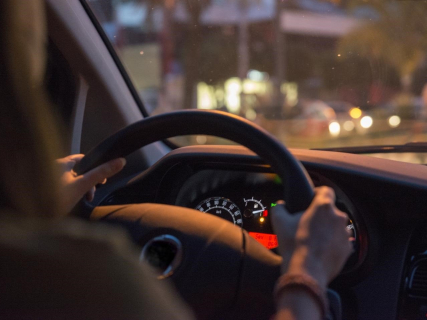










Six out of ten drivers (60%) admit that their visual ability decreases when driving at night: 22% experience this difficulty in a habitual way and 38% perceive it at times. The problem is more pronounced among those who have some visual defect, since 67% of these drivers recognize that they see worse at night, compared with 32% of those who do not report vision disorders, according to the latest Vision Study in Spain conducted by Baviera.
With the arrival of winter and the progressive reduction in daylight hours, traveling at night becomes something increasingly common for many drivers in Spain. The return trips from work, Christmas shopping, or weekend outings are usually made with little natural light and in settings where the headlights of other cars, streetlights, and shop windows increase reflections and glare, which adds an extra challenge for the eyes.
Driving in dim light involves a greater effort for the visual system, since the eyes do not react the same way in daylight as they do under reduced lighting conditions. "In these circumstances, the rods of the retina, which are more sensitive to light, take on greater prominence over the cones, which are responsible for perceiving colors and details. As a result, visual acuity decreases, color perception is reduced, and it becomes more difficult to distinguish objects with sharpness. That is why it is so important to maintain an adequate prescription and have your eyesight checked periodically, since visual defects that can go unnoticed during the day may manifest with greater intensity at night," explains Dr. Fernando Llovet, an ophthalmologist and cofounder of Baviera.
In addition, the eyes need an adaptation period in response to sudden changes in light. As reported by the Revista de la DGT, this process can last between 5 and 10 minutes in moderately lit environments and reach up to 30 minutes in complete darkness. During that interval, the ability to perceive details and contrasts decreases, something especially critical when entering a tunnel, driving on roads with poor lighting, or recovering from the glare caused by the headlights of another vehicle.
A study by Bavaria finds that complications for driving at night have a close relationship with the state of eye health. Among those who report the most problems, people with retina pathologies (81%) stand out, followed by cataracts (79%), myopia (75%), and astigmatism (73%). Cataracts, in addition, can generate greater sensitivity to light, the appearance of halos around headlights, and loss of contrast; astigmatism makes it difficult to see lights and signs clearly, while myopia complicates focusing on distant objects when lighting decreases.
"It is important not to normalize difficulties driving at night, especially when intense glare, halos, or problems distinguishing objects and signs appear. These symptoms may be a manifestation of refractive defects or of eye pathologies. Consulting with an ophthalmologist makes it possible to detect possible visual alterations and adopt the necessary measures to drive in better conditions", adds doctor Llovet.
Bavaria’s specialists insist that adopting certain habits can help improve visibility and reduce the discomfort associated with night driving:
- Review your eyesight and prescription: it is important to visit the ophthalmologist periodically, especially if difficulties appear in distinguishing signs, halos, or flashes. If glasses or contact lenses are needed, they must always be used with the correct prescription.
- Keep the windshield, mirrors, and headlights clean: both exterior dirt and marks, dust, or condensation inside the windshield can multiply reflections and worsen visibility.
- Check the condition and aim of the headlights: a lighting system in good condition allows you to see the road better and prevents dazzling other road users.
- Avoid glare: do not stare directly at the headlights coming from the front, direct your gaze toward the right edge of the road, and use the anti-glare position of the rearview mirror.
- Reduce the brightness of the dashboard and the navigation screen: excessive interior lighting hinders the eyes’ adaptation to the external darkness.
- Adapt your speed and increase the safety distance: it is advisable to adjust driving to light and visibility conditions, especially when entering tunnels or after glare, when the eyes need time to recover their visual capacity.
- Care for eye hydration: heating and air conditioning promote dryness of the eye surface. Blinking frequently and using artificial tears when indicated helps maintain visual comfort.
- Rest during long trips: visual fatigue and drowsiness reduce attention while driving. It is recommended to take periodic breaks and stop the vehicle whenever signs of tiredness appear.