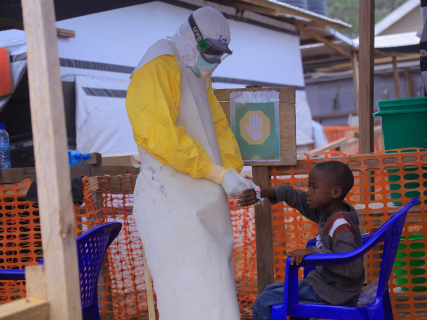

The World Health Organization (WHO) has declared a public health emergency of international concern due to the outbreak of Ebola detected in Central Africa, a decision that places the health crisis at the highest alert level provided for by international response mechanisms.
The decision comes after the agency confirmed the spread of the outbreak beyond the initial focus, raising concerns about the risk of regional transmission. Although the WHO currently maintains that the global risk is low, it considers the threat to neighboring countries affected by the evolution of infections to be high.
The outbreak has also raised alarms due to the nature of the variant detected. According to the WHO itself, this is the Bundibugyo virus, one of the strains of Ebola for which there is currently no specific approved vaccine, which complicates the health response to a highly lethal disease.
International concern over the evolution of the outbreak
The main focus is on the Democratic Republic of Congo, where health authorities initially detected an outbreak of unknown origin that was later identified through laboratory analysis as this variant of the Ebola virus.
Concern increased with the detection of cases in Uganda, a scenario that fueled fears of cross-border spread and led to increased international surveillance.
The Director-General of the WHO, Tedros Adhanom Ghebreyesus, publicly expressed his concern about the evolution of the crisis. "I am deeply concerned by the speed and scale of the increase in cases," he stated in remarks reported by Reuters.
The United States Centers for Disease Control and Prevention (CDC) also point out that there is no authorized vaccine specifically for this variant, so the response is mainly based on contact tracing, case isolation, infection control, and supportive clinical care.
In Europe, the risk is currently considered limited. The European Centre for Disease Prevention and Control (ECDC) maintains a very low-risk assessment for the population of the European Union, although it continues to monitor the evolution of the Ebola outbreak.
The WHO is already working with the health authorities of the affected countries and with international partners to strengthen hospital response capacity and contain a crisis whose evolution remains ongoing.