
The Economic Community of West African States (ECOWAS) has expressed this Saturday its "deep concern" at the "unilateral decision" by the transitional authorities of Guinea-Bissau to extend the transitional period until November 2028, which means raising to three years a stage that the coup leaders had initially set at one year.
In an official note, the regional body has reiterated its commitment to a "short" transition, "with defined timelines and inclusive," that leads to the restoration of constitutional order through "credible, open and transparent" elections.
ECOWAS has indicated that it takes into consideration the arguments presented by the junta to defend the extension of the schedule, but it has offered its support to address those difficulties and reduce the announced period.
At the same time, the bloc has asked the authorities in Guinea-Bissau to review the postponement and to sit down for constructive dialogue with Senegal, the country designated as mediator, in order to agree on a "consensual, inclusive and realistic" roadmap that facilitates a rapid return to constitutional legality.
In its statement, the regional organization has also called for effective guarantees for respect for fundamental freedoms and for the exercise of the political and civic rights of all national actors, while also reaffirming its determination to accompany the process in close coordination with the African Union and the UN.
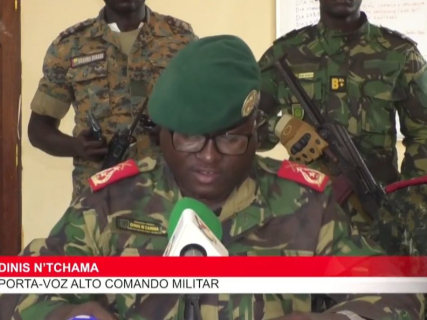
Last Thursday, the leader of the coup and self-proclaimed "transitional president" of Guinea-Bissau, Horta N'Tam, made public his decision to postpone by two years the general elections scheduled for next 6 December, citing serious technical difficulties that were affecting his organization.
Horta N'Tam thus confirmed the worst fears by announcing that he was going to "revoke the presidential decree that set 6 December 2026 as the date for the holding of the elections," which will now take place on 26 November 2028.
On November 23, 2025, the Army carried out a coup d'état and arrested the then president, Umaro Sissoco Embaló, shortly before the publication of the election results in which he was seeking re-election. After registering intense gunfights in several areas of the capital, Bissau, the military proclaimed the "total control" of the country and established the High Military Command for the Restoration of National Security and Public Order.