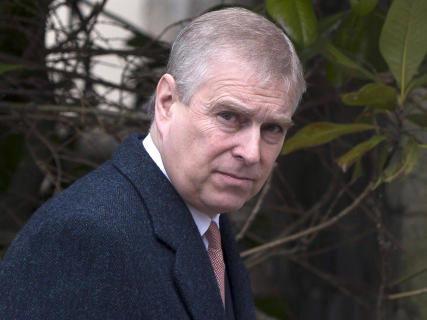

The British Government has released a series of documents about the appointment in 2001 of former Prince Andrew Mountbatten-Windsor as a trade envoy, from which it emerges that no specific checks or audits were carried out on his figure to detect possible conflicts of interest or risks to the country's image.
"We have found no evidence that a formal due diligence or background check process was carried out. Nor is there evidence that such a possibility was considered," said the Minister for Trade and Economic Security, Chris Bryant, in a statement.
The head of Trade noted that that appointment "represented a continuation of the Royal Family's involvement in the promotion of trade and investment" after the Duke of Kent resigned from his responsibilities as vice-president of British Trade International, the government body responsible for promoting foreign trade and attracting foreign investment.
Bryant detailed that the publication of this material responds to a request made by MPs last February, with the aim of clarifying the reasons that led to the designation of former Prince Andrew, currently under investigation for his links with the deceased businessman and convicted sex offender Jeffrey Epstein.
"Identifying the historical documents requested by the House has not been a simple task. 25 years ago, government departments primarily used paper filing systems. We have had to locate files that might contain relevant information, retrieve them from the archive, and conduct manual searches," the minister specified.
As he explained, a good part of the papers have been reviewed and partially redacted "to remove personal information" and any data that could negatively affect the foreign relations of the United Kingdom. "We have consulted with the Police to ensure that the disclosure of this information does not prejudice their investigation," he emphasized.
Likewise, he indicated that information related to "communications with the Royalty" has also been suppressed in the set of documents released. "I can assure the House that we have acted with the utmost transparency," he stressed.
Among the files is a document stating that the late Queen Elizabeth II requested that her son Andrew Mountbatten-Windsor be appointed trade envoy for the United Kingdom, according to a letter from the then chief executive of British Trade International.
"It was the norm" and changes in the rules
Subsequently, Bryant has appeared before the House of Commons, where he has defended that "it was the norm" not to require audits from members of the Royal Household, and has maintained that, with the information available at that time, ministers would not have been able to detect Andrew's ties with Epstein.
The minister added that the role of the current UK trade envoys is very different from the one held by the former prince, as they are now parliamentarians subject to the House's code of conduct.
"Everything related to that period has been published. I don't think there's anything else that can be found," he stated, thus ruling out that Keir Starmer's Executive will disclose new documents about this appointment.
Former Prince Andrew was arrested at his Sandringham residence at the end of February for misconduct in public office, an arrest that took place a few weeks after the British Royal Family initiated the formal procedure to strip him of his titles.
The former prominent member of the Royalty was also evicted from the mansion where he lived in Windsor, west of London, in a measure described as "necessary," despite the fact that he continued to reject the accusations against him and that in October 2025 he renounced his titles, including that of Duke of York.